Nine Canary Islands municipalities account for nearly half of all discharges into the sea
Only a handful of coastal municipalities are behind much of the wastewater that reaches the sea in the Canary Islands. According to the outlet Atlántico Hoy, nine town councils account for nearly half of all discharge points in the archipelago — a figure that again puts the spotlight on the state of the islands' sewerage and treatment.
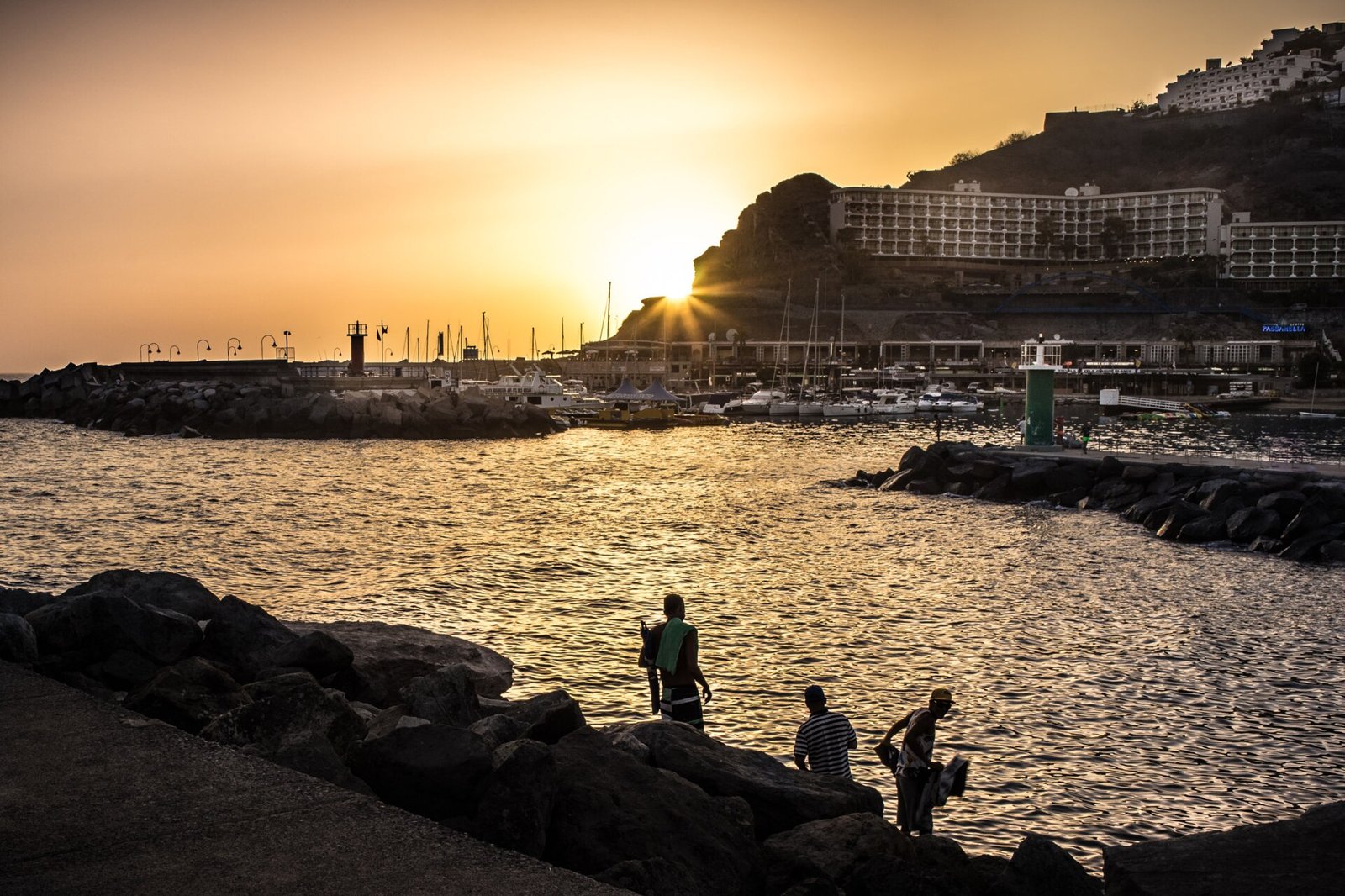
Photo: Giuseppe Milo, CC BY 3.0 (Symbolbild).
The numbers come from the Canary Islands government's land-to-sea discharge census (Censo de Vertidos desde Tierra al Mar), updated in 2025. Far from alarmist, the picture is above all one of incomplete infrastructure that the authorities say they are gradually bringing into compliance.
What the figures say
The regional government's register counts 403 land-to-sea discharge points, down from 434 in 2021. Around 351 remain active and 216 have no authorisation, according to figures released by the Consejería de Transición Ecológica y Energía and reported by outlets including eldiario.es and Atlántico Hoy.
On that basis, Atlántico Hoy puts at nine the number of municipalities that concentrate nearly half of the discharges — almost all on the two capital islands.
Where they cluster
By island, the census distributes the points as follows: Tenerife 180, Gran Canaria 115, Fuerteventura 40, Lanzarote 36, La Palma 18, La Gomera 10 and El Hierro 5. Tenerife and Gran Canaria alone account for about 295 points, roughly 82% of the total.
The exact municipal breakdown is given by the original source. Among the places named repeatedly by the press and the census are the capitals, Santa Cruz de Tenerife and Las Palmas de Gran Canaria, along with tourist municipalities such as Adeje and Granadilla de Abona in southern Tenerife and Telde on Gran Canaria. These names should be read as cited examples, not a closed list.
Why it happens
The cause is not a single spill but a still-incomplete sewerage system. Collectors, pumping stations and connections that would close the network are missing, so part of the wastewater — domestic, industrial or storm-water — ends up reaching the sea without adequate treatment.
On top of that, only a minority of points use submarine outfalls (emisarios submarinos) under optimal dispersal conditions: analyses such as the Fundación Canarina's SOS Costas Canarias report, cited by El País Canario, estimate that only around 13% have that kind of infrastructure.
What impact it has
The most visible effect is the occasional closure of beaches over bacterial contamination, which recurs mainly in summer at some busy coves. Outlets such as El País Canario mention recurring episodes in Adeje, Granadilla de Abona and Yaiza on Lanzarote.
Even so, it is worth not generalising: most of the Canary Islands' bathing zones keep a "suitable" rating under health checks, and a point "without authorisation" is not automatically a source of pollution. The problem is real but confined to certain stretches of coast.
What is being done
The Consejería de Transición Ecológica y Energía, led by Mariano H. Zapata, has presented the updated census as a key tool to order and regularise the discharges. According to the department, more than half of the unauthorised points are already undergoing regularisation.
The plan involves prioritising the 20 most polluting discharges through agreements, deploying drone technology for monitoring, and strengthening coordination between the regional government, island councils (cabildos) and town halls. The census is also public and can be consulted in an interactive viewer via IDECanarias.
You can look up the status of each point in the discharge census viewer on IDECanarias, and bathing-water quality in Spain's Health Ministry Náyade system.
If a beach is closed on health grounds, respect the signage and pick a nearby one instead.
Depending on the source, the share of unauthorised points ranges from 53% (216 of 403) to readings above 70%, because active, expired and in-process points are counted differently.
The census is under constant update, so always cite the date of the figure.
Key facts
- 403 land-to-sea discharge points in the Canaries, down from 434 in 2021 (discharge census, Canary Islands government, 2025).
- About 216 points without authorisation; over 50% undergoing regularisation, per Transición Ecológica.
- By island: Tenerife 180, Gran Canaria 115, Fuerteventura 40, Lanzarote 36, La Palma 18, La Gomera 10, El Hierro 5.
- Tenerife and Gran Canaria concentrate about 295 points, close to 82% of the total.
- Nine municipalities account for nearly half of the discharges, according to Atlántico Hoy.
- Only around 13% use submarine outfalls under optimal conditions, per the SOS Costas Canarias report (via El País Canario).
FAQ
- How many sea discharges are there in the Canary Islands?
- The regional government's census records 403 points, of which about 351 are active and 216 have no authorisation (2025 data).
- What does it mean that nine municipalities concentrate nearly half?
- That much of the total is grouped in a few coastal councils, mainly on Tenerife and Gran Canaria, according to Atlántico Hoy. The original source details the municipalities.
- Is it dangerous to swim?
- Most bathing zones remain suitable. Closures are occasional and localised; if you see a closure sign, do not swim and check the Náyade system.
- Why do these discharges happen?
- Mainly because of incomplete sewerage: collectors, pumping stations and connections are missing, and few points use proper submarine outfalls.
- What is being done?
- Updating the census, prioritising the 20 most polluting discharges, using surveillance drones, and coordinating the regional government, cabildos and town halls to regularise the points.
Read on
- Canary Islands: municipalities move to control vacation rentalsCanary Islands · 18 August
- SCS earmarks nearly nine million euros for the Canaries' health centresCanary Islands · 11 August
- Canary Islands holiday lets: deadline now 31 December 2027Canary Islands · 10 November
- Canaries general strike 11N: rent €1,211, buses unclearCanary Islands · 9 November
- Canary Islands flights this weekend: 5,640, up 420Canary Islands · 1 November
- All events on the Canary Islands →