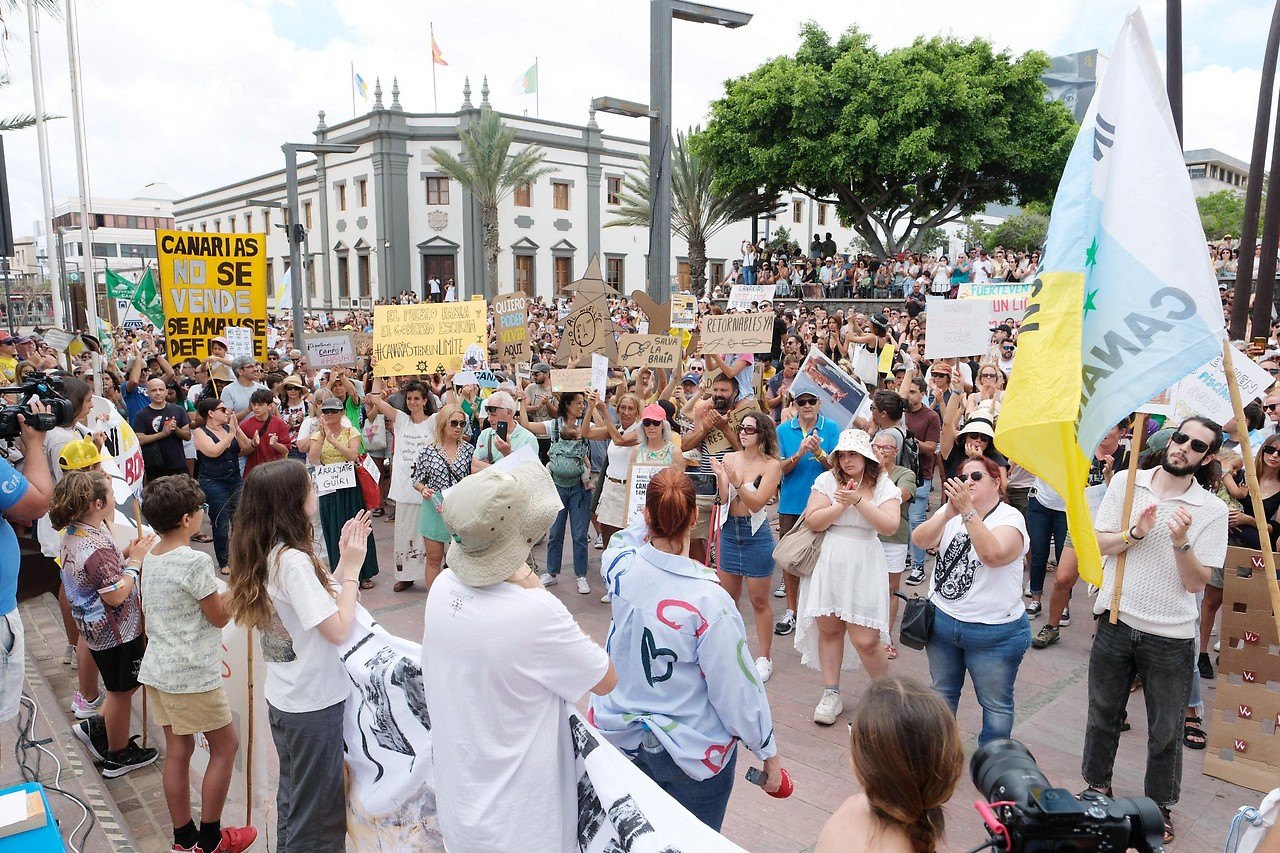
It is one of those figures that spreads fast: 90 percent. That is how many Canarians consider it necessary to change the islands' tourism-based economic model. The figure is correct — but it calls for context, because it says something other than some headlines suggest.
What the 90 percent really means
First, the nuance: «change the model» is not the same as «abolish tourism». The survey distinguishes clearly: 52.1 percent of respondents want deep change, a further 36.9 percent only «partial adjustments». Together that makes the roughly 90 percent who consider some change necessary. To turn that into «nine in ten Canarians against tourism» is therefore an undue shortcut. What the data show is a broad desire for correction — not for abolition.
Where the figures come from
It also matters who did the asking. The survey is called «Estudio de Percepción Ciudadana sobre el Medio Ambiente en Canarias» and was commissioned by the environmental Fundación Canarina, conducted by the institute Estudios Sociales GEAS 7. So it is a commissioned study by an organisation with a clear environmental orientation, not a neutral state barometer. Methodologically it rests on 409 telephone interviews with island residents, balanced by sex and age, at a confidence level of just over 95 percent. That is a solid but modest sample — the results are a robust mood indicator, not a referendum.
The real surprise: housing before tourism
Perhaps the most important finding gets lost in the headlines. Asked about their biggest worry, almost half of respondents (45.2 percent) name housing and rent — significantly more often than tourism, which follows in second place at 27.6 percent. This fits a picture we have drawn repeatedly in recent months: the tourism debate is in truth often a housing debate. The short-term holiday-rental market, rising rents and scarce housing are what people feel most immediately in daily life.
It also fits that 70.4 percent of respondents feel quality of life on the islands has worsened over the past decade — most markedly on Fuerteventura and Tenerife. As causes they cite housing costs, the cost of living, tourist overload and overstretched infrastructure.
Limits, yes — but who takes to the streets?
A majority of 61.1 percent favour limiting tourism growth, most strongly the 35-to-54-year-olds. But the survey also reveals a striking gap: despite high sensitivity, only 2.4 percent of the population are actively organised in citizens' initiatives or associations. Between conviction and action, then, lies a gap — many share the protest movement's concerns without taking to the streets themselves.
A gender difference also stands out: women call more often for deep change (86.3 against 79.8 percent among men), perceive the decline in quality of life more strongly, and worry more about climate change.
Distrust of politics
A common thread runs through the answers: the feeling of not being heard. Two in three respondents think their concerns are not taken seriously by the administrations; only two in ten see institutions driving change in line with ecological and social needs. The Fundación Canarina accordingly reads its results as confirmation of recent years' wave of protest — warning that the transition to a more moderate model will be «either shaped democratically or imposed by the limits of nature».
The reckoning
What remains? The survey is a mood picture from a committed organisation, not a neutral official barometer — that should be borne in mind. Yet its core message tallies with what protests, rents and vacancy figures have long suggested: on the Canaries, the desire for a different balance is growing. What is most notable is where the shoe pinches most — not abstractly at tourism, but very concretely at housing. To understand the mood on the islands, then, look less at the eye-catching 90 percent figure than at the 45 percent who make a roof over their head their first concern.
Frequently asked questions
- Are 90 percent of Canarians against tourism?
- No. 90 percent consider a change to the tourism model necessary — but only 52.1% want deep change, 36.9% only partial adjustments. «Change the model» is not «abolish tourism».
- Who carried out the survey?
- The environmental Fundación Canarina commissioned it, conducted by the institute Estudios Sociales GEAS 7. It is a commissioned study with an environmental orientation, not a neutral state barometer, based on 409 telephone interviews.
- What is islanders' biggest worry?
- Housing and rent (45.2%), well ahead of tourism (27.6%). The tourism debate is often, in truth, a housing debate.
- How many are active in protest movements?
- Only 2.4 percent of the population are actively organised in citizens' initiatives or associations — despite broad agreement with their concerns.
- Are there differences between the islands?
- Yes. The decline in quality of life is felt most strongly on Fuerteventura (85.7%) and Tenerife (77.6%); support for limiting growth also varies by island.
Read on
- 67.9 percent call tourism beneficial – and 77.1 percent blame it for costly housingCanary Islands · 23 September
- 61 percent want to build their own home — why the Canaries lead on self-buildCanary Islands · 9 September
- Canaries: 2,444 homes back in long-term rental marketCanary Islands · 24 October
- Canary Islands: foreign property buyers face 10-year ruleCanary Islands · 24 October
- Canary Islands: Clásico on 25 October, Barça favouritesCanary Islands · 21 October
- All events on the Canary Islands →
As of 10.06.2026. Sources include eldiario.es (Canarias Ahora), the Fundación Canarina and Estudios Sociales GEAS 7 («Estudio de Percepción Ciudadana sobre el Medio Ambiente en Canarias»). This is a perception study commissioned by an environmental organisation based on 409 telephone interviews; the results are a mood indicator and not equivalent to an official survey.