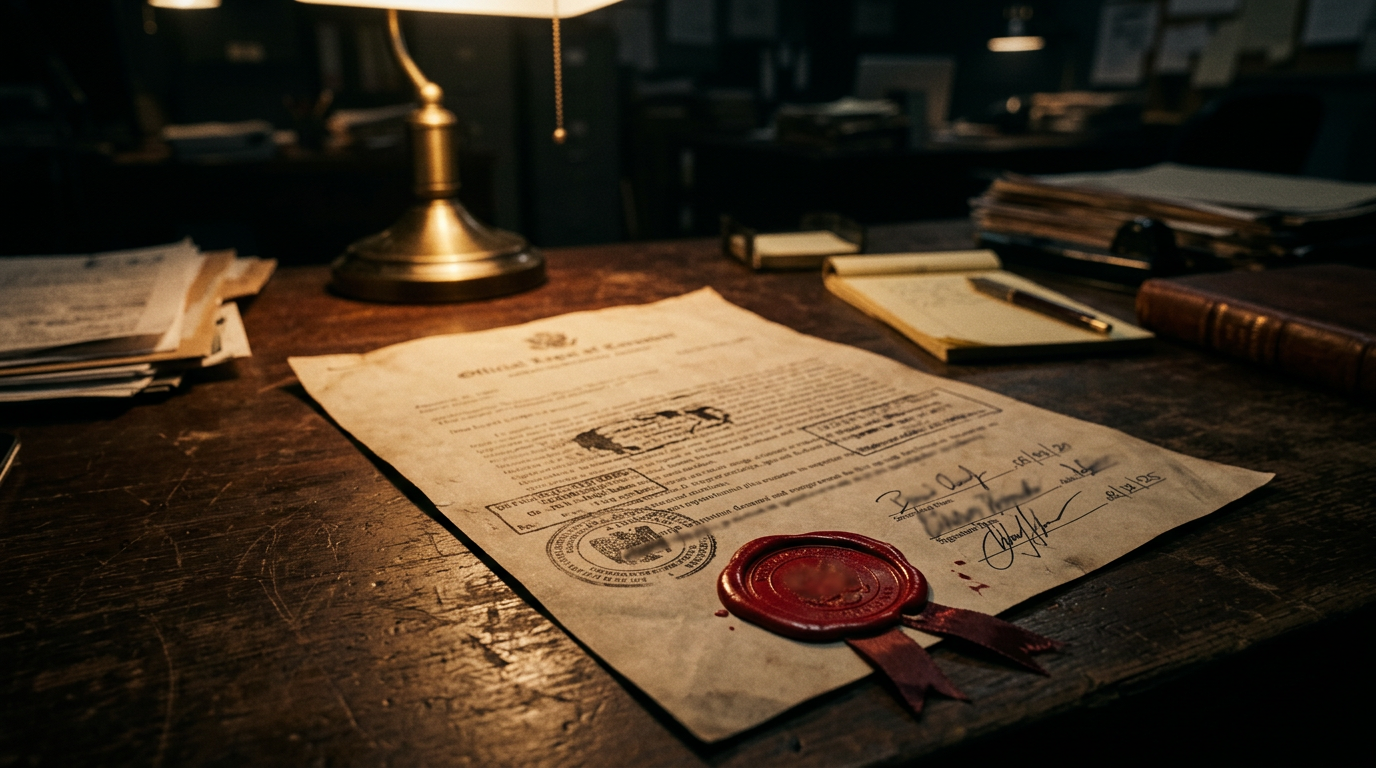
What began on 18 April 2026 as an extraordinary owners' assembly at the Centro Comercial Cita has become, three weeks later, a case study. Not in property management. In the method by which an official truth is manufactured that does not match the reality.
Act 1: The recording ban — a shield against the truth
The Presidente opened the meeting with a prohibition. No audio recordings, no video recordings, any violation would have legal consequences. The justification offered was the protection of personality rights and the GDPR.
The ban contradicts settled case law. The Spanish Tribunal Supremo (STS 489/2018) and the Constitutional Court (STC 11/1984) have repeatedly held that a participant in an assembly may record it for their own evidentiary purposes. Against the background of the demonstrably false acta of 7 March — a 26-to-22 rejection recorded there as «approved by majority» — the ban does not read as data protection. It reads as a preventive strike against independent evidence.
Act 2: The acta as the only source
The recording ban does not stand alone. The acta records it with a penalty threat — «medidas legales oportunas». An assembly whose only permissible record is the later minutes has no independent counter-source. What was said in the room becomes, three weeks later, only what the drafters of the acta put down. Whoever pronounces the ban secures sole authority over the interpretation of the meeting.
Legally, that does not hold. An acta is a private document. It carries a presumption of correctness, but it is challengeable — that is precisely why Article 18 of the Ley sobre Propiedad Horizontal exists. To shield the written record against every other form of evidence preservation by threatening legal action is to try to turn a documentation instrument into an instrument of power. It remains an attempt. It has no support in case law. The «medidas legales oportunas» with which the acta threatens recorders are exactly the ones the law places in the hands of the owners — to challenge the acta itself. Anyone who threatens with a blade should know which way it cuts.
Act 3: What the acta says — and what was in the room
Three weeks after the assembly the acta has been delivered. At several points it diverges from what, according to verified sources, was discussed in the room.
The budget. On 19 April, the day after the assembly, CITA News reported a total 2026 budget of 967,490 euros. The acta of 10 May records 951,650.04 euros. Difference: 15,840 euros. No correction motion, no recount, no explanation.
The banking authorisation. A detailed mancomunada 2-of-3 clause for the BBVA accounts appears in the acta. In the CITA News reporting of 19 April on the meeting, no such motion appears. A clause in the minutes that was not voted on in the room has no binding force under Article 19.3 LPH.
What does not appear in the acta. The 615,000-euro bank balance, named in the room by the Vicepresidente in response to a direct owner question, according to verified sources. The exchange about the missing community computers, which the Presidente described in the room as a «delito» and which CITA News documented in part 9 of this series. The new Administradora's statement that the community had never filed Modelo 184 — the annual Spanish tax declaration for suppliers paid over 3,000 euros. The four-week deadline announced for the handover audit. All discussed in the room. None of it in the acta.
Act 4: The mechanism
Eight weeks, two acta documents. The first turned a clear 26-to-22 rejection into its opposite — defeat presented as approval. It was disproved only because two independent recordings had been made. The second is more subtle: a quiet downward correction, an unvoted clause, four substantial omissions. The numbers are smaller, the method is the same. To deliver, three weeks after a meeting, an acta in which half of the meeting is missing is not to document. It is to filter.
Of course, any owner would have been entitled, under Spanish case law, to record the meeting for their own evidentiary purposes. The question is not whether anyone did. The question is why it became necessary in the first place.
The challenge period under Article 18 LPH closes on 18 July 2026. Where the law or the statutes have been breached: one year, until 18 April 2027. The clock is running.
Frequently Asked Questions
Questions and answers
- Why does the acta of 18 April show a different budget figure than the CITA News reporting of 19 April?
- The figure reported on 19 April was 967,490 euros as the total 2026 budget. The acta of 10 May records 951,650.04 euros. The difference is 15,840 euros. There is no correction, no entry in the minutes. The acta does not explain the divergence.
- Can a clause enter an acta if it was not voted on in the meeting?
- No. Article 19.3 of the Ley sobre Propiedad Horizontal requires the acta to record what the assembly actually resolved. A clause without a vote in the room has no binding force, even if it appears in the written acta.
- What is the deadline for challenging the resolutions of 18 April?
- Three months from adoption — until 18 July 2026 — for ordinary challenges under Article 18 LPH. One year — until 18 April 2027 — where the resolutions breach the law or the community statutes.
- Is the recording ban legally binding?
- No. The Tribunal Supremo (STS 489/2018) and the Constitutional Court (STC 11/1984) hold that a participant in an assembly may record it for their own evidentiary purposes, even where other participants object. A presidential ban cannot override that case law.
- Who is liable if the acta does not match what was decided?
- The signatories of the acta bear primary responsibility for its accuracy under Spanish horizontal property law. Civil challenges run under Art. 18 LPH; criminal questions, where relevant, fall under Art. 395 of the Spanish Penal Code on the falsification of private documents.