What is there to do in Costa Adeje and Playa de las Américas?
Playa de las Américas grew out of the tourist area of Los Cristianos in the 1960s, as Hispanopedia writes, citing the Spanish Wikipedia entry. Costa Adeje was originally farmland.
The coastal strip lies between Playa de las Américas and the old fishing village of La Caleta. The details in this guide apply to Monday 2 November 2026.
According to Hispanopedia's table, the registered population of Playa de las Américas rose from 2,188 in 2000 to 5,272 in 2015. The figures count residents, not holidaymakers, and there are no newer values or 2026 visitor numbers for Adeje.
German-language guides such as canarias-lovers.com and Barceló describe Las Américas as louder, younger and more commercial. They see Costa Adeje as an area for families and couples, and as the upmarket part of the south.
These are the verdicts of commercial guides, not an official ranking. Anyone seeking quiet should choose their base accordingly.
German-language guides list diving centres, hikes in the Barranco del Infierno, the 18-hole Golf Las Américas and water sports. La Caleta and quieter beaches such as El Duque come on top.
These details have not been checked against the operators' own sites. The sections below therefore separate confirmed points from open ones.
Which beaches are there in Costa Adeje and Playa de las Américas?
Wikipedia lists the beaches of Fañabé, Playa del Duque, Torviscas, La Pinta, Ajabo, San Juan and Troya for Costa Adeje. According to tourist portals, Playa del Duque has a northern and a southern section and a promenade.
Torviscas adjoins Fañabé, and a breakwater keeps the water calm there. Neither detail comes from official sites.
A tourist overview says Playa de las Américas has four artificial beaches with imported Saharan sand: Tierra Negra, El Bobo, Las Américas and Troya. The sources place Troya sometimes in Costa Adeje, sometimes in Playa de las Américas.
Check the exact beach names with the Ayuntamiento (town council) of Arona. For 2026, Adeje keeps the Blue Flag only at El Duque and Torviscas.
Fañabé, La Enramada and Troya I and II have not regained the flags they flew until 2021. Anyone who assumes every beach in the area has a Blue Flag is wrong.
One summary blames the missing flag at Troya on pollution from drainage. No official source has checked this.
In neighbouring Arona, Los Cristianos lost its flag for 2026 because the beach missed the “excellent” grade in the 2025 sampling, Canarian Weekly reported on 7 May 2026. Arona says the beach remains safe for swimming.
How do you visit the Barranco del Infierno?
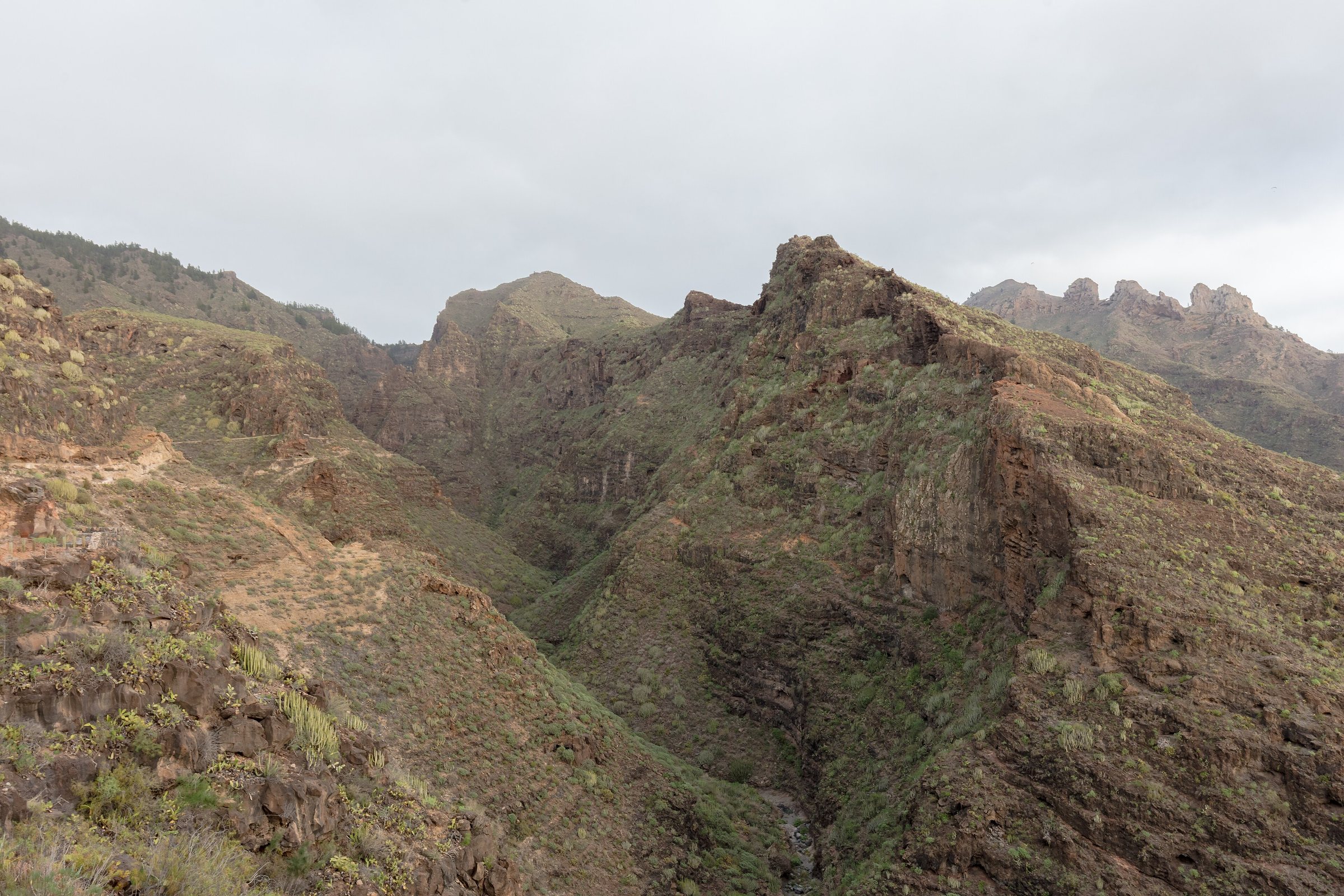
The Barranco del Infierno above the town of Adeje is a Reserva Natural Especial (a specially protected nature reserve), according to the official site barrancodelinfierno.es. In summer, from 1 June to 15 September, entry is from 08:00 to 10:30, and the site closes at 13:30.
In winter, from 16 September to 31 May, entry is from 08:30 to 11:30, with closing at 14:30. The site gives no year for these times.
In November, as of this guide, the winter period applies. Visitors should check the times on the site before booking.
A helmet is compulsory on the site, and minors need adult supervision. Sturdy footwear and extra water are recommended.
Entry is forbidden in wind or rain because of the risk of landslides. Current readings and warnings are on CITA weather (cita.news/de/wetter.html) and from AEMET (the state weather agency).
Swimming in the ravine or the waterfall is banned, as are camping, climbing, abseiling and canyoning. Anyone who goes in does so at their own risk.
The entry fee is not refunded, and visitors must keep the ticket during the visit. Booking is online through the site.
Prices and a visitor cap do not appear on the site we checked. They are not confirmed.
What sights and hidden gems are there away from the beaches?
The Casa Fuerte de Adeje, a fortified manor house, stands at Los Molinos 2, 38670 Adeje, according to webtenerife.co.uk. Building began in 1555 under Pedro de Ponte as protection against pirate raids.
On 7 February 1986 it was declared a Bien de Interés Cultural (a cultural asset of special interest). Until 1655 it was the administrative seat of the jurisdiction of the first Marquis of Adeje.
The operator's site, cafutenerife.com, gives the address as Calle de los Molinos 1A. It documents restoration work from 2018 to June 2021.
According to the operator's site, enquiries go to casafuerteadeje@gmail.com. No checked source could confirm current opening times or an entry price.
A travel portal describes La Caleta as a small former fishing village with dark sand, north of Playa del Duque. According to Wikipedia, the Duke of Abrantes built the Casa del Duque in the 1930s.
The same source dates the Hotel Bahía del Duque to 1993. There is no documented list of hidden gems with access, price and opening times.
Guides name La Caleta and El Duque beach as quieter places. For a spot that package tourists avoid, go early to the Barranco del Infierno or ask the operator of the Casa Fuerte first.
What do Siam Park and boat trips from Costa Adeje cost?
Siam Park costs non-residents from 44 euros for adults and from 32 euros for children aged 3 to 11 in 2026. That comes from the ticket seller taquilla.com, not the park itself.
Canary residents pay from 22 euros (adults) and from 16 euros (children) with ID. Children under 2 get in free.
According to taquilla.com, the park opens from 10:00 to 17:00 (1 November to 30 April) and from 10:00 to 18:00 (1 May to 31 October).
No source could confirm the single-ticket price of Loro Parque. Whale-watching boat trips from Costa Adeje cost roughly 31 to over 400 euros, according to an undated summary of reseller offers.
The trips last 2 to 5 hours, and some include food. Two catamarans from the same pier can differ in price by a factor of two.
Puerto Colón in Costa Adeje is a major departure point. The Canary government's Decreto 178/2000 regulates the watching of whales and dolphins.
It repealed Decreto 320/1995 and created the Barco Azul flag. Only licensed boats that follow the rules may fly it.
A boat without this flag should not approach animals, and feeding them or swimming with them is banned. No checked source could confirm a minimum distance.
Ecoticias, reporting on a meeting in November 2012, says the Turismo de Tenerife inspection plan named three violations. These are jet skis approaching at speed, operating without a permit or safety equipment, and feeding or swimming with the animals.
The broadcaster RTVC reported seven sanctions opened, but the date and details are unknown. Los Gigantes belongs to Santiago del Teide, where pilot whales are said to live all year, according to 52spain.com.
What is still unclear before you visit Costa Adeje?
Several details are not confirmed for planning. They include the prices and visitor cap at the Barranco del Infierno, the current opening times of the Casa Fuerte de Adeje and the Siam Park prices on the park's own site.
The exact beach names of Playa de las Américas are also open, as is the spelling of the surf spot El Guincho. We found no official visitor page from the Cabildo (island government) or the Adeje council listing common mistakes.
The confirmed rules point to three mistakes: booking a boat without the Barco Azul flag, feeding animals or swimming with them, and expecting a Blue Flag everywhere. More information is on webtenerife.com for the municipalities of Adeje and Arona.
The Adeje council has details on the Casa Fuerte and the ravine's tariffs, and the Arona council on the beaches of Playa de las Américas. We did not check the bus lines of the operator TITSA for this guide.