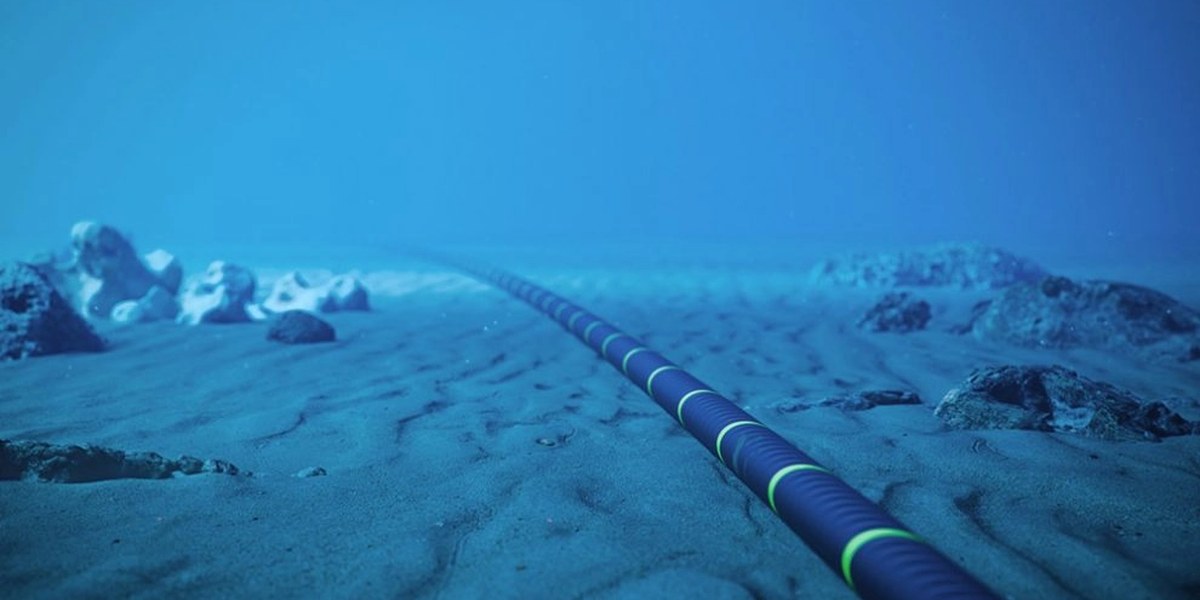
Let's start with the idea. The core is a ring structure linking Gran Canaria, Lanzarote and Fuerteventura by fibre.
From there an international branch continues to Tarfaya on Morocco's south coast. The operator is Canalink, a public company of the Cabildo de Tenerife.
The clever part is the shape. A ring means that if one section fails, traffic can flow the other way round — the connection holds.
Why it matters strategically
The Canaries sit in the middle of the Atlantic, on the natural path between Europe, Africa and America. Several international cable systems already run through the archipelago, such as ACE, WACS and 2Africa.
The new ring is meant to strengthen that role. It creates additional routes and reduces dependence on single lines — important for operators, cloud providers and data centres.
Behind this is a rapidly growing global appetite for data. Cloud services, video streaming and artificial intelligence are driving demand for bandwidth.
For the Canary economy this is more than technology. Better connectivity makes the islands more attractive for digital investment, data centres and low-latency financial or scientific services.
Frequently asked questions
- Who is behind the project?
- Canalink, a public company of the Cabildo de Tenerife. The project is EU co-financed.
- Which islands are connected?
- In the first stage Gran Canaria, Lanzarote and Fuerteventura, by a fibre ring, with a branch to Tarfaya (Morocco).
- What does it all cost?
- Around 49 million euros, with European co-financing.
- What does it bring the Canaries?
- More resilience, extra data routes and capacity for cloud, AI and data-intensive services — and a stronger role as an Atlantic digital hub.
- Why is the route contested?
- Because the branch ends near Western Sahara. The government separates the project from the disputed territory; critics fear a later extension by Morocco.
Read on
- Canary Islands health insurance: €60 convenio especialCanary Islands · 20 November
- Lozoyuela fire: Madrid forest work, no impact on CanariesCanary Islands · 20 November
- Canary Islands 20-22 Nov: Feria del Atún, Opera, FiestasCanary Islands · 20 November
- Canary Islands: 4% fewer beds in 45,555 holiday letsCanary Islands · 20 November
- Canary Islands: when you must exchange your driving licenceCanary Islands · 20 November
- All events on the Canary Islands →
As of 03/07/2026. Sources include Data Center Dynamics, Canalink, National Geographic, Infobae and OCTSI. Details on route, budget and timing per public statements; individual sources give differing timelines for entry into service. The account of Western Sahara reflects the legal situation and the parties' positions and is not a political statement. This article is general information. Illustration.