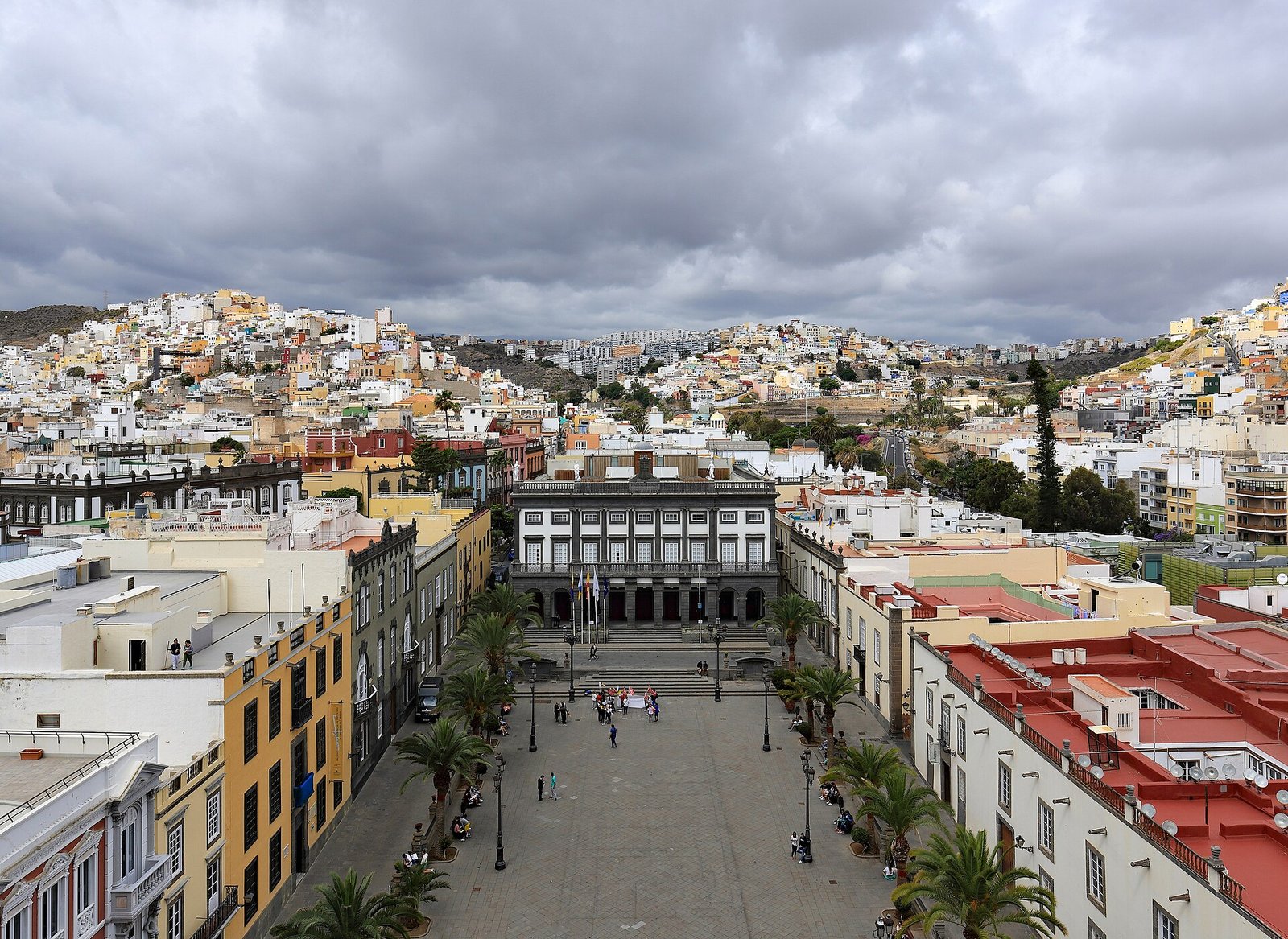
Imagine the ports of Tenerife and Gran Canaria in the 1500s: a chaotic, multilingual dance of ships, barrels of sugar, and merchants haggling in a dozen accents. It was a golden age of commerce, but beneath the surface, a quiet drama of faith and survival was unfolding. The Canary Islands, a vital pit stop between Europe, Africa, and the Americas, became an unlikely stage for a secret network of Protestant speculators who, according to historical research, managed to quietly dominate large swathes of the local economy while living under the constant threat of the Spanish Inquisition.
The idea of a perfectly organized "secret society" is perhaps a little too cinematic. What the archives reveal is something more human and complex: a very real, dense presence of foreign merchant communities —English, Flemish, German, and later Dutch and French— who settled in the islands, tied first to the sugar boom and then to the prestigious malvasía wine trade. They operated with extreme discretion, not out of a conspiratorial masterplan, but because their economic survival depended on it in a strictly Catholic territory.
Who Were These Shadow Merchants?
The cast of characters was diverse. Early on, Portuguese and Genoese traders were prominent, but as the century progressed, the network expanded to include a significant number of Flemish, English, and German merchants. These weren't just fleeting visitors; many became residents, establishing family-run trading houses that spanned generations. Historical records point to influential Flemish families like the Van Dale, who settled with considerable importance, and connections to powerful Antwerp dynasties such as that of Jacobo Groenemborch.
The English presence, by contrast, was more sporadic in the first half of the 1500s, not yet forming a large, stable community. Yet, their comings and goings, along with those of their continental counterparts, were enough to make the Canary Islands what some historians suggest was probably the first place in Spain where Protestantism arrived and took root. This was not a public reformation, but a private, whispered faith held by individuals far from home, navigating a world that demanded Catholic conformity.
How They Controlled Trade and Credit
Their economic power wasn't built on a single, formal monopoly. Instead, it was a sophisticated web of kinship, correspondence, and financial trust. The Canarian economy was an agro-export machine, first pumping out sugar to sweeten Europe's palate, and later pivoting to the celebrated malvasía wine, a favorite in markets from London to Genoa. This system required intermediaries who could organize purchases, finance risky sea voyages, and manage credit across vast distances.
This is precisely where the foreign merchants excelled. They operated through networks of family and trusted agents, using consignment deals and commercial credit to effectively control the flow of goods from the islands' ports to the major trading plazas of Europe. They were the essential link between local producers and international markets, a position that gave them immense, quiet influence. While specific contracts are scarce in the general literature, the pattern is clear: the economy couldn't function without their capital and connections, even if their religious leanings were suspect.
A Dangerous Game of Faith and Commerce
Living in the Canaries as a Protestant was a high-stakes balancing act. The Inquisition was a terrifying reality. Tribunal records show that 192 people were prosecuted as Protestants in the islands, and nearly 90% of them were foreigners. Openly practicing a different faith was impossible without risking persecution, imprisonment, or worse. The merchants "resisted as much as they could," sources note, because their livelihoods were inextricably linked to this trade. The result was a cat-and-mouse game where commerce with Protestant nations like England and the Netherlands continued, but was "concealed in various forms."
This constant pressure bred a culture of extreme prudence. Many merchants opted for temporary residence, kept their social circles tight, and worshipped privately, if at all. Their public expression of ideas was carefully guarded. Interestingly, the evidence suggests the Protestant presence wasn't purely foreign. Some islanders also show traces of contact with these ideas, appearing in Inquisition files for "propositions," though this remains more of an intriguing hint than a closed case.
A Lasting Legacy on the Islands
The discreet operation of this network was a masterclass in adaptation. The Crown, aware of the islands' economic needs, often tolerated the presence of useful foreign merchants, creating a tense but functional coexistence. They clustered in key commercial hubs like La Laguna, Garachico, and Las Palmas, where the pulse of Atlantic trade beat strongest. Yet, this discretion didn't erase the danger; the second half of the 16th century saw an intense crackdown on Protestantism, driving their practices further underground.
Their legacy, however, is etched into the islands' DNA. Economically, they cemented the Canaries' role as an Atlantic export platform, wiring its ports into a network stretching from Genoa to Flanders. Culturally, they left a visible mark on the urban and commercial fabric of the historic port enclaves where they lived, sometimes uneasily, alongside the local population. In a broader historical sense, their story explains why the Canary Islands were a unique, early point of contact between the Spanish Monarchy and the Protestant world — a contact always conditioned by repression on one hand and the irresistible pull of Atlantic commerce on the other.
Common questions
- Were the Protestant merchants a formal, organized secret society?
- No, historical sources describe a real but informal network of foreign merchants bound by family ties, trade interests, and the shared need for discretion, not a single secret organization.
- Which nationalities were most prominent in this network?
- Flemish, English, and German merchants were key, alongside earlier Portuguese and Genoese traders. The Flemish community, including families like the Van Dale, was particularly well-established.
- What products did they trade?
- Initially, sugar was the dominant export. As the century progressed, malvasía wine became the central commodity, connecting the Canaries to major European markets.
- How did the Inquisition affect them?
- The Inquisition posed a constant threat. Nearly 90% of the 192 people prosecuted for Protestantism in the Canaries were foreigners, forcing merchants to practice their faith in secret and operate with extreme caution.
- Where did these merchants mainly live and work?
- They concentrated in the major commercial ports and towns, including La Laguna, Garachico, and La Orotava on Tenerife, as well as Santa Cruz de La Palma and Las Palmas on Gran Canaria.
Read on
- Canaries: 211,400 homes empty as new rental scheme opensCanary Islands · 28 October
- Canary Islands doctors' strike extended to 10 NovemberCanary Islands · 28 October
- Canary Islands 16–18 October: fiestas, concerts, partiesCanary Islands · 16 October
- Canary Islands: strong calima to Wednesday, 30C in southCanary Islands · 26 October
- Canary Islands: Sunday power price falls just 1.82%Canary Islands · 25 October
- All events on the Canary Islands →
Stand: July 2026. This article is based on current historical research and sources. All details regarding Inquisition proceedings refer to historical events and individuals, with a presumption of innocence for any unproven accusations in the original records.