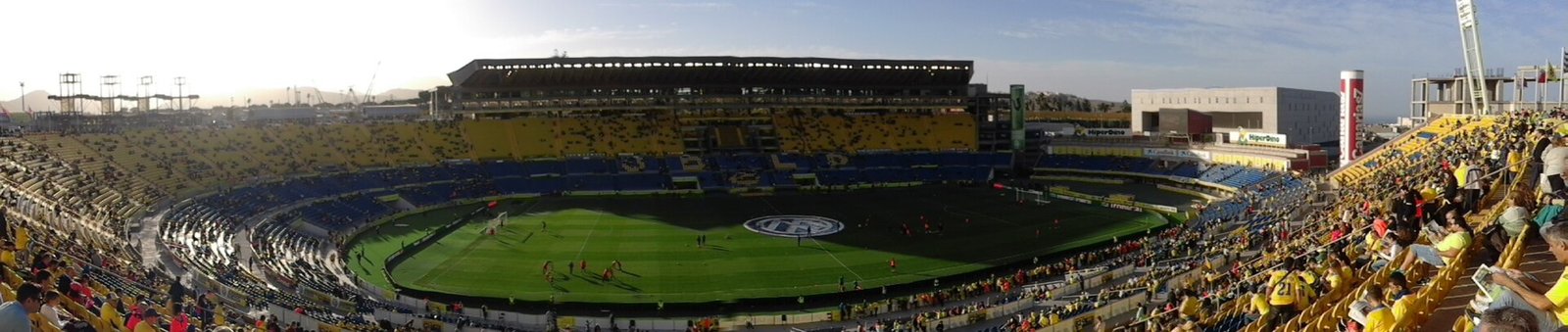
It was meant to be the definitive starting gun. On 3 June 2026, the Instituto Insular de Deportes of the Cabildo de Gran Canaria published the main construction tender for the reform and expansion of the Estadio de Gran Canaria, with a substantial budget of €174.7 million and a tight 36-month execution window. The project, known as "La Nube", is the island's single most important piece of infrastructure for the 2030 FIFA World Cup. Yet when the deadline arrived on 7 July, the virtual inbox was empty. Not a single construction company had submitted a bid, leaving the contest officially void.
For a project of this scale and visibility, the silence was deafening. But rather than panic, the Cabildo has moved swiftly to diagnose the problem and prescribe a remedy. The diagnosis, according to local construction industry voices and official statements, is clear: the price was no longer right. In a climate of escalating material and labour costs, the €174.7 million figure, while enormous, was judged insufficient to cover the project's complexity and risk. The prescription is a new tender, to be launched in the first half of August 2026, explicitly "with the price updated". Cabildo president Antonio Morales has framed the void tender as a procedural bump, insisting that "there is still time" to finish before the World Cup. The construction employers' association in Las Palmas shares this cautious optimism, confident that with adjusted conditions, the works can be delivered on schedule.
Why the First Tender Failed
The lack of bids was not a sign of disinterest, but a sharp market correction. The project's cost estimates have been a moving target. An initial framework approved by the Cabildo in 2024 set the budget at around €101 million, with a multi-year spending plan stretching to 2027. By the time the tender was published in June 2026, that figure had ballooned to €174.7 million, reflecting a more realistic assessment of the full build. Yet even this updated sum appears to have fallen short of what contractors need to take on a job of this magnitude.
Local analysis points to a trio of interconnected reasons for the tender's failure. First, the budget tension is real; separate reporting indicates total cost estimates have shot up to around €160 million or more, with UD Las Palmas itself committing €60 million to the project. The gap between the tender price and market reality made the risk-reward balance unattractive. Second, the project risk profile is exceptionally high. Contractors must execute a complex, phased reform over 36 months without disrupting UD Las Palmas' home fixtures, all while racing to meet a non-negotiable July 2029 deadline set by FIFA. Third, administrative constraints within the tender process may have limited flexibility. The Cabildo is now considering all options to recover lost time, including the possibility of a negotiated procedure without publicity if the re-tender faces further hurdles.
The "La Nube" Vision: A Football Fortress
When the dust settles and the cranes finally move in, the Estadio de Gran Canaria will be almost unrecognisable. The winning architectural concept, "La Nube" by L35 Arquitectos—the firm behind the new Santiago Bernabéu—promises a complete metamorphosis from a multi-purpose athletics bowl into a dedicated, intimidating football cauldron. The current capacity of roughly 32,400 seats will swell to around 44,480, comfortably clearing FIFA's 40,000 minimum for World Cup venues and positioning the stadium to host matches up to the quarter-final stage.
The most dramatic change will be the new roof. For the first time, every single seat in the house will be covered, a welcome upgrade for fans used to the island's sun and occasional rain. The stands themselves will be completely reshaped. The Gradas Naciente and Curva will be brought significantly closer to the pitch, eliminating the current running track and creating the tight, atmospheric bowl that modern football demands. Beyond the stands, the project envisions a stadium that lives and breathes seven days a week. Interior spaces will be reconfigured to house shopping, leisure, and restaurant areas, alongside a new UD Las Palmas museum and a sports hub. A new external ring will improve circulation, and surrounding public spaces will get a significant upgrade. Early enabling works, including the demolition of the obsolete east tower, are already on the horizon, budgeted at around €804,000 and designed to proceed without affecting the club's match schedule.
Race Against the World Cup Clock
Time is the one luxury the project does not have. FIFA's rulebook is clear: World Cup venues must be ready at least one year before the tournament kicks off. With the 2030 World Cup scheduled for the summer, the drop-dead completion date for the Estadio de Gran Canaria is July 2029. Working backwards, a 36-month construction phase means the main works must begin by mid-2026 at the absolute latest. The void tender has therefore eaten directly into an already tight schedule.
The Cabildo estimates the delay at about one month, assuming the August re-tender is successful and a contractor is appointed swiftly. This would push the start of main construction into the autumn of 2026, still theoretically leaving enough runway to hit the 2029 deadline. However, any further slippage would force difficult conversations. Acceleration measures, increased shift work, or alternative procurement routes could all come into play. The official line remains resolute: the stadium will be delivered on time and within FIFA's deadlines. But behind the scenes, the pressure is palpable. The island's World Cup dream is not just a matter of civic pride; it is a multi-million-euro bet on Gran Canaria's global future.
What the World Cup Means for the Island
Gran Canaria is no longer just a candidate. FIFA has confirmed the Estadio de Gran Canaria as an official venue for the 2030 World Cup, part of the joint Spain–Portugal–Morocco bid. The Royal Spanish Football Federation included the stadium among its 11 proposed Spanish venues, and the island has been pencilled in to host matches up to the quarter-finals. This is a monumental achievement for a territory often seen as peripheral, and it brings with it a wave of economic and social opportunity.
For UD Las Palmas, the reform secures a world-class home and a long-term revenue stream. The club is not just a tenant but a co-investor, contributing around €60 million and set to co-manage the stadium post-reform. For the local construction sector, the project is a lifeline of activity, expected to sustain hundreds of direct jobs and many more indirect ones over several years. And for the island's tourism and hospitality engine, the World Cup is a global shop window. Gran Canaria's bid documentation proudly notes that it offers one of the highest concentrations of four- and five-star hotel rooms among all candidate cities, outperforming even Barcelona and Madrid. The Cabildo is backing this up with investments in training venues in Maspalomas, El Hornillo, and Piletas, spreading the tournament's benefits beyond the capital. An economic impact study is underway to quantify the full effect, but the strategic value—positioning Gran Canaria as a premier sports and events destination for decades to come—is already beyond doubt.
Common questions
- Why did no company bid for the first tender?
- The €174.7 million budget was considered too low given rising construction costs, the project's high complexity, and the tight 36-month deadline, making the risk-reward balance unattractive for contractors.
- Will the stadium still be ready for the 2030 World Cup?
- The official target is completion by July 2029, one year before the tournament. The Cabildo estimates a one-month delay from the void tender and is confident the new August tender will keep the project on track.
- What will the reformed stadium look like?
- It will be a fully covered, football-only stadium with about 44,480 seats, stands brought closer to the pitch, and new commercial, museum, and leisure spaces integrated into the structure.
- How much will the entire project cost?
- The total cost is a moving target. The failed tender was for €174.7 million, but other estimates place the final figure around €160 million, with UD Las Palmas contributing €60 million. The re-tender will feature an updated price.
- Is Gran Canaria definitely a World Cup host city?
- Yes. FIFA has confirmed the Estadio de Gran Canaria as an official venue for the 2030 World Cup, with the capacity to host matches up to the quarter-finals, subject to the stadium's successful completion.
Read on
- Gran Canaria this weekend, 23–25 October: WOMEX, La Oreja de Van GoghGran Canaria · 20 October
- Puerto de Mogán: 4 verified restaurants, from fish to IrishGran Canaria · 20 October
- Gran Canaria, the Wingfoil Capital: World Cup Returns for July 2026Gran Canaria · 15 July
- Sarah-Quita Offringa Wins 18th Freestyle World Title at Fuerteventura 2026Fuerteventura · 21 July
- Gran Canaria: Halloween parties on 31 October at a glanceGran Canaria · 20 October
- All events on Gran Canaria →
Stand 22 July 2026. This article is based on official statements and local media reports. Budget figures and timelines are subject to change as the re-tender process unfolds.