Part 5 of this series covered which insurance you need. Part 10 is about the practice: how to use the system when you need it.
Getting Your Tarjeta Sanitaria Canaria
The Tarjeta Sanitaria Canaria (TSC) is your key to the public healthcare system. It is personal, non-transferable and contains your insurance number, your assigned Centro de Salud and your médico de cabecera (GP).
How to apply:
- Go to your assigned Centro de Salud (based on your Empadronamiento address)
- Bring: NIE number, Empadronamiento certificate, proof of Seguridad Social registration (or Convenio Especial)
- Staff will register you in the system and assign you a GP
- The card will be posted to you or you collect it — processing time: a few days to weeks
EU citizens with a European Health Insurance Card (EHIC) initially receive a Documento Sanitario de Inclusión Temporal — temporary inclusion in the system. For permanent access, you need the regular TSC.
Important: You don't need to wait for the physical card. Once you're registered in the system, you can book appointments and see a doctor.
Booking a Doctor's Appointment
On Gran Canaria, there are three ways to get an appointment:
Online: Via the "miCita SCS" app or website from the Servicio Canario de la Salud. Log in with your Tarjeta Sanitaria number and choose a date and time. The app is in Spanish.
By phone: Call 928 219 030 (Gran Canaria province). Have your Tarjeta Sanitaria number ready. Best times: 8:00–9:00am. Alternative: 012 (general Canarias info service).
In person: Go directly to reception (mostrador de admisión) at your Centro de Salud. Staff will give you an appointment or refer you.
Waiting times: For your GP (médico de familia), typically 1–5 working days. For specialists (especialistas): weeks to months, depending on the field. For urgent but non-emergency cases, you can request an "urgente" appointment.
Your Centro de Salud
The Centro de Salud is your first port of call for everything except emergencies. This is where your GP (médico de familia), paediatrician (pediatra), nursing staff (enfermería) and basic services like blood tests, vaccinations and wound care are located.
Which Centro de Salud you're assigned to depends on your Empadronamiento address. In southern Gran Canaria, the main health centres are in Maspalomas/San Fernando, Playa del Inglés (Arguineguín), Vecindario and Mogán.
Language: Doctors speak Spanish. Some speak English, but don't rely on it. In tourist areas, the chances are higher. For important appointments: bring someone who can translate, or use a translation app.
A&E (Urgencias)
A&E works on a triage basis in the Canaries: life-threatening cases are treated immediately, less urgent cases wait. Waiting times can be long — several hours during peak periods.
Emergency numbers:
- 112 — General emergency (police, fire, ambulance)
- 061 — Health emergency (SUC, Servicio de Urgencias Canario)
Hospitals on Gran Canaria with A&E:
- Hospital Universitario Insular (Las Palmas) — largest hospital on the island, maximum care
- Hospital Universitario de Gran Canaria Dr. Negrín (Las Palmas) — second major public hospital
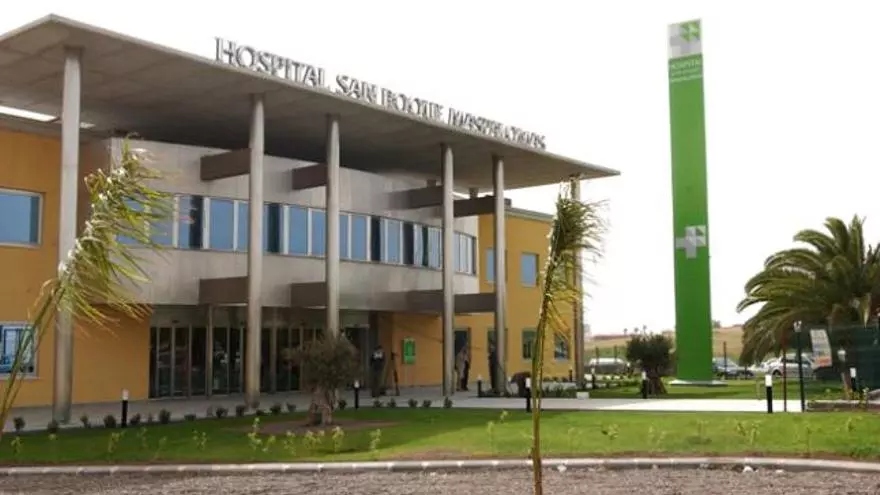
Private: Hospital San Roque (Maspalomas and Las Palmas), Hospitén Roca (San Agustín), Clínica Santa Catalina. Private A&E departments typically have shorter waiting times, but you need private insurance or pay directly.
Important: You will ALWAYS be treated in A&E, regardless of insurance status, nationality or residence status. The bill comes later — but treatment comes first.
Prescriptions and Pharmacies
Prescriptions (recetas) are issued digitally by your GP and can be collected at any pharmacy (farmacia) using your Tarjeta Sanitaria. You pay a co-payment (copago) that depends on your income — typically 10–60% of the medication price.
Pharmacies are marked with a green cross. They are generally open Monday to Friday from 9:30am to 1:30pm and 5:00pm to 8:30pm, Saturday mornings. At night and on public holidays, duty pharmacies (farmacias de guardia) are open — which one is on duty is displayed in the window of every pharmacy or at farmaciasdeguardia.info.
Over-the-counter medicines: Many medications that require a prescription in the UK or Germany are available over the counter in Spain — including certain antibiotics, painkillers and skin creams. Just ask the pharmacist.
Private Doctors and Clinics
Southern Gran Canaria has numerous private doctors and clinics catering to expats and tourists. Many speak English and German. Costs vary: a GP consultation runs €50–80, a specialist €80–150.
The main private health insurers in the Canaries are Sanitas, Adeslas, DKV and Asisa. Plans start at around €50 per month (young, healthy) and increase with age and pre-existing conditions.
Practical Tips
Medical documents: Bring your vaccination record, allergy list and current medication in copy. Have them translated into Spanish — or at least English.
Dentists: Dental care in the public system is minimal (emergencies, extractions). For everything else, you need a private dentist or dental insurance.
Mental health: Access to psychological treatment in the public system is possible but waiting times are long. Private psychologists charge €50–80 per session.
Pregnancy: Prenatal care and delivery are fully covered in the public system. The Hospital Materno-Infantil in Las Palmas is the reference hospital.