Tazacorte: marine observatory opens on La Palma
On Thursday 3 September 2026 the Observatorio de Biodiversidad Marina y Economía Azul «Rogelio Herrera» — Becomar for short — started work in the port of Tazacorte on La Palma. It occupies the town's former infant school building («antiguo colegio infantil») and is coordinated by the Plataforma Oceánica de Canarias, PLOCAN.
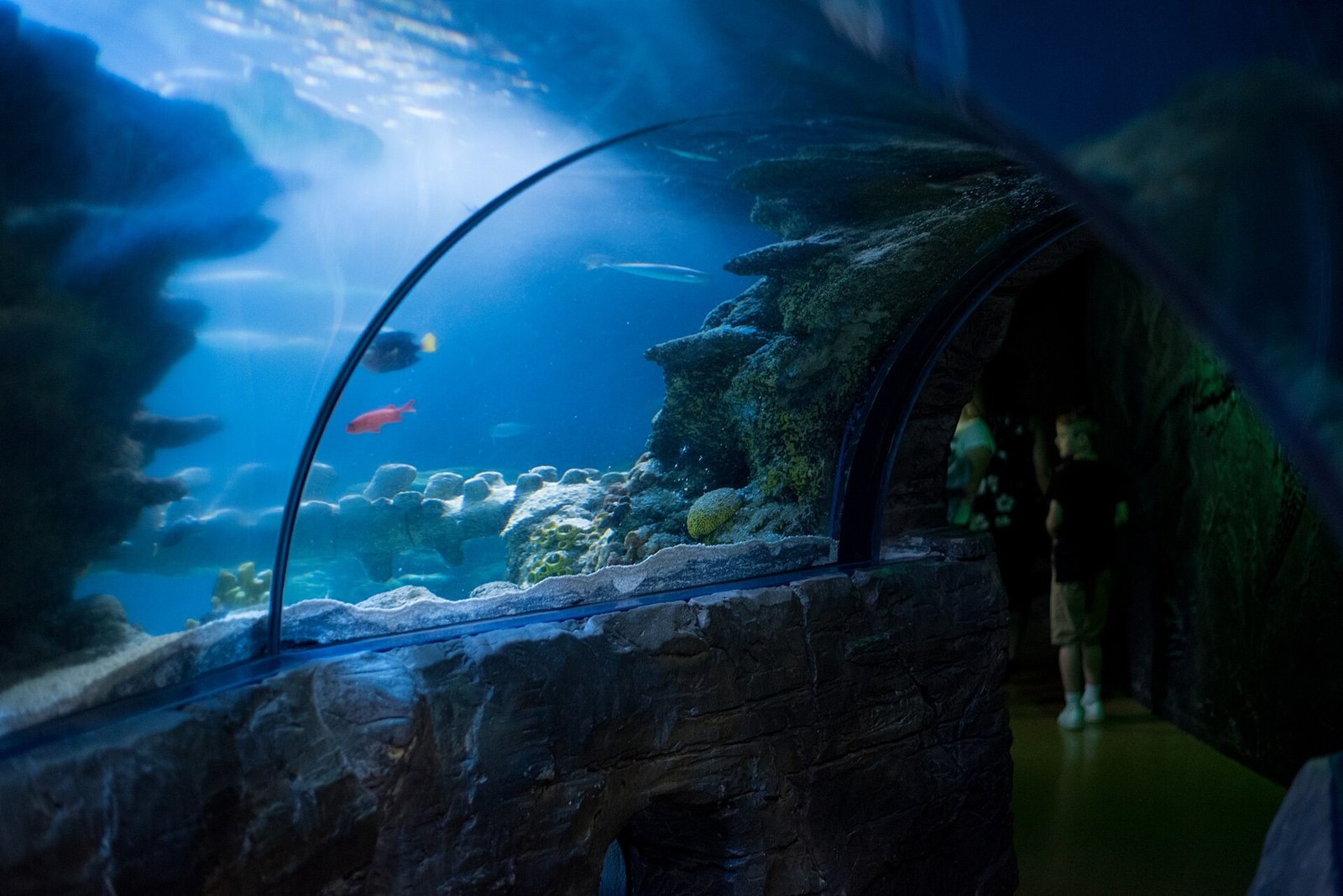
Photo: ʘx, CC BY-SA 4.0 (Symbolbild).
It is a small facility with a narrow brief: to keep measuring what happens in the water off La Palma's west coast, and to connect that knowledge to training, businesses and jobs. The timing is not accidental. Five years after the Tajogaite eruption, some of the youngest seabed in Europe lies just offshore from Tazacorte.
What opened on 3 September
According to the Canary Islands government, Becomar is a scientific and technical facility — not a university department and not a museum. Its core is a permanent base on La Palma from which the coast can be observed, sampled and analysed. Until now, survey campaigns had to be mounted from Gran Canaria or Tenerife.
The government's statement lists Mariano Hernández Zapata and Migdalia Machín Tavío of the Canary Islands government among those present at the opening, together with Tazacorte's mayor David Ruiz Álvarez and PLOCAN director Joaquín Hernández Brito. Also named are Mónica Gómez Curiel, environment councillor of the Cabildo de La Palma, Fuencaliente mayor Gregorio Clemente Alonso, and representatives of the coastal authority, the Biosphere Reserve, the Instituto Español de Oceanografía, the Universidad de La Laguna and the port of Tazacorte.
Why Tazacorte
The location follows from the geography. When the Tajogaite erupted in the Cumbre Vieja ridge in autumn 2021, lava reached the sea at two points and built two new coastal platforms, known in the Canaries as fajanas. Sources agree that roughly 49 to 50 hectares of new land were created — and beneath the waterline, entirely new basalt ground.
Surfaces like this are rare anywhere in the world, and rarer still directly outside a port that already has a road, a power supply and a fishing fleet. From Tazacorte the lava deltas are a short boat ride away. That is what turns this stretch of coast into what the newspaper El Día calls a «natural laboratory»: a place where the colonisation of brand-new rock can be followed from hour zero.
The name on the door: Rogelio Herrera
The observatory carries the name of Rogelio Herrera Pérez. According to the available sources he held a doctorate in marine sciences and worked as an oceanographer in the biodiversity service of the Canary Islands government, including on protected marine areas; local media give 2024 as the year of his death. The centre was named in his memory.
Canary Islands publications also describe him as a driving force behind marine biodiversity monitoring programmes, among them RedPROMAR, the regional government's portal for species records and sightings. A new government patrol boat likewise bears his name; the responsible department honoured him there as the «technician and researcher who devoted his career to the study, communication and protection of the Canary marine environment». No further biographical detail can be confirmed from the sources at hand.
Who pays, and who does the science
Published figures put the joint investment behind the launch at more than 1.7 million euros. Most of it comes through the Delta project, coordinated by PLOCAN: more than 1.48 million euros for scientific equipment, observation campaigns, operating assets and infrastructure. Delta is funded by the Canary Islands department of ecological transition and energy together with Spain's state secretariat for the environment.
Refurbishing the building and fitting out the adjoining spaces was covered, according to the same account, by the regional department for universities, science, innovation and culture through its agency ACIISI, with more than 250,000 euros. The research fields named are marine biodiversity, climate change, submarine volcanism, biotechnology and ocean renewable energy. No staffing numbers or campaign calendar were published at the opening.
The blue economy, in practical terms
«Economía azul» sounds abstract but covers concrete sectors: fisheries and their value chain, aquaculture, port and vessel services, marine biotechnology, ocean energy, and the technical layer underneath all of it — sensors, maintenance, data analysis. The ambition behind Becomar is that measurements eventually turn into contracts, qualifications and posts, not only papers.
For La Palma that would be a piece of diversification. The island leans heavily on farming and tourism, and since 2021 it has seen how fast both can come under strain. A permanent research presence keeps skilled work on the island rather than exporting it. That said, nobody has yet put a credible employment figure on it, and an observatory is not an economic strategy. Realistically the effect starts small and works over years: placements, cooperation with local firms, usable data for fisheries and coastal management.
On visits, guided tours or training courses at Becomar: nothing had been published at the time of the opening. PLOCAN and Tazacorte town hall are the places to ask.
Detailed figures on staff, equipment or research programmes are not yet available. The research lines announced are statements of intent, not projects already running.
Becomar Tazacorte in figures
- Opened 3 September 2026 in the port of Tazacorte, La Palma (Canary Islands government; El Día).
- Full name: Observatorio de Biodiversidad Marina y Economía Azul «Rogelio Herrera», known as Becomar.
- Site: the port town's former infant school building; coordination by PLOCAN.
- Joint investment: more than 1.7 million euros, of which more than 1.48 million through the Delta project (eldiario.es).
- Building refurbishment and adjoining spaces: more than 250,000 euros via ACIISI (eldiario.es).
- The 2021 Tajogaite eruption created roughly 49 to 50 hectares of new land in two lava deltas where the flows met the sea.
FAQ
- What exactly is Becomar?
- The Observatorio de Biodiversidad Marina y Economía Azul «Rogelio Herrera» in the port of Tazacorte on La Palma. It is a scientific and technical facility coordinated by the Plataforma Oceánica de Canarias (PLOCAN), set up to monitor the coast on a permanent basis.
- Who was Rogelio Herrera?
- According to available sources, a marine scientist with a doctorate who worked as an oceanographer in the biodiversity service of the Canary Islands government, on protected marine areas and on monitoring programmes such as RedPROMAR; local media give 2024 as the year of his death. The centre carries his name in his memory.
- What will be researched there?
- The stated fields are marine biodiversity, the development of the coastal ecosystems formed after the Tajogaite eruption, climate change, submarine volcanism, marine biotechnology and ocean renewable energy. No detailed programme was published at the opening.
- What did it cost?
- Published figures give a joint investment of more than 1.7 million euros: more than 1.48 million through PLOCAN's Delta project and more than 250,000 euros from ACIISI for refurbishing the building.
- Can the observatory be visited?
- No information on that was available at the opening. It is a research facility rather than a visitor centre. PLOCAN and Tazacorte town hall are the points of contact.
Read on
- La Palma: the complete 2026 travel guideLa Palma · 17 October
- La Palma: Full Moon Trail Tijarafe on 24 OctoberLa Palma · 15 October
- La Palma: Rubén Simeó plays Los Llanos on 17 OctoberLa Palma · 15 October
- La Palma: Jet2 cancels flights from 30 October 2026La Palma · 14 October
- La Palma diesel at €1.90: 57 cents more since FebruaryLa Palma · 12 October
- All events on La Palma →