What should you see first in Lanzarote?
The Parque Nacional de Timanfaya is, according to the Gobierno de Canarias, the most geologically distinctive national park in the Spanish national parks system. Its landscape was shaped by volcanic eruptions in the 18th and 19th centuries, mainly between 1730 and 1736 and in 1824.
You reach it by car on the LZ-67 between Tinajo and Yaiza. No public bus route goes directly into the national park; buses serve Tinajo and Yaiza, and from there you can continue by taxi.
On arrival, cars must be left in the Islote de Hilario car park. The Route of the Volcanoes can only be accessed on the park's own bus. According to the Gobierno de Canarias, entry to the Montañas del Fuego includes the car park, geothermal demonstrations and the bus trip along the volcano route.
What rules apply in Timanfaya National Park?
Drones, kites, paragliders, parachutes and balloons are banned in the national park, according to the Gobierno de Canarias. Volcanic material must not be collected or damaged.
Visitors may only use designated roads and paths and may only park in marked areas. Pets are not allowed in the park; open fires are prohibited.
The park authority recommends sturdy footwear, windproof clothing, plenty of water, a hat, sunglasses and high sun protection. There are no designated picnic areas in the national park.
Professional photo, film, television and video recordings require prior permission. Rubbish must be taken away.
How do the guided walks in Timanfaya work?
The guided Ruta de Tremesana is 3.5 kilometres long, takes around three hours and has a low difficulty level, according to the Gobierno de Canarias. The guided coastal route is 2 kilometres long and takes about 2.5 hours.
The free long coastal route covers 9.75 kilometres and is listed as taking five to six hours with a high difficulty level. The free guided routes must be reserved at least one month in advance.
The Route of the Volcanoes is not a trail that can be walked individually. Access from the Islote de Hilario is only possible on the internal bus.
What does the Mancha Blanca visitor centre offer?
The Centro de Visitantes e Interpretación de Mancha Blanca explains the geology, ecology and history of Timanfaya, according to the Gobierno de Canarias. It is described as free of charge.
As part of the national park's 50th anniversary, an audiovisual exhibition on the park's history was announced for 2026. According to the official announcement, the exhibition is open daily from 9:00 to 16:00.
Free registration was required for special events because of limited capacity. If you want to see Timanfaya beyond the visitor bus, you can use the exhibition and audiovisual introduction at the visitor centre.
What makes the Mirador del Río special?
The Mirador del Río is a viewpoint designed by César Manrique on the Risco de Famara slope in the north of Lanzarote. According to Turismo Lanzarote, it sits at 474 metres above sea level.
From there you can look out over the Chinijo Archipelago Natural Park and the Risco de Famara. Opening hours are 10:00 to 17:00, with last entry at 16:40.
The available official tourism page does not list an entry price in the data provided. The guide should therefore not state a price without a direct tariff source.
What alternatives are there outside Timanfaya?
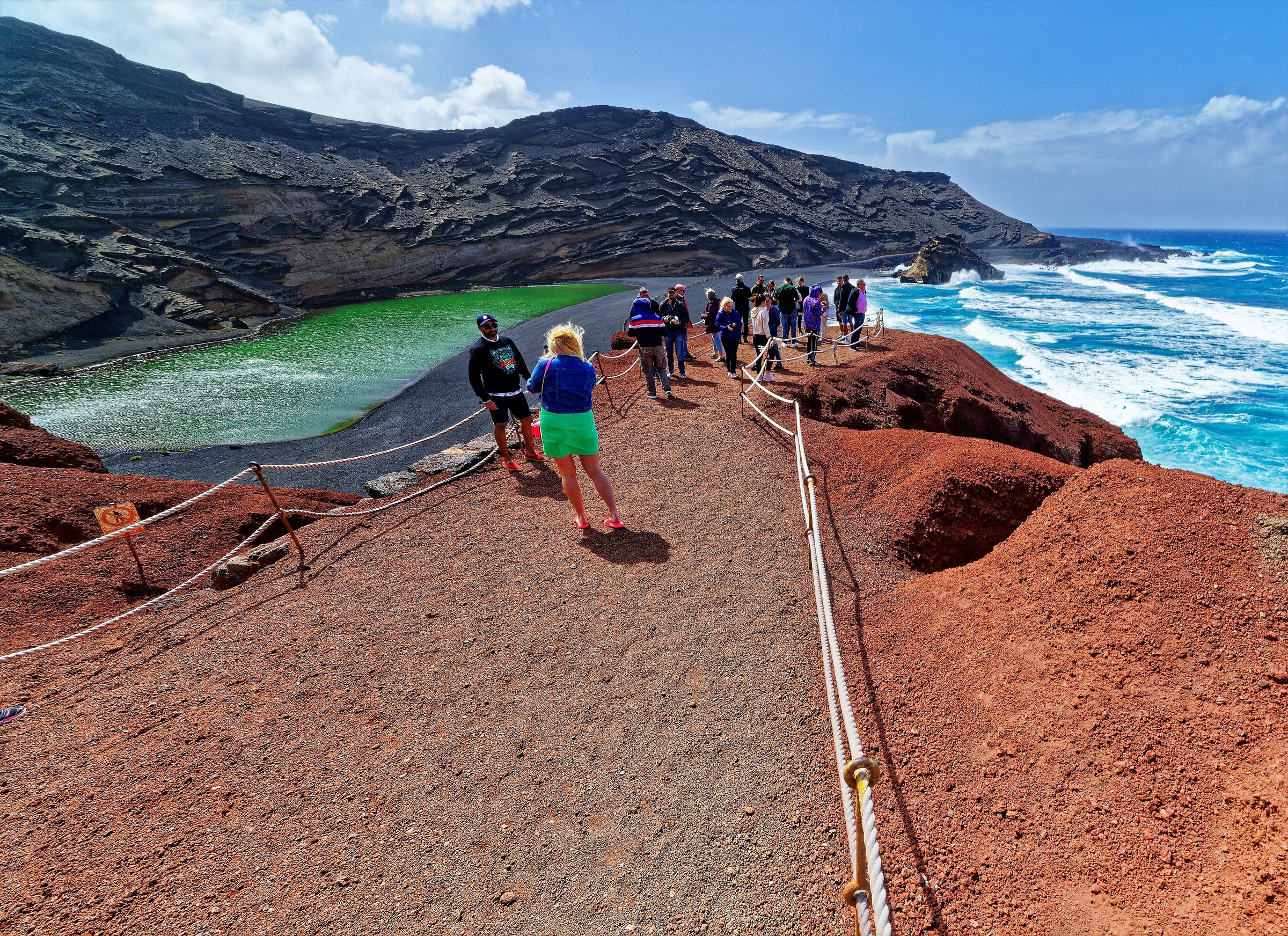
According to Turismo Lanzarote, less tightly managed alternatives include the circular trail at Volcán del Cuervo, the La Geria wine landscape, the Janubio salt flats, the old town of Arrecife and the cave landscape around the La Corona volcano.
Other central places to visit include César Manrique's former home, the César Manrique Foundation and facilities he designed or redesigned, such as Jameos del Agua and the MIAC in the Castillo de San José.
In hot weather or when guided tours are fully booked, visitor centres, short marked trails and cultural venues are usually more sensible than spontaneous cross-country walks.