How do I get from Lanzarote Airport to Arrecife and Playa Honda?
According to Aena, line 22 connects Aeropuerto César Manrique-Lanzarote with Arrecife in roughly 10 minutes. It runs about every 40 to 50 minutes from Monday to Friday, from early morning until late evening.
For Arrecife and Playa Honda there is line 23 at the weekend.
The bus stops are on the ground floor near the arrivals areas of T1 and T2. Exact departure times vary by day and direction and should be checked in the current Aena or operator timetable before travelling.
Which bus routes go to Puerto del Carmen, Yaiza and Playa Blanca?
According to Aena, line 161 connects the airport with Puerto del Carmen, Puerto Calero, Uga, Yaiza and Playa Blanca.
For late arrivals, Aena gives a departure of line 61 at 22:30 from T1 to Playa Blanca. Anyone arriving after that time should arrange their transfer in advance.
Bus services are limited depending on the day of the week and destination. It is worth checking the operator's current timetable before setting off, as times can change.
How much does a taxi from Lanzarote Airport cost?
Aena publishes two fares for the airport, dated 2026. Fare 1 applies on working days from 06:00 to 22:00.
Fare 2 applies on working days from 22:00 to 06:00, as well as on Sundays and public holidays.
Aena advises taking taxis only from the official taxi rank and avoiding drivers who offer journeys away from the rank. A receipt should be requested in case of any complaint.
Where can I find help at the airport and in Arrecife?
According to Turismo Lanzarote, the official tourist information office is in T1 in the arrivals terminal.
In Arrecife there is another tourist information office at the Intercambiador de Guaguas, the central bus station. It opens Monday to Friday from 09:00 to 17:00 and on Saturdays from 10:00 to 13:00; it remains closed on Sundays and public holidays.
For hire cars, T1 and T2 have offices including AutoReisen, Cabrera Medina, CICAR, Europcar, Goldcar, Hertz, Payless, Sixt and TopCar. Exact opening hours should be checked with the provider in advance.
Which first steps make sense for expats in the first 48 hours?
In hours 0 to 3 after landing, luggage and the accommodation address should be secured. For late arrivals, a transfer arranged in advance is sensible, because bus services are limited depending on the day of the week and destination.
On the first day, the focus is on getting oriented in daily life: locating accommodation, supermarket, pharmacy and the nearest health centre. Tenancy agreement, identity document, proof of insurance and, where applicable, residence documents should be organised and ready.
On the second day, anyone staying longer is advised to contact the relevant municipality about the empadronamiento, the registration in the municipal population register. Requirements can vary by residence status and municipality; a generic list of documents should not be used without checking the current municipal website.
Anyone taking over a hire car should document the vehicle, damage, fuel policy and insurance cover. Non-urgent visits to public offices should only be planned after checking opening hours.
What should new arrivals know about weather, protected areas and mobility?
For a reliable picture of the climate, only the monthly AEMET climate normals should be used. Individual daily measurements are not representative for long-term travel or relocation planning.
Regardless of the season, sun protection, enough drinking water and caution on unguarded stretches of coast are essential. In the event of weather warnings, the advice of AEMET, the Gobierno de Canarias and the local authorities is decisive.
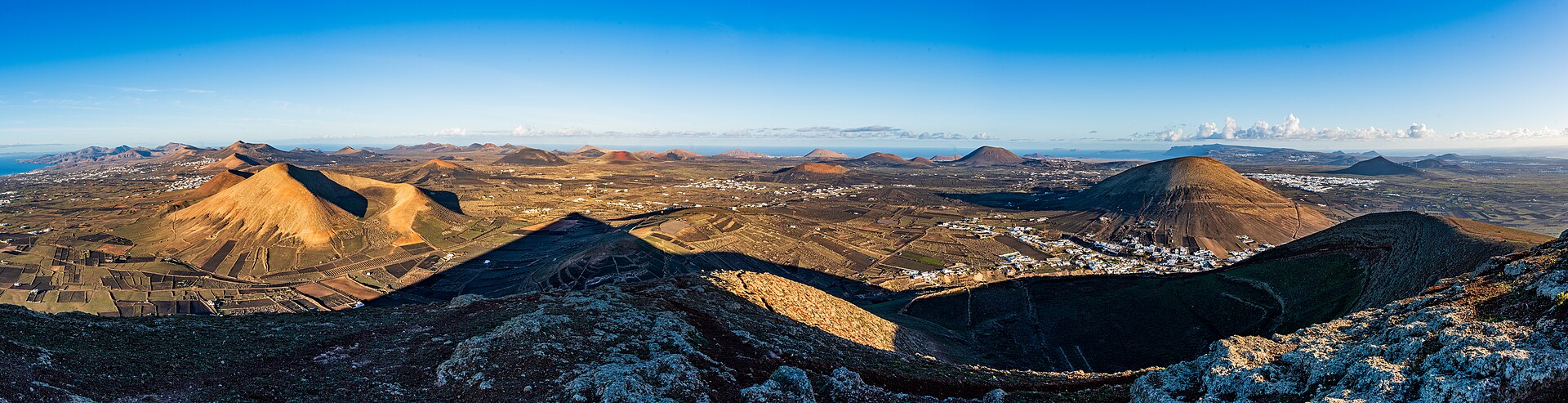
Lanzarote is a UNESCO biosphere reserve. In Timanfaya, only marked roads, paths and official visitor facilities are permitted; guided walks such as the Tremesana route must be booked in advance.
The guaguas, the scheduled buses, connect Arrecife with municipalities and holiday resorts. Playa Blanca has connections to Arrecife, the airport, Puerto del Carmen and Yaiza. For Arrecife and the main resorts, bus, bicycle, taxi or car sharing may be enough; for remote villages a car remains practical.