How do I arrive on La Palma?
Aeropuerto de La Palma (SPC) airport lies east of Santa Cruz de La Palma. It offers connections to the neighbouring islands, including Tenerife North and South and Gran Canaria, as well as national and international connections; further routes are added seasonally.
Alternatively, you can reach La Palma by ferry. The main connection for travellers runs from Los Cristianos on Tenerife; according to the official tourism website, there are daily connections.
Timetables, vehicle transport and prices depend on the season and the connection. They must be checked with the relevant operator before departure. Actual flight, ferry and bus times should be checked on the relevant operators' websites immediately before travelling.
What entry requirements apply for expats?
EU/EEA and Swiss nationals only need a valid passport or national identity card to enter. For a permanent move, residence status, registration, health insurance and tax obligations should be clarified in advance.
Third-country nationals must present a passport, visa, return or onward ticket, proof of accommodation and proof of sufficient financial means, depending on their nationality.
The Canarian immigration portal brings together information on residence and integration procedures, among other things. The specific responsibilities, required documents and opening hours differ according to nationality and reason for residence. Appointments and forms should only be confirmed through the responsible authorities.
How do I get from the airport to my accommodation?
Several options are available for onward travel from La Palma airport. A hire car is the most flexible option, especially for places outside the capital and for remote accommodation. It should be reserved early, particularly during holiday periods.
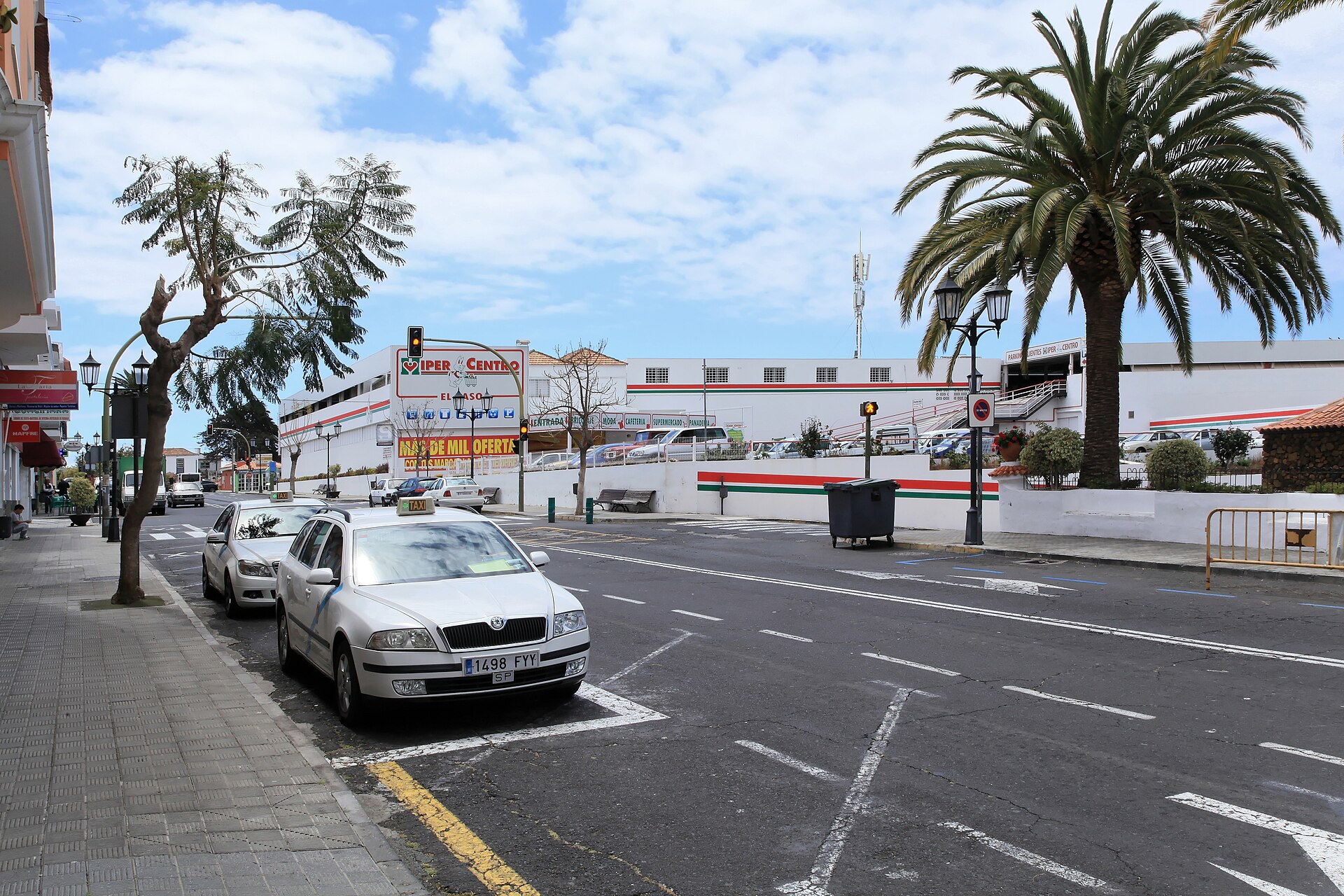
The guaguas (scheduled buses) network connects all municipalities and is suitable for journeys between larger towns and villages. Taxis are available in town centres; at the airport, the official taxi rank should be used.
For remote holiday homes or accommodation, arrival should be confirmed with the host in advance. Santa Cruz de La Palma is the main urban starting point and lies close to the airport. For daily mobility outside the capital, a hire car is often more practical than relying solely on public transport.
Which official steps are due in the first 48 hours?
For a permanent stay, the responsible municipal and state bodies are typically relevant as next steps. The Ayuntamiento (municipal administration) is responsible for registering at your place of residence and for municipal matters. The Policía Nacional or immigration office processes residence documents and foreigner identification, where required.
Access to public healthcare depends on residence and insurance status. Banks and mobile phone providers are relevant for an account, a Spanish phone number and payments. The Cabildo de La Palma (island government) offers island-wide information and services.
On the first day, newcomers should save the exact location of their accommodation, the nearest bus stop and the nearest supermarket. For longer-term accommodation, the condition, meter readings and existing damage should be photographed. For hire cars, vehicle handover, insurance and return conditions should be documented.
What should I bear in mind when hiking and in nature?
La Palma has signposted hiking trails, some of which can be combined with public transport. For your first outings, only officially open trails are suitable. In the event of volcano, forest fire or severe weather risk, official closures and access restrictions apply; these must be checked before every hike.
In addition, various protection categories exist, including the Caldera de Taburiente National Park, natural parks, protected landscapes, coastal protection areas and a marine reserve. Drones, fire, camping, shortcuts away from marked trails and entering closed volcano or coastal areas may be prohibited or dangerous.
General safety rules: do not enter unmarked trails or closed volcano areas. Avoid exposed high-altitude paths in fog, strong wind or rain. Stay on official trails and plan your return time realistically. Carry enough water, a charged mobile phone and suitable clothing. In an emergency, dial the European emergency number.
What climate can I expect on La Palma?
The official island information describes La Palma as a year-round mild destination. Winters are mild on the coast and cool at higher altitudes; spring and autumn are considered particularly suitable for hiking.
The official tourism website gives an average annual temperature. This general figure does not replace monthly normal values. For reliable monthly data on temperature, days with precipitation, sunshine duration and sea temperature, the relevant AEMET climate normal values should be used; these values are not included in the available sources.
Current values and warnings: CITA weather (cita.news/de/wetter.html) and AEMET (state meteorological service).