When is the best time to visit Lanzarote?
The AEMET climate normals for the Lanzarote/Aeropuerto station refer to the period 1981–2010. The annual mean temperature is 21.1 °C, the mean maximum temperature is 24.8 °C and the mean minimum temperature is 17.4 °C.
According to AEMET, the driest months are June to September. In June, July and August an average of 0 mm of precipitation falls, with 292 to 308 hours of sunshine per month. The highest number of rainy days and the largest amounts occur in December with 29 mm and in January with 16 mm.
May to October are particularly suitable for beach and walking holidays. The mean maximum temperature then ranges between 24.6 °C in May and 29.1 °C in August. In January and February the maximum values are 20.7 °C and 21.3 °C.
The AEMET table does not contain sea temperatures. Current values and warnings are available from CITA Weather (cita.news/de/wetter.html) and AEMET.
What rules apply in Timanfaya National Park?
Timanfaya National Park was formed mainly by the Timanfaya eruptions between 1730 and 1736 as well as further eruptions in 1824.
The park is not a volcanic area that can be explored freely. The central volcano route is travelled by park bus. Other paths are only accessible on foot and partly guided, as the official park information states.
Common mistakes include leaving marked paths, walking on lava formations, unsuitable footwear and spontaneous guided tours without a reservation. Protected plants, stones or sand must not be taken away.
Anyone who wants to see Timanfaya not only from the bus can use the Ruta Tremesana with a guide or the more demanding Ruta del Litoral. The official park information also mentions the 14-kilometre volcano route, guided walks and a short camel ride.
What alternatives are there to Timanfaya?
Lanzarote became a UNESCO Biosphere Reserve in 1993. The recognition referred not only to nature, but also to the attempt to combine the economy, settlements and tourism with the island's character.
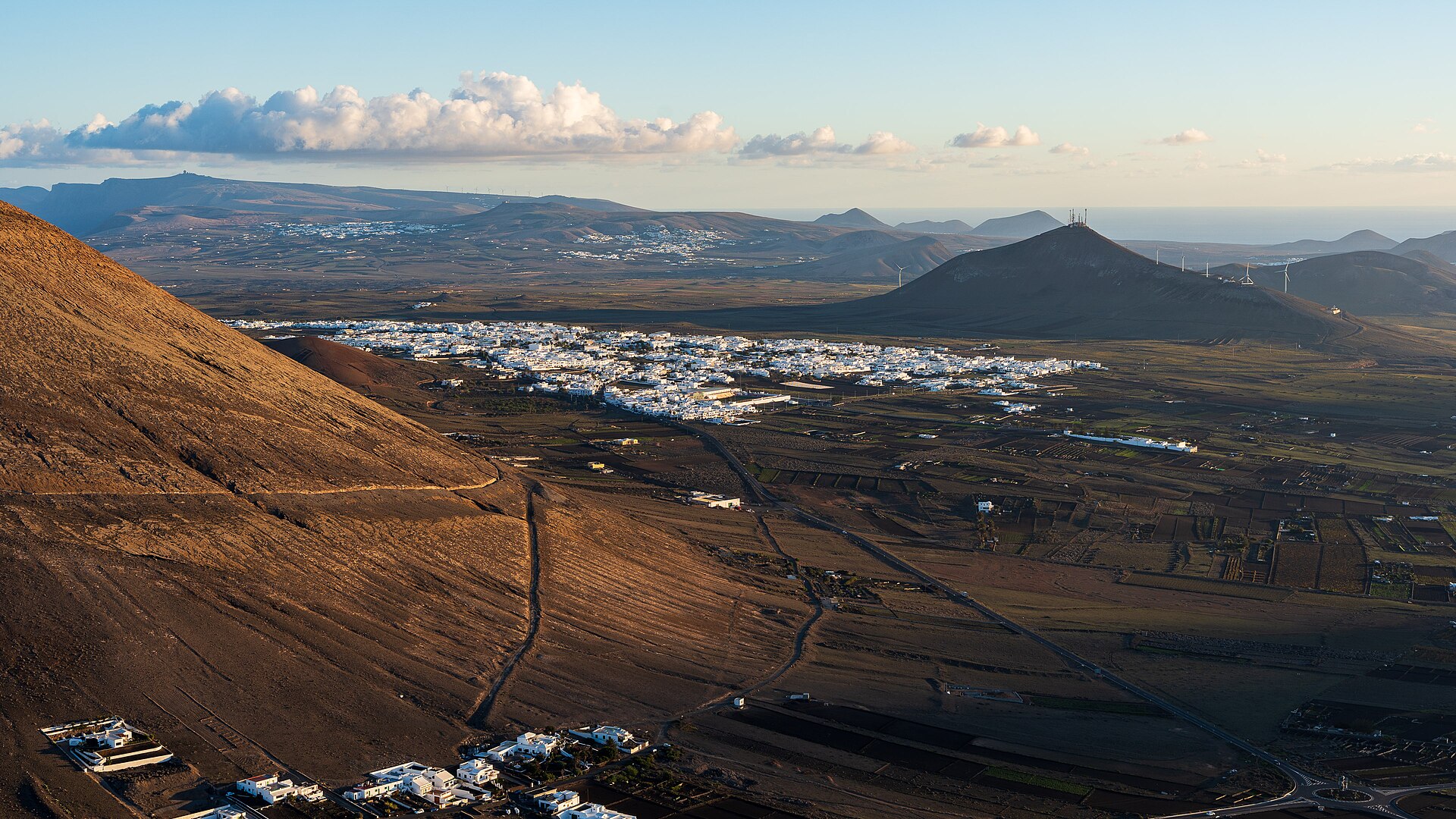
La Geria offers wine-growing in volcanic hollows and dry-stone walls. The Volcanoes Nature Reserve is suitable for walks to craters such as El Cuervo, Montaña Colorada and Caldera Blanca.
Jameos del Agua, Cueva de los Verdes and Mirador del Río are cultural and architectural sites by the artist César Manrique. Papagayo offers sheltered bays in the south and is better suited to classic beach days than Timanfaya.
The Chinijo Archipelago and La Graciosa are a quieter, nature-focused complement to the main island. The maritime Parque Natural del Archipiélago Chinijo is one of the island's protected areas.
How do you get around Lanzarote in 2026?
For 2026, free use of season tickets and multi-journey cards on public land-based collective transport in the Canary Islands has been confirmed.
However, the available result does not mention the specific Lanzarote fares for single journeys, nor the sales outlets or conditions of the respective tickets. These details have not yet been published.
For trips to the volcano centres and beaches, a hire car is often practical. Distances and wind are frequently underestimated by visitors, as the official park information makes clear.
Trying to fit all sights into one day is a typical planning mistake. The island is less geared towards extensive sandy beaches than towards a consistently staged volcanic landscape.
What should visitors bear in mind during heat and calima?
During an official heat warning in September 2026, maximum values of locally up to 36–38 °C were forecast for Lanzarote. At the same time, light calima was possible. During a further heat event, locally at least 37 °C and calima were announced, particularly on the eastern islands.
The authorities recommend avoiding physical activity outdoors and keeping windows closed during dusty or hot weather conditions. Dust should be removed with damp cloths.
Drinking enough is important in these conditions. If respiratory symptoms worsen, the emergency number 1-1-2 should be called.
Typical calima and trade wind periods as climate statistics are not shown in the available sources. AEMET publishes current warnings.
What is new on Lanzarote in 2026?
Turismo de Canarias approved a 2026 action plan. Priorities are climate protection, premium tourism, wellness, events, artificial intelligence and regenerative ecological and social measures.
For Lanzarote, more than 75 million euros were announced as part of a four-year programme. Of this, 26 million euros come from the Cabildo de Lanzarote, the island government.
The funds are intended, among other things, to create 647 new places in social and health care. Specific new openings or changes for tourists in 2026 are not evidenced in the available sources.
Entry and reservation fees for 2026 should be checked immediately before booking via the official pages of the national park or the tourist centres. The available official sources do not provide a reliably complete current price list.