Las Palmas de Gran Canaria: what can you do in one day?
The national tourism site spain.info describes a one-day route through Las Palmas de Gran Canaria of 15 to 20 kilometres. It starts in the morning in Vegueta, at the Catedral de Santa Ana on the Plaza de Santa Ana. The Mercado de Vegueta and the nearby museums follow, and the morning ends on the Calle Mayor de Triana, known for its shops and modernist buildings.
For the afternoon, spain.info suggests the terraces at the Sportmarina or the Pueblo Canario. After that, the route heads to the Playa de Las Canteras, where the site describes the tides as “like a swimming pool”. If you are short of time, you can cut the route: the old town in the morning, the beach in the afternoon.
For the evening, spain.info points to the Auditorio Alfredo Kraus and the Teatro Pérez Galdós. The site places live music and salsa venues in the port district. It does not say which event runs on which day, so the programme can only be checked with the venues themselves.
The Cabildo (island government) tourism portal grancanaria.com divides the city around the Guiniguada ravine. The zones are Vegueta, Triana, Ciudad Jardín, Alcaravaneras, Puerto and Canteras. Most visitor sights lie in Vegueta, Triana and Canteras. You can reach all three in a day if you combine walking with the bus.
What is worth seeing in Vegueta and Triana?
Juan Rejón founded Las Palmas on 24 June 1478 as the Real de Las Palmas, the broadcaster RTVC reports. It was the first Castilian settlement in the Atlantic. According to RTVC, citing chronicles of the time, the founding fleet had about ten ships and some 1,300 men. Six years of conquest of Gran Canaria on behalf of the Catholic Monarchs had come first.
Vegueta is the colonial and administrative heart of the city. According to grancanaria.com, work on the Catedral de Santa Ana began in the 16th century. The district also holds the Casa de Colón, the Museo Canario and the Museum of Sacred Art. The same portal dates the Mercado de Vegueta to 1854 and gives its address as Calle Mendizábal 1, but the city council has not confirmed this.
According to spain.info, the Casa de Colón occupies the former governors’ house, which is over 500 years old. Its address is Calle Colón 1, 35001. Five themed areas cover the pre-Columbian cultures, the voyages of Columbus, his stopover in the Canary Islands and the founding of Las Palmas, and there is also a collection of paintings from the 16th to 19th centuries.
Information on admission and hours for the Casa de Colón is contradictory. Tourist sites give 4 euros and free entry on Sunday, yet also list Sunday as a closing day. There is no year and no official confirmation. Before you go, check casadecolon.com. For the Museo Canario, at Calle Doctor Verneau 2, only the details on elmuseocanario.com count.
Triana is the shopping district around the Calle Mayor de Triana. According to grancanaria.com, it includes the Teatro Pérez Galdós, the neoclassical Gabinete Literario and the Quegles building of 1900. RTVC links the district to the novelist Benito Pérez Galdós. The Jardín Botánico Viera y Clavijo lies about 7 kilometres from the capital and shows endemic Canary plants.
What can you do at Playa de Las Canteras and the port?
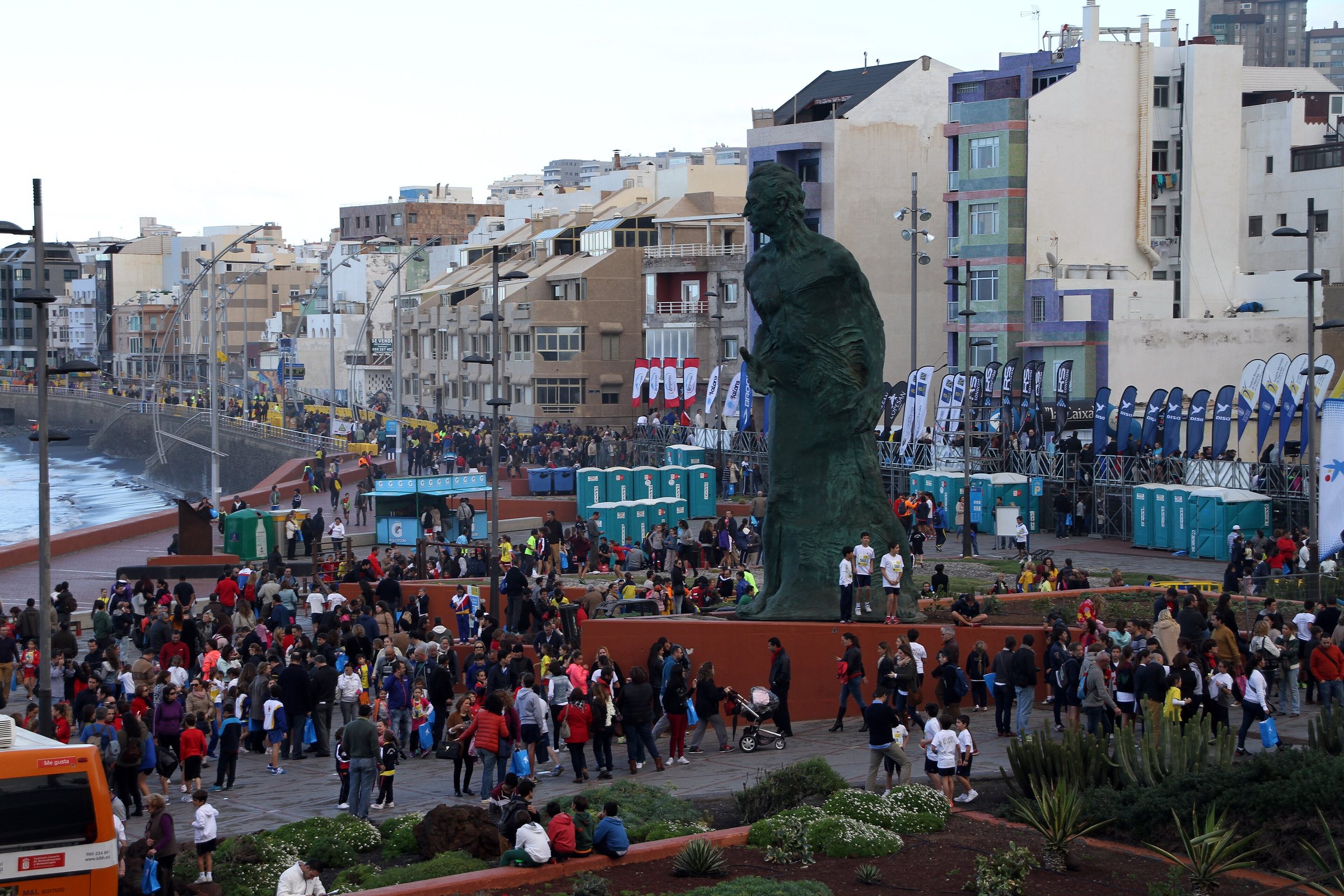
According to the tourism portal grancanaria.com, the Playa de Las Canteras has 3 kilometres of golden sand. It lies 3 to 4 blocks from the cruise terminal. The portal lists swimming, surfing and diving, and also calls the bay a marine protected area. There is no entry fee for the beach, and the sources checked showed no charge.
Offshore lies “La Barra”, a natural rock reef. According to grancanaria.com, it shelters parts of the beach and creates shallow areas for wading at low tide. That is a useful tip for families with children. No official safety information on the reef turned up, so the flag on the day remains the guide.
A private guide, localguidegrancanaria.com, describes the beach sections. It calls the Puntilla the livelier part and says Playa Chica and Calle Portugal are popular with locals. Cicer, next to the Auditorio, is described as the surfers’ spot. The Auditorio Alfredo Kraus stands at the southern end of the beach and hosts the Ópera de Las Palmas festival. These are private opinions.
The Museo Elder de la Ciencia y la Tecnología stands at the Muelle de Santa Catalina, 35007 Las Palmas. According to museoelder.es, it opens Tuesday to Saturday from 10:00 to 20:00 and Sunday from 10:00 to 18:00, and is closed on Mondays. The site gives no ticket prices. Hours may change for special events, and the website lists closing days.
Boat trips leave from the Muelle de Santa Catalina, next to stop 9 of City Sightseeing. Bahia Cat and WeWhale are named as operators. No prices or departure times turned up, and the operators have not confirmed the details. If you plan a trip, ask the operators directly for times and fares.
Which flags and rules apply at Las Canteras?
The beach uses a flag system. Green means normal use, yellow calls for extra care in the water, and red bans swimming, RTVC reports. Anyone who enters the water under a red flag breaks the swimming ban. Flags are the most reliable guide to conditions, and they change with water quality and sea state.
According to headlines from RTVC and elDiario.es, the beach flew yellow flags because of microalgae. It was later reported green again once no more algae were found. We did not check the articles themselves, and no data are available. The episode shows that conditions can change at short notice. Current warnings are posted by the council and on the beach.
The tourism portal grancanaria.com lists the Blue Flag for Las Canteras since 1989. The city council, however, decided in November 2023 not to apply for one. According to RTVC on 27 November 2023, tourism councillor Pedro Quevedo called the label an instrument of a private firm and a marketing tool. The opposition PP, through spokesperson Jimena Delgado, says the beach would not meet the criteria and points to cleaning, bacteria and litter.
The missing Blue Flag is therefore a political decision, and the question of quality stays disputed. No information on its status for 2026 turned up. For getting there, the travel site Barceló lists bus lines 1, 105, 210, 25, 317 and 323 to Las Canteras. The operator Guaguas Municipales (city buses) does not confirm this in the sources checked. No rules on dogs or smoking on the beach turned up.
Are there insider tips, and what is still unknown?
No reliable source turned up for insider tips, so this text names no invented places. Guidebooks mention La Isleta, with the walk to Playa del Confital, a volcanic rocky beach for sunsets. They also name the Mercado Central between the port and Las Canteras. Both come from unofficial sources and have no opening hours.
Travel sites recommend Vegueta on weekday mornings, when it is quieter. According to the directory mercadillos.org, a crafts and culture market runs on Sundays from 10:00 to 14:00 at the Plaza del Pilar Nuevo. That is not officially confirmed. The Castillo de la Luz is regarded as the oldest defensive fortress in the Canary Islands and has housed the Fundación Martín Chirino since 2015. Hours and prices contradict each other, so check with the foundation directly.
Vegueta-Triana has local protection as a historic and artistic ensemble but is not a UNESCO World Heritage Site. In January 2023 the citizens’ group “Plataforma Ciudadana Reivindicativa” revived the plan and presented it on 17 January 2023. The city council agreed unanimously to support it. The Universidad de Las Palmas, the Museo Canario and the Gabinete Literario also back it.
No formal acceptance of the bid turned up, so the status is: candidacy sought. Prices for 2026 also remain open for the Catedral de Santa Ana, the CAAM, the Museo Néstor and the Poema del Mar, which appeared only as names. There are also no comparison figures for other islands and no visitor numbers for 2026. If you are planning a visit, check hours with the venues shortly beforehand.