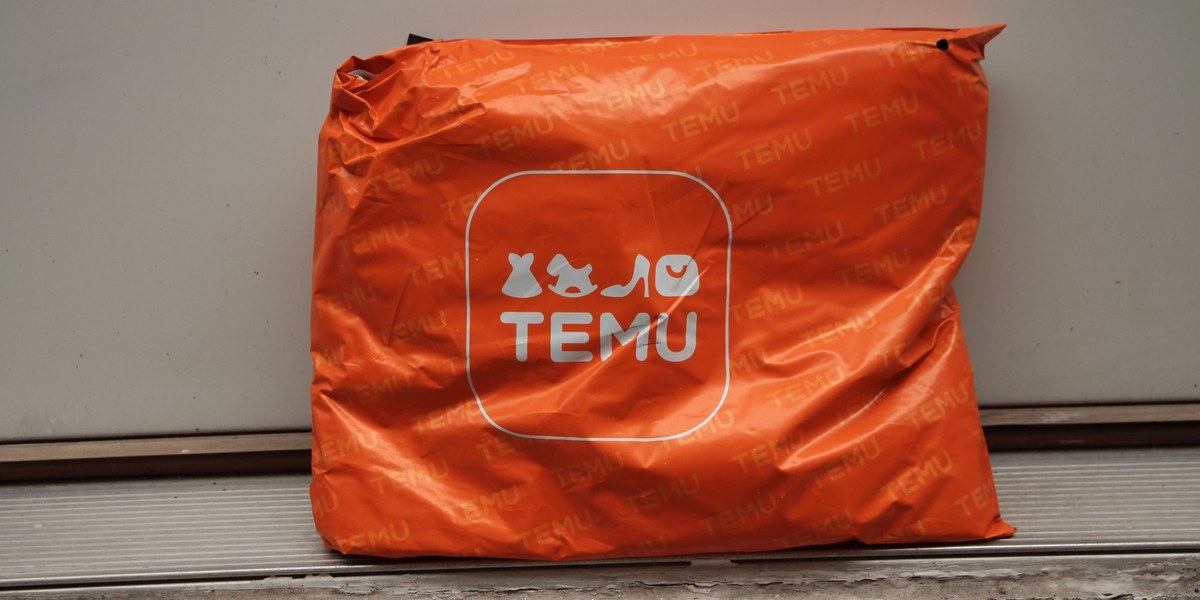
Customs and IGIC — two different things
First, the distinction on which almost every headline trips up: customs duty (arancel) and IGIC are two different things. One is an EU charge that is certain to come. The other is a Canarian tax exemption whose end is still only being debated.
Lump the two together and you inevitably arrive at more dramatic figures than the evidence currently supports.
What is certain on 1 July
From 1 July 2026, every parcel with a goods value of up to 150 euros shipped from a country outside the EU carries a flat duty of 3 euros. The basis is Council Regulation (EU) 2026/382 of 11 February 2026, which abolishes the previous 150-euro customs-free threshold across Europe.
Spain's tax agency AEAT has explicitly clarified that the measure also applies in the Canaries — the archipelago is part of the Union's customs territory, even though it sits outside the VAT area.
The small print matters: the 3 euros apply per product category, not once per parcel. AEAT's own example: order two phone cases and a charger in one shipment and you pay 6 euros — the two cases count as one category (3 euros), the charger as a second (3 euros).
What also matters is where the goods ship from, not the shop's web address: a ".es" domain or prices shown in euros do not make it duty-free.
The catch: customs is not the same as IGIC
Running alongside the duty is a second, purely Canarian debate — and this is where the real dispute lies. Since 2016 the Canaries have had a tax franchise: online purchases up to 150 euros are exempt from the IGIC import tax.
It was brought in to spare consumers the cumbersome customs process — some carriers were charging up to 30 euros simply to present the customs document and deliver the parcel.
According to the Canarian retail sector, this makes the archipelago the only territory in the European environment where low-value online shipments pay no indirect tax at all at their destination — on the mainland the equivalent VAT exemption fell back in 2021. Retailers and chambers call this gap "unfair competition" against local shops, which do have to charge IGIC.
The reasoning of finance councillor Matilde Asián: if a customs declaration is needed anyway for the 3 euros, the IGIC exemption loses its original justification. But its abolition has not been decided — the Canary Islands government is so far only reviewing.
Do prices really double?
The snappy "double the price" headline holds only for part of the purchases — and it ignores that the duty is a flat fee. Three euros on a 4-euro item is almost a doubling; 3 euros on a 60-euro order is roughly five per cent.
The charge therefore hits the cheapest mini-orders hardest — and only there does the word "double" fit. If IGIC were later added on top, that would normally mean a further 7 per cent.
Consumer advocates point to an imbalance: the 3-euro duty hits a Canarian buyer (on 7 per cent IGIC and the lowest wages in the country) just as hard as a mainland buyer (on 21 per cent VAT). Retailers counter that the measure protects local business from competition that ships to the islands with no tax burden and no paperwork.
What you can do right now
Before you buy, check the "terms and conditions" or the checkout to see whether the platform already shows customs and handling fees in the price — on IOSS-system shops the tax is often built in, on others it is added on delivery. On very cheap small items, expect the flat 3-euro charge to swallow the saving; here a local purchase may be the better choice.
And take care with returns: the duty paid is not refunded, according to AEAT, unless the goods were defective or not as described. VAT refunds are unaffected by that rule.
What is still open — and which figures to treat with caution
Two points are not yet settled: the possible abolition of the IGIC exemption and an additional handling fee announced by the Consejería from November. Consumers also warn that carriers could — as in 2016 — once again charge high fees for handling customs, because self-declaration is cumbersome.
The often-quoted sector figures (around 170,000 online shipments a day in the Canaries, about half of them under 150 euros; some 160,000 retail jobs) are industry estimates, not officially confirmed values — and we flag them as such.