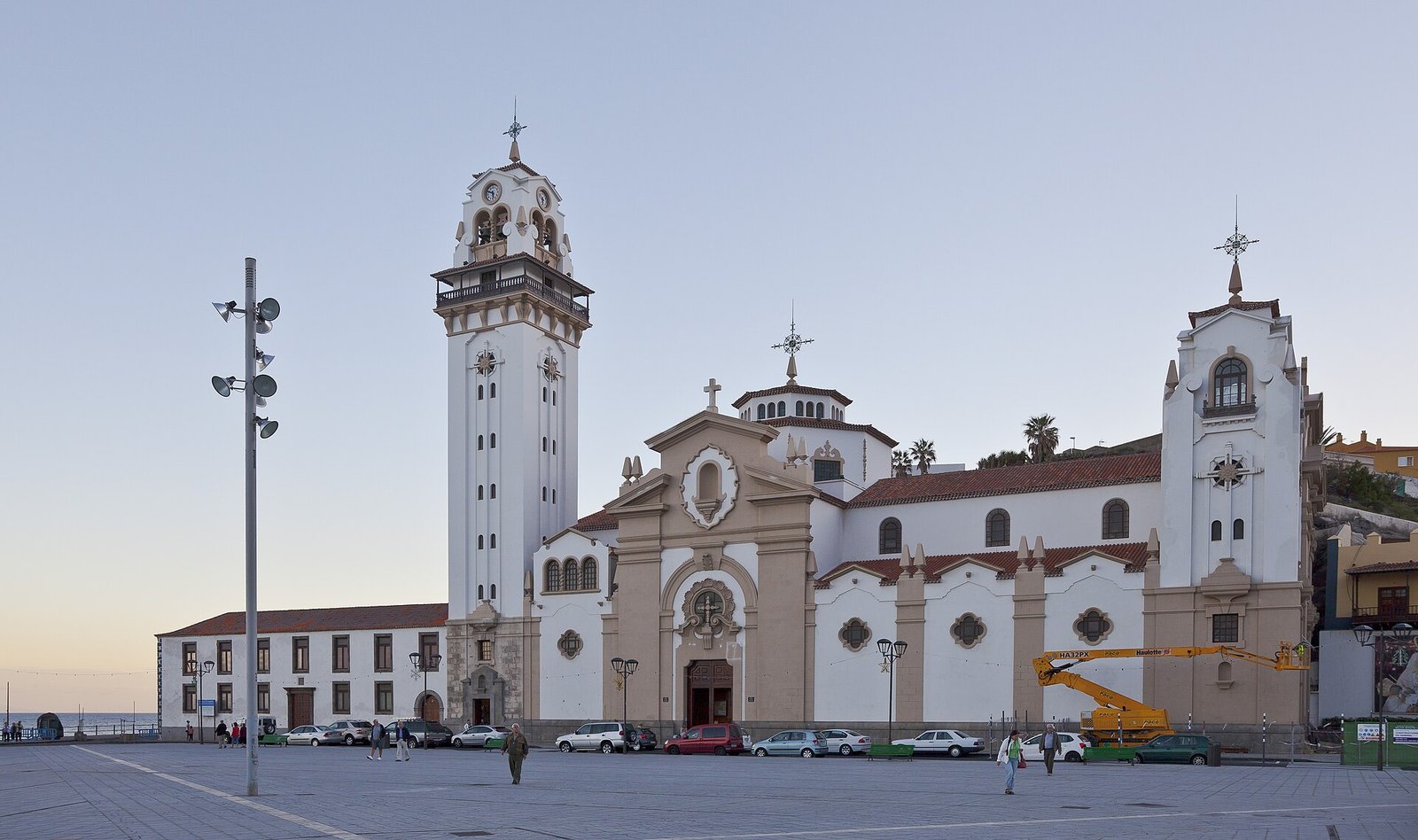
There are experiences in the Canary Islands that go far beyond beaches and sunshine. Walking to Candelaria on the night of 14 August is one of them. It is the only mass movement on foot that still exists on Tenerife today, and for many locals it is as much a part of summer as the sea itself. The destination is always the same: the dark, enigmatic figure of the Virgin of Candelaria, the Patroness of the entire archipelago, who waits in her basilica right by the Atlantic.
What makes this pilgrimage so special is its unique blend of Catholic tradition and pre-Hispanic roots. Nowhere else in the Canary Islands do the two worlds merge so naturally. The theatrical Guanche ceremony on the evening of 14 August recreates the moment when the island's original inhabitants found the statue of the Virgin on the coast — long before the Spanish conquest. And the thousands who then set off through the night are following in the footsteps of more than five centuries of pilgrims who have walked this path to fulfil promises, give thanks, or simply be part of something bigger.
What happens when: the key moments
The pilgrimage is not a single event but a sequence of moments that build over two days. It all begins on the afternoon of 14 August. From sunset onwards, the first groups of walkers start arriving in Candelaria from all corners of the island. At dusk, the Guanche Ceremony takes place in the Plaza de la Basílica — a theatrical re-enactment of the discovery of the Virgin's image by the aboriginal Guanches on the shore, complete with traditional costumes and dialogue inspired by ancient chronicles. It is one of the most singular and moving moments of the entire festival.
As darkness falls, the real magic begins. The night of 14 to 15 August is when the great pilgrimage on foot properly happens. Thousands of people walk through the night towards the basilica, their paths illuminated by headlamps and handheld lanterns. As the local saying goes, "on the night of 14 to 15 August, the paths of Tenerife fill with lantern lights." Many aim to arrive in time for the early morning mass or the mass at dawn by the sea, a deeply atmospheric moment. The following day, 15 August, is the big feast day — known as the "fiesta de los naturales" (festival of the natives). It features the main mass, a solemn procession with the statue of the Virgin through the Plaza de la Patrona and surrounding streets, and a lively romería atmosphere with folk music, food stalls, and celebration throughout the town.
The main walking routes to Candelaria
The network of traditional paths leading to Candelaria is well structured, and the undisputed classic is the Camino Viejo de Candelaria. This historic pilgrimage route connects San Cristóbal de La Laguna, Santa Cruz, El Rosario, and Candelaria. The island council (Cabildo) puts its length at around 21.2 km, while some hiking descriptions measure the stretch from the Plaza del Cristo in La Laguna to the basilica at about 22 km. A sporty hiker might cover it in three and a half hours, but during the pilgrimage — with crowds, pauses, and a more relaxed pace — you should plan for considerably longer.
Many pilgrims starting from Santa Cruz de Tenerife either head up to La Laguna to join the Camino Viejo or use the TF-28, the old southern road, when it is open for walkers. The distance from Santa Cruz to Candelaria by road is roughly 20 km. Each year, the Cabildo usually designates and checks three main paths for the pilgrimage. In recent years, these have typically included the Camino Viejo de Candelaria and the TF-28 as a permitted walking route. Any route through the mountains or the Corona Forestal may be restricted due to fire risk, so it is essential to check official announcements in the days before you set out.
Getting there and back: buses and road closures
Walking the entire route is the classic way, but you do not have to do it all on foot. The public bus company TITSA usually reinforces its services to the Candelaria area on 14 and 15 August to help pilgrims get to their starting points or return home. In previous years, this has meant extra departures on lines such as the 120 (Santa Cruz – Candelaria – Güímar), especially in the late afternoon and evening, as well as special services like La Laguna – motorway – Candelaria. The on-demand urban transport in Candelaria has also operated free of charge in past editions between the Plaza de Teror and the old bus station on the Rambla de Los Menceyes, with extended hours on both days.
Road closures are a key part of the logistics. Walking on the TF-1 motorway is strictly forbidden for safety reasons, and access to the mountains and Corona Forestal is generally prohibited when fire risk is high. For 2026, a planned closure on the TF-28 between El Chorrillo and Las Caletillas is expected from 18:00 on 14 August until 09:30 on 15 August, to allow pilgrims and the athletic march to pass safely. Exact timetables and special routes for 2026 should be confirmed on the TITSA website and with the Candelaria town council closer to the date, but the pattern of reinforcements is well established.
Practical tips for your night walk
August in Tenerife is hot, and the authorities strongly recommend avoiding the hottest hours of the day. The ideal approach is to set off in the late afternoon or early evening, walking through the cooler night. For safety, it is also wise to tackle the more delicate sections while there is still some daylight. Pack as if you were going on a serious hike: a hat or cap, lightweight boots or sturdy trainers that you have already worn in, comfortable clothing, and enough water for several hours. Never attempt this walk in brand-new shoes — it is a recipe for blisters.
A headlamp or handheld torch is absolutely essential. The night of 14 August, the paths are famously lit by thousands of them, and you will need your own to see where you are stepping. Bring a light layer for the early morning hours, especially if you are coming from higher ground where temperatures can drop. Stick to the marked and authorised paths at all times — straying off them can damage stone walls and vegetation. Lighting fires is strictly forbidden, and extreme care should be taken with cigarette butts to prevent wildfires. Carry basic identification and, if you are in a group, agree on meeting points in advance; with over 100,000 people converging on a small town, it is easy to get separated.
Common questions
- Do I have to walk the whole way?
- Not at all. Many people drive or take the bus to a starting point closer to Candelaria and walk just the final stretch. The experience is flexible.
- Is the pilgrimage only for religious people?
- While it is a deeply religious event for many, plenty of people join for the cultural experience, the night hike, and the unique atmosphere. All are welcome.
- Can I sleep in Candelaria on the night of 14 August?
- It is possible, but accommodation fills up very quickly. If you plan to stay overnight, book as far in advance as you can, or consider using the reinforced bus services to return home.
- What is the Guanche Ceremony exactly?
- It is a theatrical representation held at dusk on 14 August in the Plaza de la Basílica, recreating the discovery of the Virgin's statue by the Guanche people on the shore of Candelaria.
- Is it safe to walk at night?
- Yes, provided you stick to the official routes, carry a torch, and follow the safety advice. Thousands of people do it every year, and there is a large security presence.
Read on
- Santa Úrsula: fiestas to 25 October, Bustamante concertTenerife · 15 October
- Tenerife: Police seek more victims after Añaza DNA arrestTenerife · 24 October
- Icod de los Vinos: 12 new self-guided routesTenerife · 24 October
- Tenerife Peñón Fest: Loquillo and Amaia on 23–24 OctTenerife · 24 October
- Tenerife: Playa Jardín reopens after contaminationTenerife · 23 October
- All events on Tenerife →
Stand: July 2026. Route openings, bus timetables, and road closures can change at short notice depending on weather and fire risk. Always check the official websites of the Cabildo de Tenerife, Ayuntamiento de Candelaria, and TITSA in the days immediately before the pilgrimage.