You have probably felt it. The creeping exhaustion of a holiday that needs another holiday to recover from. Silent travel, also called quiet travel or quiet vacationing, is the antidote. It is not about doing nothing in a boring way. It is a deliberate, deep rejection of the noise, the rush, and the constant digital buzz that defines so much of modern life—and modern tourism. In the Canary Islands, this trend is not just a niche idea; it is one of the fastest-growing ways to experience the archipelago in summer 2026.
The concept is beautifully simple. It means choosing a slow, paused rhythm over a frantic checklist of attractions. It means actively avoiding crowds, even if that means skipping a famous spot when it is saturated. The goal is profound mental rest, found in low-stimulus environments where you are not obliged to talk, multitask, or scroll. Think solitary hikes, meditation, reading, swimming in natural waters, and simply contemplating a volcanic landscape. A core part of the practice is a voluntary digital detox: phones off, social media closed, and a rule like “30 minutes of screen time a day” to truly let the mind unwind.
Why the Canary Islands Are a Perfect Match
The Canary Islands possess an almost unfair advantage for this kind of travel. Beyond the well-known beach resorts lies another world: a quiet interior of rural parks, isolated hamlets, and traditional paths that remain wonderfully low-density. Regional tourism strategy is actively reinvesting in this “small but strategic” pillar, with over a thousand rural and emblematic accommodations identified. Yet these stays still account for only around one percent of total tourism, a tiny figure that guarantees the very silence silent travellers seek.
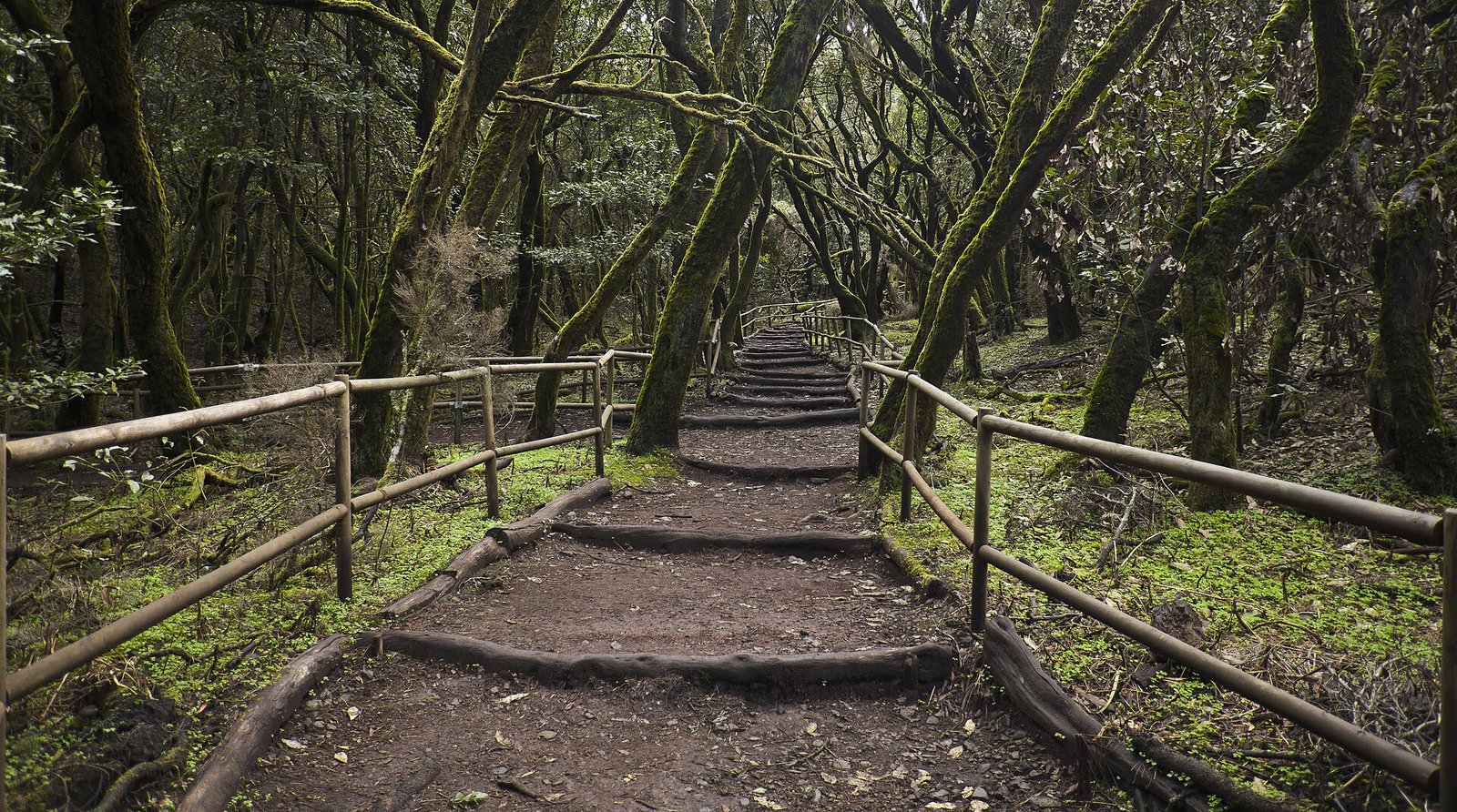
The landscapes themselves invite introspection. Picture walking in near-solitude through volcanic terrain, misty laurel forests, deep ravines, and highland viewpoints. Fuerteventura, with its harsh volcanic-desert beauty, small bays, and deserted beaches, is increasingly profiled as “the quiet island of the Canaries.” Meanwhile, the archipelago’s internationally recognised dark-sky areas offer another layer of silent magic: nocturnal contemplation under a blanket of stars, far from artificial light. This combination of quiet interiors, open spaces, and protected night skies makes the islands an unusually strong fit for the trend.
Where to Find Your Silence: Tenerife and La Palma
You do not need to travel to the smallest islands to disappear into quiet. On Tenerife, two rural parks are paradigmatic silent-travel spaces. The Parque Rural de Anaga is a world of isolated hamlets, laurel forest trails, and little-known viewpoints perfect for solo hiking and forest bathing. Similarly, the Parque Rural de Teno offers cliffy landscapes, quiet paths, and contemplative walks above the ocean. The general tip here is to look for accommodation in the medianías, the mid-altitude rural belts, for darker nights and fewer crowds.
La Palma, often called “La Isla Bonita,” is a natural sanctuary for introspective hiking. The island’s historic stone paths, the caminos reales, cross ridges and ravines far from congested viewpoints. For a deeper sense of enclosure and silence, the Parque Nacional de la Caldera de Taburiente is unmatched. Its steep volcanic scenery, threaded with rivers and pine forests, provides a powerful feeling of being held by nature, particularly outside peak times.
Gran Canaria, Fuerteventura, and the Smallest Islands
Gran Canaria’s silent-travel heart beats in its inland medianías, far from the coastal resort zones. This is where you will find a growing number of wellness retreats offering yoga, dawn mindfulness sessions on semi-secret beaches, and farm-to-table gastronomy. The high-altitude Tamadaba Forest is a standout for silent hikes and excellent stargazing away from city lights. On Fuerteventura, the key is to focus on non-urban coastal stretches and the vast inland volcanic areas, where long visual horizons, the sound of wind and waves, and minimal artificial noise create a deeply restful atmosphere.
The greener, less urbanised islands of El Hierro and La Gomera align especially well with silent-travel values. In La Restinga on El Hierro, a tiny fishing harbour offers a calm, small-scale atmosphere where diving can be your single daily focus. On La Gomera, the palm-filled valley of Valle Gran Rey invites a slow routine of gentle walks and shared but calm sunsets, with limited nightlife. These are places where silence is a natural consequence of the environment, not a rule you must fight to maintain.
Silent Travel as an Answer to Overtourism
This trend is not happening in a vacuum. It intersects directly with the mounting debate around overtourism in the Canary Islands. With record visitor numbers and resident unrest making international headlines, silent travel offers a radically different model. By design, it avoids saturated nodes and peak seasons, steering visitors instead to inland and lesser-known areas. This spatial dispersion is exactly what regional rural-tourism strategy aims for: spreading benefits to small villages rather than concentrating them in coastal mass-tourism hubs.
The ethics of silent travel also align with the emerging global discussion on “digital silence.” A core norm is not geotagging or over-sharing quiet places in real time, a form of gatekeeping that helps prevent the next viral hotspot from being loved to death. While silent travel remains a niche, it represents a lower-impact, more resident-friendly way to experience the islands. The caveat is clear: if quiet areas are heavily marketed without controls, they could simply shift overtourism inland. This is why respecting local silence, carrying out your own trash, and avoiding loud music are not just nice ideas—they are essential practices for a more harmonious future of travel.
Common questions
- What exactly is silent travel?
- It is a low-stimulation, slow form of tourism that rejects crowds and constant connectivity in favour of nature, mental rest, and deep quiet.
- Do I have to give up my phone completely?
- Not necessarily. The idea is a voluntary digital detox. Many travellers set simple rules like limited daily screen time or keeping devices out of the bedroom.
- Which Canary Island is quietest?
- El Hierro and La Gomera are naturally the quietest, but the rural interiors of all islands, like Anaga on Tenerife or Tamadaba on Gran Canaria, offer profound silence.
- Is silent travel only about hiking?
- No. While solitary hiking is popular, it also includes stargazing, yoga, meditation, reading, swimming in natural waters, and simply contemplating the landscape.
- How does this help with overtourism?
- It disperses visitors away from packed hotspots and into inland areas, supports small-scale local economies, and promotes a lower-impact, more respectful travel ethic.
Read on
- Canary Islands: general strike on 11 November hits touristsCanary Islands · 23 October
- Canary Islands: tenants and pensioners rally on 24 OctoberCanary Islands · 23 October
- Canary Islands: Clásico on 25 October, Barça favouritesCanary Islands · 21 October
- Canary Islands: 30 October port strike hits ferries, freightCanary Islands · 23 October
- Canary Islands: 8,318 illegal holiday let ads to be removedCanary Islands · 23 October
- All events on the Canary Islands →
Stand 24 July 2026. This article reflects current trends and source-backed areas; any specific hotel, retreat or business should be individually checked.