Which excursions and day trips on Tenerife are well documented?
Four destinations are well documented: the Barranco de Masca (a ravine), Teide, the Drago Milenario in Icod de los Vinos and the ferry to La Gomera. For the Parque Rural de Anaga there is only partial information.
The figures come from reports by the Canary Islands broadcaster RTVC and the newspaper Diario de Avisos, the Teide operator's website and comparison portals. They apply to Monday 2 November 2026.
According to Wikipedia, Teide has been a national park since 22 January 1954 and covers 189.9 square kilometres. UNESCO added it to its World Heritage list in 2007.
According to Wikipedia, no national park in Spain draws more visitors: the record in 2016 was 4,079,823, and the source gives 4,463,281 for 2023. That is the latest figure available.
There are no verified details on prices, times or distances for La Laguna, Garachico, Candelaria and Puerto de la Cruz, so they are left out here. The research also could not confirm TITSA fares for 2026 or distances in kilometres.
Many prices and times come from intermediaries and travel portals rather than the operators, and each one is marked as such. Anyone planning a trip should check price, opening days and weather with the operator or the official site beforehand.
Current readings and warnings are on the CITA weather page (cita.news/de/wetter.html). You can also check AEMET, the national weather service.
How does a trip into the Masca ravine with a booking work?
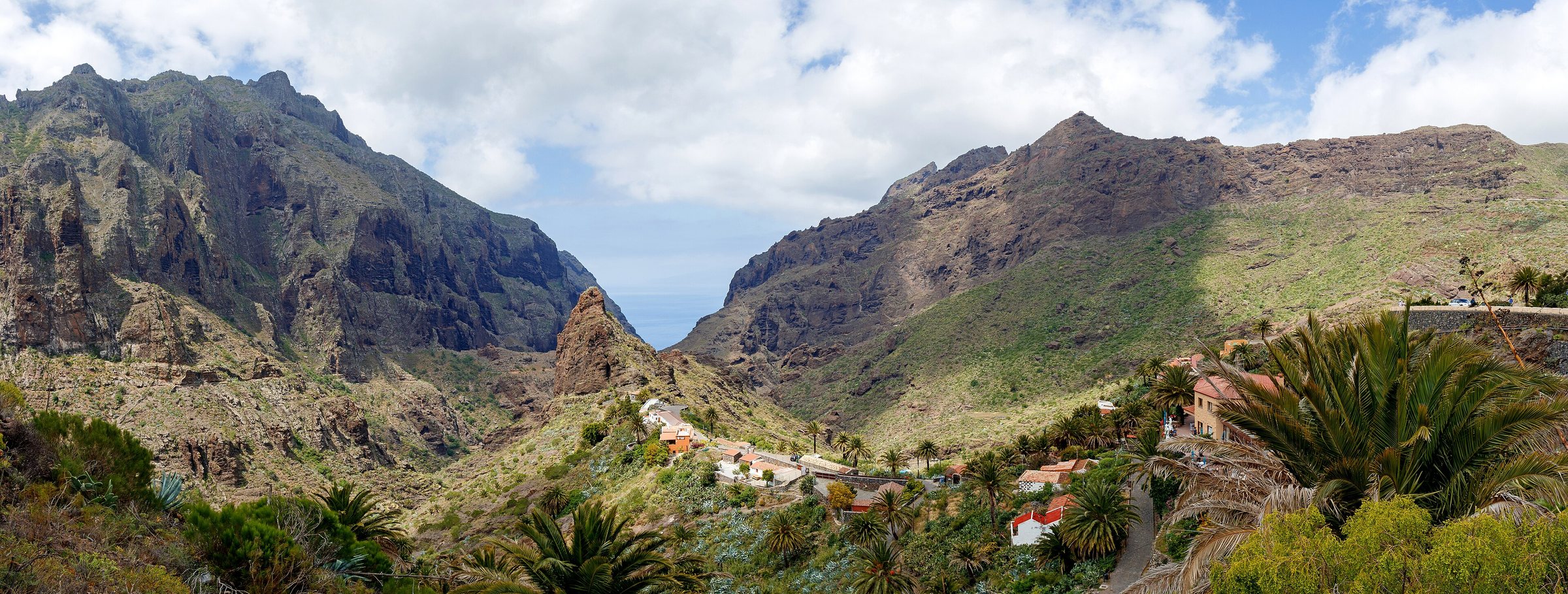
Anyone heading into the Barranco de Masca in the Teno mountains must book in advance and show ID, says RTVC. The Cabildo de Tenerife (the island government) controls access, and booking is at caminobarrancodemasca.com.
According to the report, the rules aim to improve safety and cut traffic on the TF-436 road. A travel portal puts the trail at about 5 kilometres, but there is no official confirmation.
Adults not resident in the Canaries pay 28 euros, according to RTVC, while residents of other Canary islands pay 3 euros and Tenerife residents pay nothing. Children pay half, so 14 euros or 1.50 euros.
The price covers check-in at the visitor centre, safety staff, accident insurance and a helmet. Tickets are personal and need a name plus an ID card or passport.
RTVC says the price excludes the journey there, the boat back from the sea and the shuttle bus. Boat and shuttle are booked separately through the booking platform.
One reseller quotes 10 euros for adults and 5 euros for children for the shuttle, but this is unconfirmed. Canarian Weekly, citing the Cabildo, says the shuttle is compulsory for all visitors, which has not yet been checked on the Cabildo's site.
RTVC and Canarian Weekly put the limit at 275 visitors a day, in groups of 25 every 30 minutes. Canarian Weekly says descents run from 08:30 to 13:00, and a single ascending group of 25 sets off at 09:00.
Tourism companies and accommodation providers hold 64 of every 100 reserved places for organised groups, according to the research. The current opening days remain unclear.
At the launch, RTVC named only Friday to Sunday and announced further weekdays. Whether that happened is not confirmed.
The RTVC article on the shuttle dates from 17 April 2025. The days for 2026 are on the booking site.
What applies to Teide, the cable car and the summit trail on Tenerife day trips?
The Teide cable car's upper station, La Rambleta, stands at 3,555 metres and the lower station at 2,356 metres. According to the portal nomadotravel, the cabin climbs those 1,199 metres in about 8 minutes.
The summit itself is at 3,718 metres, according to the operator's site Volcano Teide, and is the highest point in Spain. The national park is open round the clock and free to enter, according to that portal.
Secondary sources give 42 euros for adults and 21 euros for children aged 3 to 13 (non-residents). Residents pay 10.50 euros and 5.25 euros, according to those sources.
Portals say the cable car usually runs from 09:00 to 16:00, and from 09:00 to 19:00 between July and September.
It is requested online through the national parks booking page.
About 200 permits a day in four time slots are mentioned, along with an access check between 09:00 and 17:00. The official page of the Gobierno de Canarias (the regional government) would not open, so these details are not officially confirmed.
Those hints say permits can be fully booked weeks or even three months ahead. In bad weather the trail closes even for permit holders.
Since 19 January 2026 there has been a fee for the two trails to the summit, says nomadotravel. It is paid separately from the cable car on another website.
The amount and whether the fee is official are unconfirmed. Check with the national park.
Entering the crater without permission risks fines of up to 3,000 euros (minor), 3,001 to 150,000 euros (serious) or 150,001 to 600,000 euros (very serious), says Xataka. Xataka adds that more people sneak in, and two bodies were found in the park recently.
What does it cost to visit the Drago Milenario in Icod de los Vinos?
Adults pay 5 euros to enter the Parque del Drago in Icod de los Vinos, according to Diario de Avisos (October 2026). Students and pensioners pay 3 euros, children aged 6 to 11 pay 2.50 euros, and under-6s go free.
Canary Islands residents pay 2 euros and 1 euro respectively, says the paper. The sources contradict each other on opening hours.
Diario de Avisos gives 09:00 to 20:00 from April to October and 09:00 to 18:00 from November to March. Another search result instead gives 10:00 to 18:00 for both periods.
As 2 November falls in the winter period, Diario de Avisos points to a closing time of 18:00. It makes sense to ask the park before you travel.
The park covers about 3 hectares and was laid out in 1996. Diario de Avisos puts the dragon tree (Dracaena draco) at an estimated 800 to 1,000 years old, though the age is disputed.
The tree has been a national monument since 1917. The grounds include caves with a recreated Guanche culture and viewpoints.
There are no verified details on getting there by TITSA bus, on parking or on the distance from the coastal resorts. Portals mention bus tours of 7 to 8 hours linking Icod with Teide, Masca and Garachico, but this is not officially confirmed.
How do day trips to La Gomera and the Anaga park work?
The ferry from Los Cristianos to San Sebastián de La Gomera takes about 50 minutes with Fred. Olsen Express (Ferryhopper). The intermediary Ferryhopper lists sailings all year at 09:30 (arrival 10:20), 16:00 (16:50) and 20:00 (20:50).
Ferryhopper puts prices at about 27.50 to 42.50 euros each way, with one example at 42.80 euros. These are an intermediary's prices, not Fred. Olsen's own.
There is no tour description, but the departure times allow a day trip: out at 09:30, back at 16:00 or 20:00. Naviera Armas is named as a second operator, with no details.
Opening hours, TITSA routes and fares are unconfirmed. Route 945 appears only on a map, without details.
According to the sources, Anaga is a UNESCO biosphere reserve with one of the last original laurel forests. It is seen as an alternative to the crowded south and the Teide area.
The Pico del Inglés viewpoint, at 990 metres, lies on the TF-114, 1 kilometre from the TF-12. Parking is limited and fills up at peak times.
The research found no fees for Anaga. Many providers sell full-day Anaga and La Laguna tours.
One portal says TITSA's winter timetable has started. For your travel day, titsa.com or the TITSA app is the authority.
Which mistakes should visitors avoid on Tenerife excursions?
The most common mistake at Teide is going to the summit without a permit. The research found no official list of mistakes, so the points below come from the rules and reports.
Arriving at the top without having obtained a permit online beforehand risks being turned away. Crossing barriers in the crater or leaving marked trails is not allowed, and Xataka says fines are possible.
Booking too late is the second typical mistake, as summit-trail permits are sometimes gone weeks or three months ahead, according to search hints. In Masca the Cabildo caps numbers at 275 people a day.
For Masca, pack ID as well. Boat and shuttle are booked separately.
Weather decides whether the cable car and summit trail run, as both can close in bad conditions, even with a valid permit, according to the sources. Anyone combining the cable car with the summit trail should therefore allow a buffer.
On the La Gomera ferry, the late return at 20:00 (per Ferryhopper) calls for time in hand to reach the port. Where prices come from intermediaries, the operator's price counts: the cable car at 42 euros (secondary sources), the Masca shuttle and the ferry.