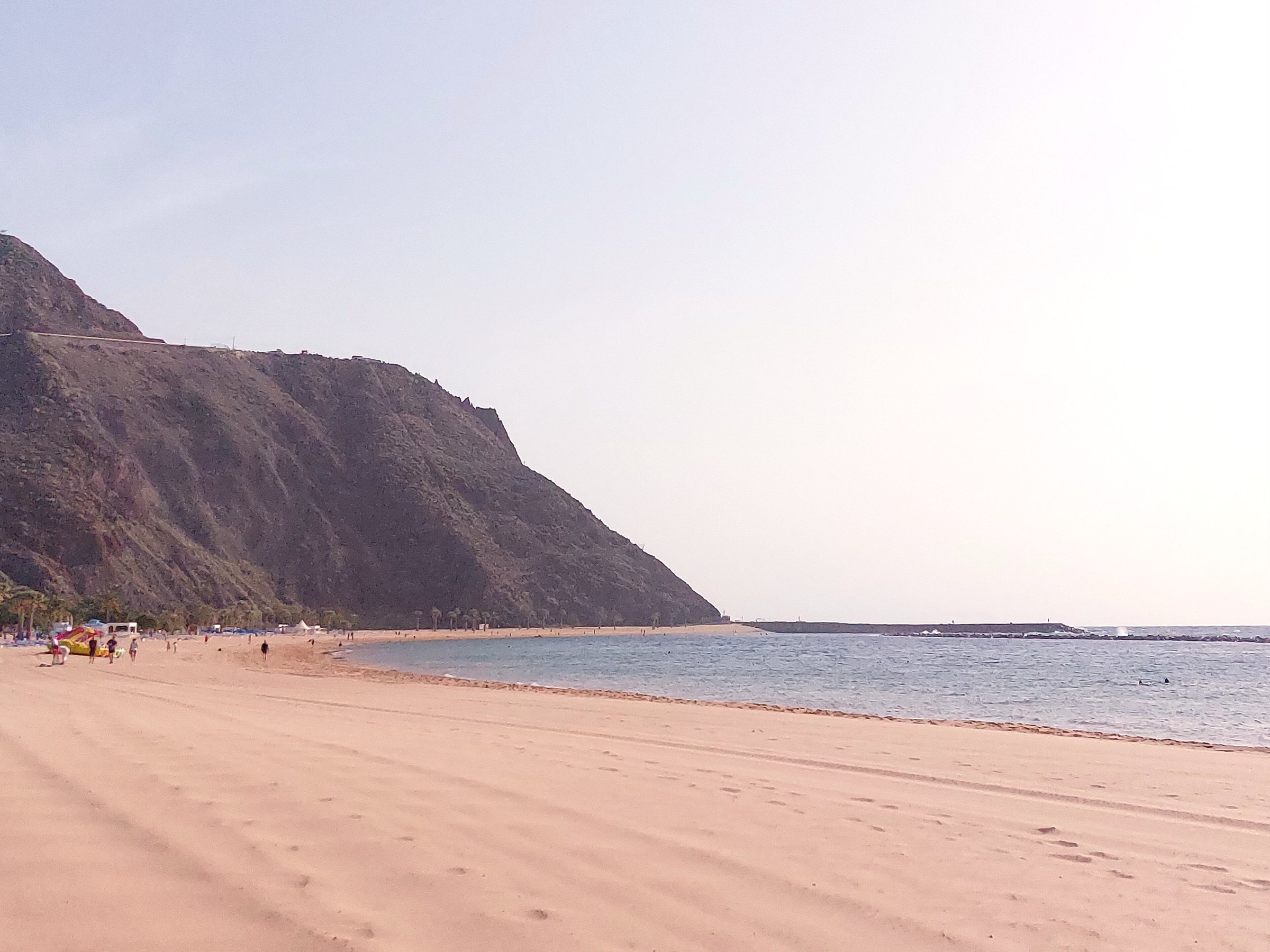
Which areas are suitable for living in Tenerife?
Santa Cruz de Tenerife is the capital and the island's urban centre. The city suits year-round city life, public administration, universities and good public transport connections.
San Cristóbal de La Laguna lies in the north, close to Tenerife Norte Airport and the university. Puerto de la Cruz is an established holiday and residential town on the north coast.
In the south, Adeje, Arona and Granadilla de Abona are important towns. They offer good proximity to Tenerife Sur Airport and the tourist infrastructure. Santiago del Teide lies in the west and has access to the Masca area.
The choice should not be based on rent alone. Tenerife shows clear differences between the north and south sides, and between coastal towns and higher-altitude areas.
How much does a flat cost in Tenerife?
For the end of 2025, an average open-market rent was given for the Canarian province of Santa Cruz de Tenerife, according to the published figures. The figure covers the province and not only Tenerife.
A Canarian rental support scheme gives a permitted upper limit for a flat and for a room, according to the Boletín Oficial de Canarias. This does not reveal the market price, but it does show the scale of social policy support programmes.
Rents vary widely according to location, flat size, furnishing and type of contract. In the south, especially in Adeje, Arona and Costa Adeje, furnished flats and short-term lets typically cost significantly more than comparable flats in the north.
Santa Cruz, La Laguna and northern municipalities generally offer a broader supply for year-round living. Central, furnished flats can be considerably more expensive than simple flats outside the centres because of limited availability.
How do you get around Tenerife by bus?
The public bus network is operated by TITSA and reaches all parts of the island. The official tourism website gives single fares, which should be noted with the date accessed, as tariffs can change.
The Puerto de la Cruz–Santa Cruz journey costs 5.25 euros, or 3.45 euros with a Bono-Bus.
Puerto de la Cruz–Playa de las Américas costs 14.60 euros, or 9.60 euros with a Bono-Bus. Playa de las Américas–Santa Cruz costs 9.45 euros, or 6.25 euros with a Bono-Bus.
For commuters, the actual route is more important than the distance as the crow flies. In the island's interior especially, mountain roads considerably lengthen journey times.
What climate can tenants expect in southern Tenerife?
The AEMET normal values for Tenerife Sur refer to the 1981–2010 reference period.
The annual average is, with annual precipitation of 132 mm. There are 114 days with measurable rain. August is the warmest month at 24.7 °C, January the coolest at 18.4 °C.
July has the most sunshine at 295 hours, December the least at 195 hours. The values apply to the south and should not be uncritically transferred to the wetter north, the capital or the high Teide area.
Flats on the north-east side can be cloudier more often, while the south is generally drier. Calima episodes are dust-laden air masses from the Sahara. Current values and warnings: CITA weather (cita.news/de/wetter.html) and AEMET.
What rules apply before signing a tenancy agreement?
For an ordinary residential tenancy, Spanish tenancy law generally applies, in particular the Ley de Arrendamientos Urbanos (LAU). A contract to cover permanent housing needs is legally different from a fixed-term tenancy or a tourist let.
Seasonal lets can count as arrendamiento de temporada and do not fall fully under the same protection as a main home. Tourist letting is additionally subject to Canarian tourism law.
The Canarian Decreto-ley 1/2024 responded expressly to the housing shortage in tourist areas and was intended to increase the supply of housing and the construction of protected homes. The later Ley 6/2025 regulates the tourist use of dwellings.
Before signing, tenants should ask for a written tenancy agreement and the landlord's full identity. Deposit, utilities, indexation, minimum term and notice periods must be checked in writing. Do not make any payment before the flat, the contracting party and the contract terms have been verifiably checked.
What alternatives are there to a conventional flat?
A room in a shared flat is often cheaper than a whole flat. Accommodation in La Laguna, Santa Cruz or the north can be cheaper than in the tourist south.
A monthly rent outside the high season can reduce costs. An aparthotel or coliving offer is suitable for the first weeks while searching on the ground.
A longer holiday let only makes sense as a temporary solution, followed by a regular residential tenancy. Municipalities with good bus connections are often more practical than a flat right on the coast.
Anyone wanting to offer a holiday flat should not assume that an ordinary residential flat can automatically be let to tourists. Municipal planning, island administration, building community and owners' association can all be relevant.