What changes for visitors to Tenerife?
No price surcharge is tied to the test flight, as neither Moeve nor World2Fly has given a figure. None of the sources mentions new rules for passengers.
World2Fly does not fly the blend day to day, because its commercial flights do not use it regularly. Nothing can be inferred from this for bookings from Tenerife.
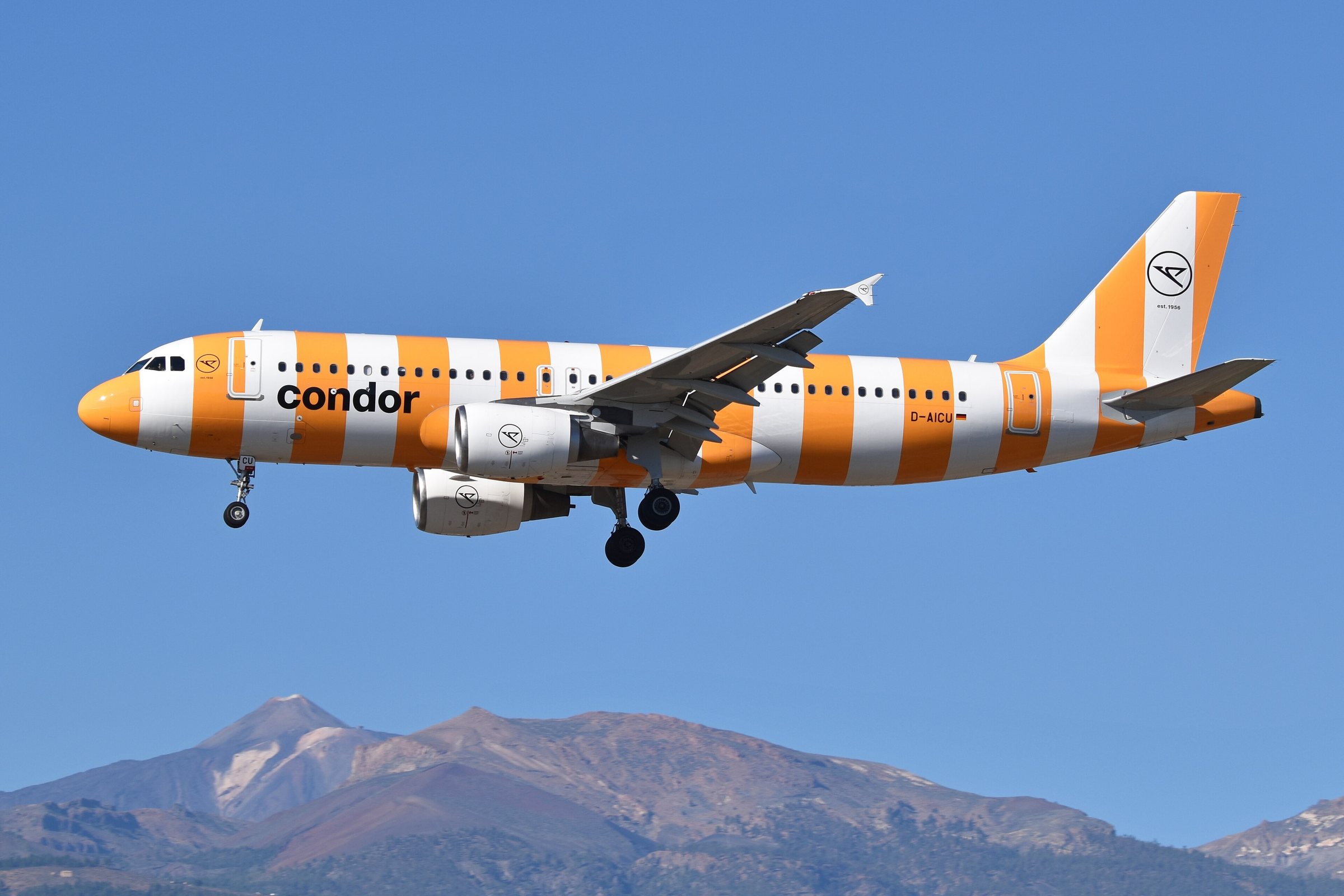
Passengers flying with Condor from Tenerife South can chip in voluntarily. They may round up the booking price to fund extra SAF, but no source gives amounts, so the airline has the details.
What happened on the flight from Madrid to Lisbon?
For a route of around one hour, a twin-aisle wide-body jet is an unusual aircraft. The Airbus A350 made the hop from Madrid to Lisbon.
The flight counts as the first on the Iberian Peninsula to use fuel from renewable hydrogen. Strictly speaking, the hydrogen is only the raw material for the synthetic share.
It was purely a demonstration flight, meant to show that the blend works. “We have to show our customers that flights with this fuel exist,” said Ricardo Rojas, president of commercial aircraft at Airbus España, at an event in Lisbon.
According to its manufacturer, the A350 uses up to 25% less CO2 than earlier models. That comes from the aircraft's design, not from the fuel mix.
Is this hydrogen as fuel?
No, the aircraft did not fly with hydrogen in the tank. It ran on kerosene blended with synthetic and biogenic fuel, and hydrogen is only the raw material for the synthetic share.
According to the companies, this e-SAF is made from hydrogen produced with renewable energy and from captured CO2. It was made at Moeve's innovation centre in Alcalá de Henares near Madrid, together with the ITQ centre of CSIC and the University of Valencia and the Finnish institute VTT.
The biogenic share of 4.8% comes from waste, including used cooking oil from hotels of the Iberostar group in Catalonia and Andalusia. It was produced at the San Roque energy park in Cádiz.
Moeve cites up to 97% less CO2 over the life cycle for e-SAF and up to 90% for biogenic SAF. These are properties of the fuels, not a measured result of this flight.
What does the EU require from 2030?
The EU regulation ReFuelEU Aviation requires at least 6% SAF in the aviation fuel supplied each year by 2030. Of that, 1.2% must be e-SAF, exactly the mix of the test flight.
The duty falls on fuel suppliers, not on every airport or every flight. They must reach 6% on average, but may meet it at individual airports.
The quota rises steadily until 2050. According to the EU Hydrogen Observatory, it reaches 20% in total in 2035 and 70% in total in 2050.
The organisers speak of a three-year head start on the rules. Under the regulation's deadlines, however, four calendar years lie between 2026 and 2030.
The main problem remains price, as sustainable aviation fuel is much dearer than kerosene. Moeve head Maarten Wetselaar therefore calls for a push from the aviation sector and for customers who commit to the product.
How far has Tenerife South got with sustainable aviation fuel?
In January 2026, Moeve supplied more than 515 tonnes of SAF to Condor for flights from Tenerife South to Hamburg, Munich, Frankfurt and Düsseldorf. The fuel comes from used cooking oil and farm waste and was produced at the La Rábida energy park in Huelva.
Moeve expects a saving of 1,700 tonnes of CO2 over the life cycle, compared with kerosene. The announcement does not give the blend share.
According to Moeve, Tenerife South is not yet legally bound by ReFuelEU, so the delivery went beyond the requirement. Voluntary contributions from passengers paid for part of it.
According to the airport operator Aena, more than 450,000 travellers a year fly with Condor to and from Tenerife South. The blend of this test flight was not used on those routes, but the direction is set.
What remains open, and what comes next?
The companies have not stated the fuel quantity or the cost of the Madrid test flight. Whether and when World2Fly or other airlines will use the blend on routes from the Canary Islands is not known.
With Apical, Moeve is building a second-generation biofuel plant in Palos de la Frontera in Huelva. The investment is 1,200 million euros, and the plant is meant to expand SAF production in Spain on a large scale.
According to Moeve, the La Rábida plant, with an annual capacity of 500,000 tonnes of SAF and renewable diesel, was more than 50% built in January. Its start is announced for the end of 2026, and the next fixed EU threshold follows in 2030.