Tenerife or Gran Canaria: how do size and landscape differ?
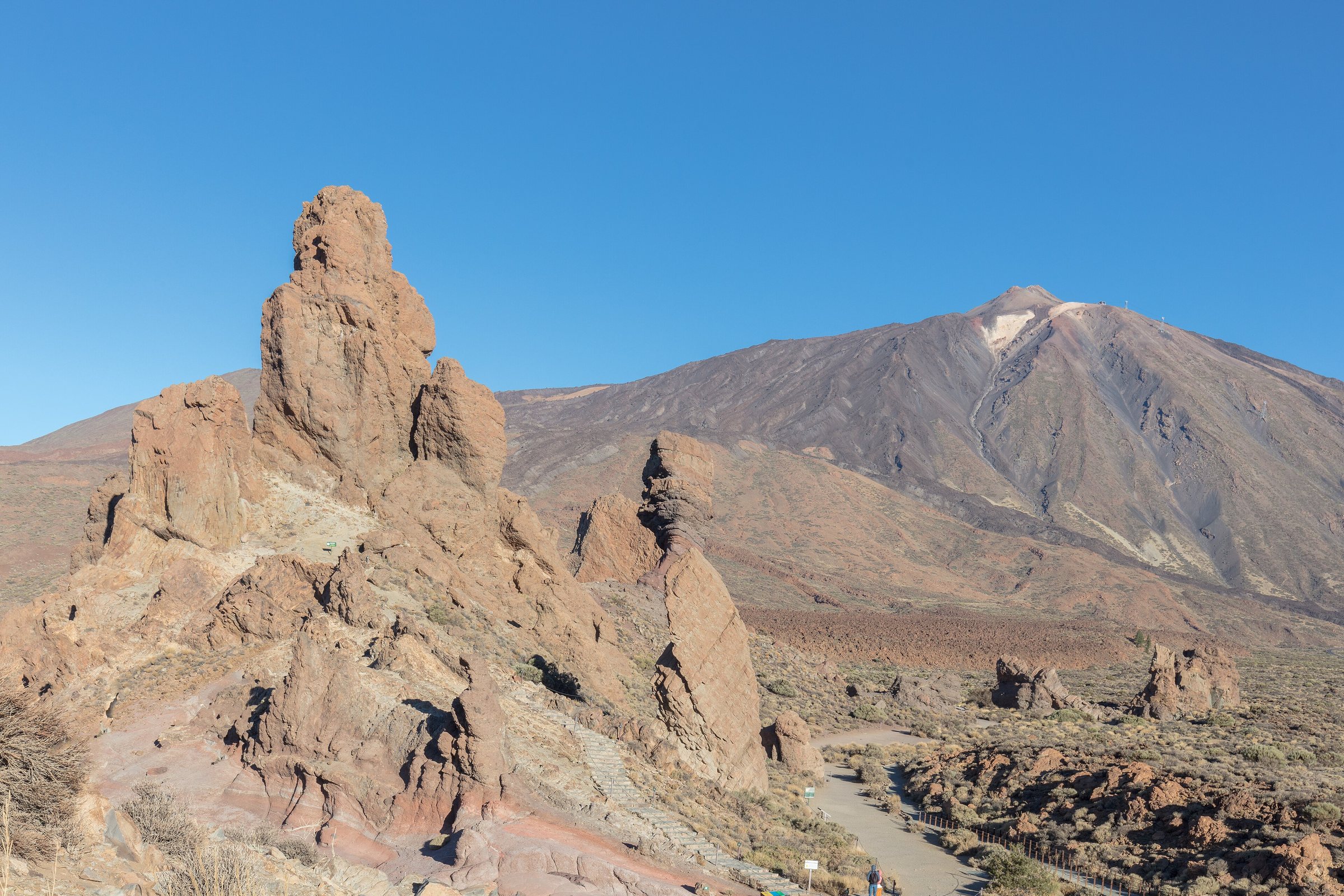
According to Spanish Wikipedia, Tenerife covers 2,034.38 square kilometres and Gran Canaria 1,560.1, so Tenerife is the bigger island. Tenerife's highest point, Teide, is Spain's highest mountain at 3,715 metres; Gran Canaria's Morro de la Agujereada reaches 1,956 metres and its landmark Roque Nublo 1,813.
Tenerife had 955,063 residents at the end of 2024, up 1.16% on the year, according to RTVC, citing ISTAC, the Canary Islands statistics institute. Gran Canaria had 863,943, a rise of 0.79%; island-level population figures for 2025 are not available in the material.
Las Palmas de Gran Canaria had 381,868 residents in 2025, according to the INE (Spain's national statistics office), as reported by RTVC. The source gives no comparable figure for Tenerife's towns, but by these figures only Gran Canaria offers a big city with port, beach and administration on one island.
Spanish Wikipedia lists La Laguna's historic centre and Teide National Park on Tenerife as UNESCO World Heritage, with the Anaga mountains a biosphere reserve since 2015. Gran Canaria has been a biosphere reserve since 2005; the Maspalomas dunes, the Caldera de Bandama and the Cenobio de Valerón are named, but UNESCO status is not confirmed for them.
Which island has the better climate?
AEMET (the state weather service) puts the 1981 to 2010 annual mean at 21.4 degrees at Tenerife Sur airport in Granadilla de Abona. Gran Canaria airport in Ingenio records 21.1; both stations sit on the dry south or east coast, so the 0.3-degree gap is hardly noticeable to visitors or new residents.
The gap in rain days is clearer: AEMET counts 15.2 days a year with at least 1 millimetre of rain at Tenerife Sur and 22.1 at Gran Canaria. December has 3.5 rain days against 4.5, November 1.9 against 3.9; June to August stay practically dry at both, with at most 0.2 a month.
From November to February Tenerife Sur is slightly sunnier, says AEMET: 193 hours against 184 in January, 195 against 179 in December. Gran Canaria is sunnier from April to October, with 272 hours against 246 in May and 308 against 295 in July, and adding up the months gives about 2,725 hours for Tenerife Sur and 2,822 for Gran Canaria (our own sum, not an AEMET figure).
In summer the two are level, with AEMET recording 24.7 degrees in August on Tenerife and 24.6 on Gran Canaria, and 18.4 and 17.9 in January. Neither station covers the north, where travel portals say the Teide massif brings more cloud and a far bigger north-south contrast, and sea temperatures and calima spells are not recorded here; for live values and warnings see CITA weather (cita.news/de/wetter.html) and AEMET.
How do airports, travel and visitor numbers differ?
Gran Canaria airport handled 15,826,553 passengers in 2025, 4% more than in 2024, according to AENA (the state airport operator), which makes it the biggest single airport in the Canaries. Tenerife Sur had 13,969,678 (up 1.7%) and Tenerife Norte-Ciudad de La Laguna 7,174,977 (up 6.1%), AENA reported on 13 January 2026.
Adding the two Tenerife airports gives 21,144,655 passengers, our own sum from the AENA figures. AENA counts 54,753,915 passengers across all Canary airports in 2025, up 3.6%, and Tenerife offers two gateways: Tenerife Sur for the south, Tenerife Norte for the north and the capital region.
AENA's June statistics for the first half of 2026 show a mixed picture: Gran Canaria had 7,917,801 passengers (up 0.5%), Tenerife Sur 6,845,121 (down 2.9%) and Tenerife Norte 3,514,967 (up 2.5%). These figures come from a summary of the statistics, and the source gives no cause for the fall at Tenerife Sur.
For May 2025, the ISTAC survey Frontur gives Gran Canaria 23.5% of arrivals in the Canaries, Lanzarote 19.3% and Fuerteventura 15%. Visitors from the British Isles made up 39.7%; full-year figures by island and the German share are not available.
What rules apply to visitors at Teide in 2026?
The Cabildo de Tenerife (the island government) announced daily quotas for three trails in Teide National Park on 15 October 2026, Euro Weekly News reported on 19 October 2026. Trail PNT 09 (Teide, Pico Viejo, Mirador de Las Narices del Teide) has 95 places, 70 for individuals and 25 for professional guides, while PNT 23 (Los Regatones Negros) and PNT 28 (Chafarí) have 65 each.
That makes 225 places a day, 150 for individuals and 75 for professional guides, and booking is free through the official platform on the official website. Anyone entering a regulated trail without a permit risks a fine of up to 600 euros, Euro Weekly News reports, though it does not attribute that figure to any authority.
According to RTVC and Canarian Weekly, the Cabildo introduced an eco-fee for non-residents on 19 January 2026, covering the summit trail Telesforo Bravo (PNT 10) and the Montaña Blanca–La Rambleta trail (PNT 07). Euro Weekly News says visitors from outside the Canaries pay 15 euros on PNT 10, residents of other islands 6 euros and Tenerife residents nothing, and children under 14 are exempt.
On PNT 07, visitors from outside the Canaries pay 6 euros on weekdays and 10 euros at weekends and on public holidays, while other reports give 15 euros for PNT 10 without a guide and 10 euros with one. The sources disagree on details, the Cabildo's wording is not available, and a cable car ticket does not replace the permit.
A single cable car ticket only goes as far as La Rambleta at 3,555 metres, and that also requires registration with Tenerife ON. The price is not confirmed, so go by the official website.
Tenerife or Gran Canaria: which island suits which kind of traveller?
Travel portals, Italian operators such as Alpitour and the official website's portal recommend Tenerife for hikers and nature lovers, citing Teide, the Anaga mountains and La Laguna, and call Playa de las Américas the liveliest resort. These are marketing claims, not official ratings, and newcomers should note that Teide is newly regulated, so hikes there need planning.
The same portals see Gran Canaria as the island for easy beaches, the city of Las Palmas and nightlife, and they highlight Maspalomas and its sand dunes. They add that the scenery is varied but on a smaller area; the beach comparisons come only from operators' sites, and the size of the dune area cannot be stated from the material.
Portals contradict each other on price: one claims Gran Canaria is 10 to 15% cheaper for accommodation and car hire, another sees only a small difference. Neither is backed up, and there is no official cost comparison for hotels or hire cars in the material, so travellers should ask providers directly for their dates.
According to travel portals, the two islands can be combined: the ferry takes at least 60 minutes and a flight about 30, but timetables, prices and Binter connections are not confirmed. The portals name Fuerteventura for quiet beaches and La Palma for hiking, and Teneriffa News says the shuttle buses to Teide reported for 2027 are only announced, not confirmed.