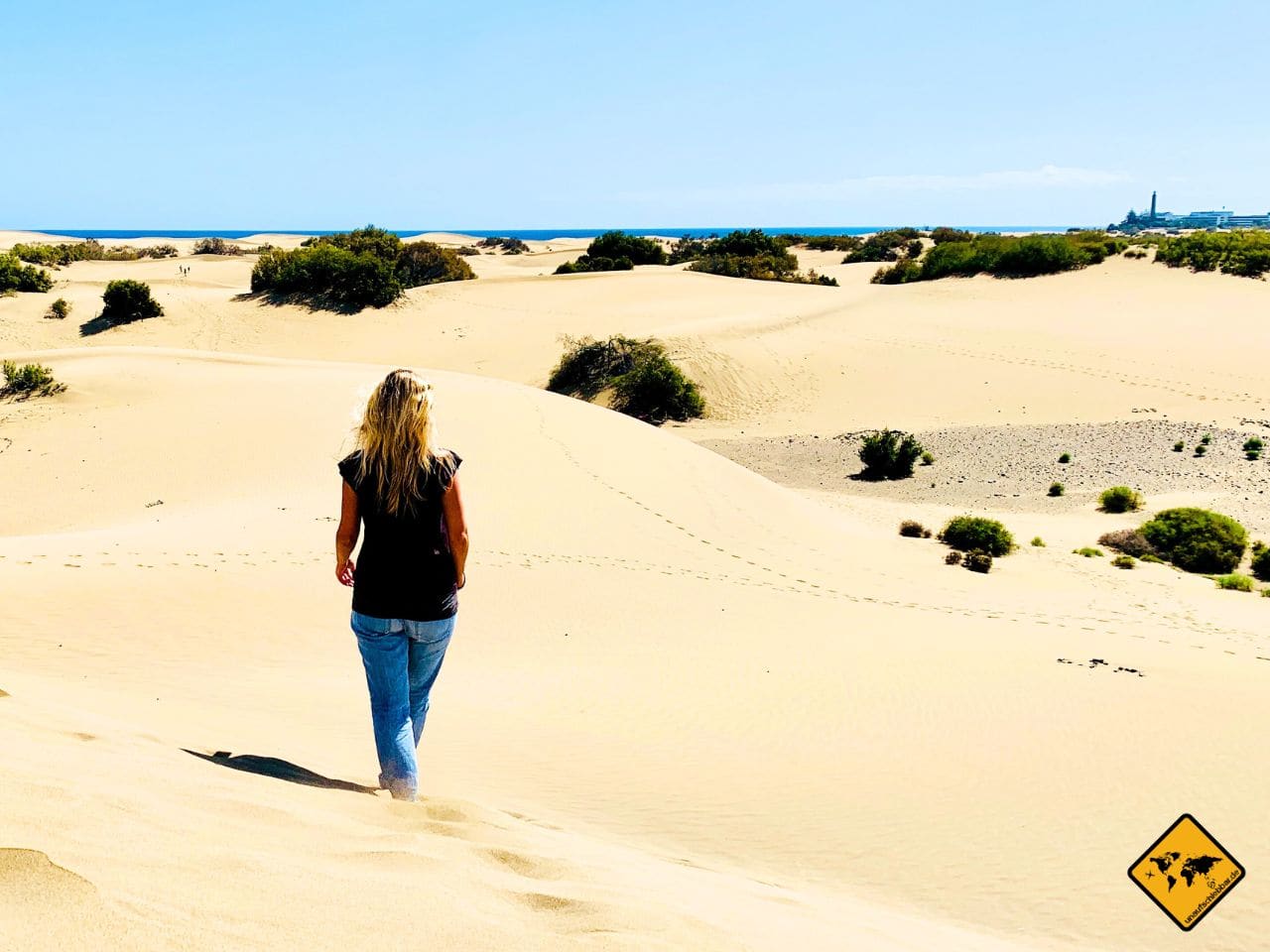
Why there's barely a wrong time to go
Let's start with the good news: you can hardly go wrong. Gran Canaria sits at the latitude of the Sahara, far south — but the cool Canary Current and the steady trade winds keep temperatures in a pleasant window all year. In winter the south is often still 20 to 22 degrees; in high summer it rarely tops 29. Snow, frost, heatwaves above 35? Almost never.
So the real question isn't whether, but what you want. Soaking up sun in January while the heating runs back home? Sure. Hiking at a cool 24 degrees in March? Ideal. Swimming in a warm Atlantic in October? Best time of all. This guide turns «always nice» into «best for me».
The four seasons at a glance
Winter (December–February): mild and sunny, 20–22 °C by day in the south. The classic time for northern Europeans escaping the cold. The sea is fresh at 19–20 °C, and the odd rainy day mostly hits the north. It gets busy around Christmas/New Year and in February (Carnival).
Spring (March–May): for many the loveliest time. 22–25 °C, lots of sun, the island is green, ideal for hiking and day trips. Outside Easter and Pride week in May, prices are moderate.
Summer (June–September): warmest (26–29 °C), driest, busiest — July and August are family high season. The sea turns properly warm. Now and then a calima brings hot, dusty days.
Autumn (October–November): the insider tip. The air is still warm (24–26 °C), the sea peaks for the year at 23–24 °C, and after the school holidays prices fall. November also brings Winter Pride.
Month by month
January: mild (20–21 °C), a winter-sun classic, quieter and cheaper after New Year. February: coolest month (~21 °C), Carnival brings life and full hotels. March: warming up (22–23 °C), great for hiking. April: reliably sunny; busier around Easter.
May: glorious 23–25 °C, long days, Maspalomas Pride; outside Pride week good value. June: start of summer, quiet before the school holidays, the sea turns pleasant. July/August: hottest (28–29 °C) and busiest, warm sea, family season.
September: still high-summer, but emptier and cheaper after mid-month. October: warmest sea of the year (~24 °C), great weather, good prices. November: still 24–25 °C, Winter Pride, a few more clouds. December: mild and sunny, pricey and packed from Christmas.
When the sea is warm enough to swim
The Atlantic around Gran Canaria is never tropical — the cool Canary Current sees to that. In late winter (February/March) the sea sits at around 19–20 °C; refreshing, but for many still too cool for a long swim.
From June it climbs above 21 degrees, and from August to November it peaks at 23–24 °C — by far the best time for swimmers and snorkellers. So if you want it warm, plan the beach holiday for the second half of the year. Tip: sheltered city beaches like Las Canteras often feel a touch warmer than the open south coast.
Calima, rain & the north–south divide
One sentence saves you a lot of grief: for sun, head south. Gran Canaria is a «mini-continent» island with microclimates. The north around Las Palmas is greener, cooler and more often cloudy (trade-wind clouds pile up against the mountains), while the south — Maspalomas, Playa del Inglés, Mogán — is almost always dry and sunny. When it's grey in the north, you're often still in the sun in the south.
Rain falls mainly between November and February, and even then usually briefly and in the north. The second weather topic is the calima: a hot, dusty wind off the Sahara that briefly pushes temperatures up and turns the sky milky. It comes irregularly (more often in late summer and winter), usually lasts only one to three days, and is no reason to postpone a trip. More in our weather & calima guide.
Best time by type of traveller
Beach & swimming: June to November — warm sea, long sunny days. Hiking & active: November to May, when it's cooler (the GR131 season runs Nov–May). Families: July/August for the school holidays (but busiest) or Easter.
Quiet & low budget: May, June, late September and October, plus early December and mid-January — good weather, fewer people, fair prices. Winter sun escape: December to March, when 20 degrees and sunshine feel like a gift. Scene & party: the two Pride weeks in May and November.
When it gets busy and expensive
High season has clear peaks: Christmas and New Year, Carnival in February, Easter, the summer holidays in July and August, and the two Pride weeks. In those windows flights and hotels are dearest and well-placed accommodation is gone months ahead — if you travel then, book early.
The most relaxed and cheapest are the «shoulder» weeks: early December (before the Christmas rush), mid-January to early February (except Carnival), May (except Pride), June and late September to October. The weather is almost as good — just without the crowds and at half the price.
Frequently asked questions
- When is the best time to visit Gran Canaria?
- There's no bad time. For swimming June–November (warm sea), for hiking November–May (cooler), for winter sun December–March. The cheapest and quietest weeks are May, June, October and early December plus mid-January.
- When is the sea warmest?
- From August to November, at around 23–24 °C. It's coolest in late winter (February/March) at 19–20 °C.
- When is it cheapest?
- In the low season: May, June, late September/October, plus early December and mid-January — outside Carnival, Easter and the Pride weeks.
- When is high season?
- Christmas/New Year, Carnival (February), Easter, the summer holidays (July/August) and the two Pride weeks in May and November.
- Does it rain much on Gran Canaria?
- Hardly in the south. Some rain falls mainly in the north and between November and February — usually brief. For reliable sun, head south.
- What is the calima?
- A hot, dusty wind off the Sahara that briefly raises temperatures and clouds the sky. It comes irregularly, usually lasts one to three days, and is no reason to postpone a trip.
- South or north for good weather?
- The south (Maspalomas, Playa del Inglés, Mogán) is almost always sunny and dry. The greener north around Las Palmas is cooler and more often cloudy.
Read on
- Lanzarote climate: the best time to visit at a glanceLanzarote · 4 October
- La Palma climate: best time to visit at a glanceLa Palma · 4 October
- La Gomera: climate and best time to visit at a glanceLa Gomera · 4 October
- Gran Canaria volcano: Bandama, Roque Nublo and geologyGran Canaria · 29 October
- Gran Canaria: San Rafael in Vecindario with 50 eventsGran Canaria · 28 October
- All events on Gran Canaria →