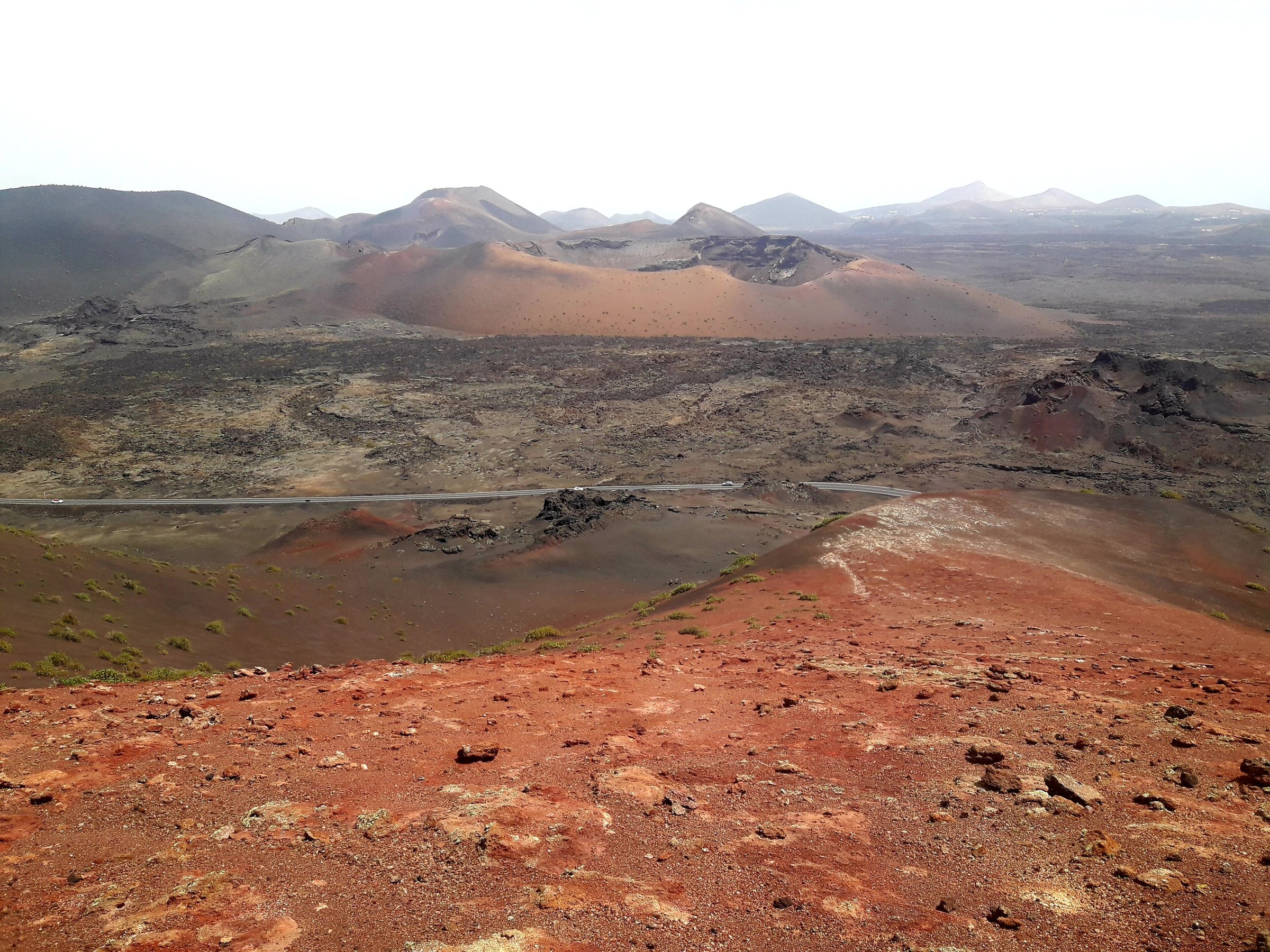
Is the volcano on Gran Canaria still active?
Gran Canaria has no active volcano. According to the official tourism portal, the most recent known eruption took place around 2,000 years ago and formed the present-day Pico and the Caldera de Bandama.
The island is geologically much older than its youngest visible eruption features. According to geological data from the IGN, the Roque Nublo cycle occurred around 5.3 to 3.4 million years ago.
Compared with Lanzarote, La Palma or El Hierro, Gran Canaria looks more heavily eroded. Visitors see deep ravines and weathered rock formations rather than extensive young lava fields.
The available official sources show no confirmed new eruption or other volcanic activity in 2026.
What is the Caldera de Bandama and how do you visit it?
The Caldera de Bandama lies between Santa Brígida, Telde and Las Palmas de Gran Canaria and is designated as a protected natural area. It is officially about 216 metres deep, around 1,100 metres wide and has a circumference of more than three kilometres.
The complex consists of two geological structures: the Pico de Bandama with its crater and the caldera. The caldera was formed by a large phreatomagmatic explosion, when rising magma came into contact with groundwater.
Visitors can walk around the crater rim or descend into the interior. The official information lists no general entrance fee for the caldera; for paths, viewpoints and natural areas, only the signposted access points and local protection rules apply.
Opening times and possible closures should be checked with the relevant island or municipal authority before visiting. According to official tourism information, the area formed around 5,000 years ago.
How do you reach Roque Nublo and what should you bear in mind?
Roque Nublo is a volcanic monolith almost 90 metres high and one of Gran Canaria's best-known landmarks. It formed during the Roque Nublo cycle, which according to geological data took place around 5.3 to 3.4 million years ago.
The island's official viewpoint network includes Roque Nublo as well as Caldera de los Marteles, La Crucita, Roque Bentayga, Bandama and Pinos de Gáldar. The term "Roque Nublo spatter" refers to a particular volcanic rock structure created by the solidification of hot volcanic clouds and subsequent cooling.
Access to Roque Nublo is subject to specific rules depending on the period and visitor numbers. Because requirements, booking obligations and shuttle systems can change, visitors should check the latest information from the Cabildo de Gran Canaria before travelling.
Off the authorised paths in protected landscapes, there is a higher risk from loose rock, rockfall and sudden weather changes. No compulsory entrance fee is mentioned in the official sources.
What climate can visitors expect at the volcano sites?
For reliable monthly values, the AEMET 1981–2010 standard period for Gran Canaria Aeropuerto station at 24 metres altitude is a useful reference. It reflects the coastal area, not the much cooler and windier mountain region.
The annual averages at this station are 21.1 °C, 151 mm of precipitation and 70.9 days with at least 1 mm of rain, according to AEMET. August is the warmest month at 24.6 °C and January the coolest at 17.9 °C.
Spring and autumn are often particularly balanced for volcano walks. In high summer the days are longest and driest, although higher ground can still be windy or cloudy.
Calima episodes and trade-wind cloud can change visibility and how warm it feels. For current values and warnings: CITA weather (cita.news/de/wetter.html) and AEMET.
What safety rules apply in the volcanic areas?
Strict rules of conduct apply in Gran Canaria's protected natural areas. Visitors must stay on marked and authorised paths, respect barriers and must not remove plants, rocks or archaeological objects.
Sturdy footwear, water, sun protection and an extra layer of clothing are recommended for walks. In strong wind, fog, thunderstorms or intense heat, the walk should be abandoned.
Fires and camping are only allowed in protected natural areas with the relevant permits. Before setting off, check the Cabildo's official status and access information as well as AEMET weather warnings.
The official sources list updated websites and information materials for Bandama and Roque Nublo in 2026. No entrance fee is mentioned in them.
What alternatives are there to Bandama and Roque Nublo?
Several other areas offer a volcanic route alongside Bandama. Las Cumbres includes Montañón Negro, Caldera de los Pinos de Gáldar, Hondo de Fagagesto and Berrazales with relatively young volcanic cones.
The Rosiana volcanic field shows a walking landscape around Quaternary cones, especially El Melosal, combined with rural scenery and dragon trees. Guayadeque near Ingenio and Agüimes is an old, heavily eroded volcanic area suited to geomorphology and cultural landscape.
Near Las Canteras and in the La Isleta protected area, solidified lava tongues are visible. Gran Canaria therefore offers a broader range of volcanic development than younger islands, but no fresh lava fields like Lanzarote or La Palma.