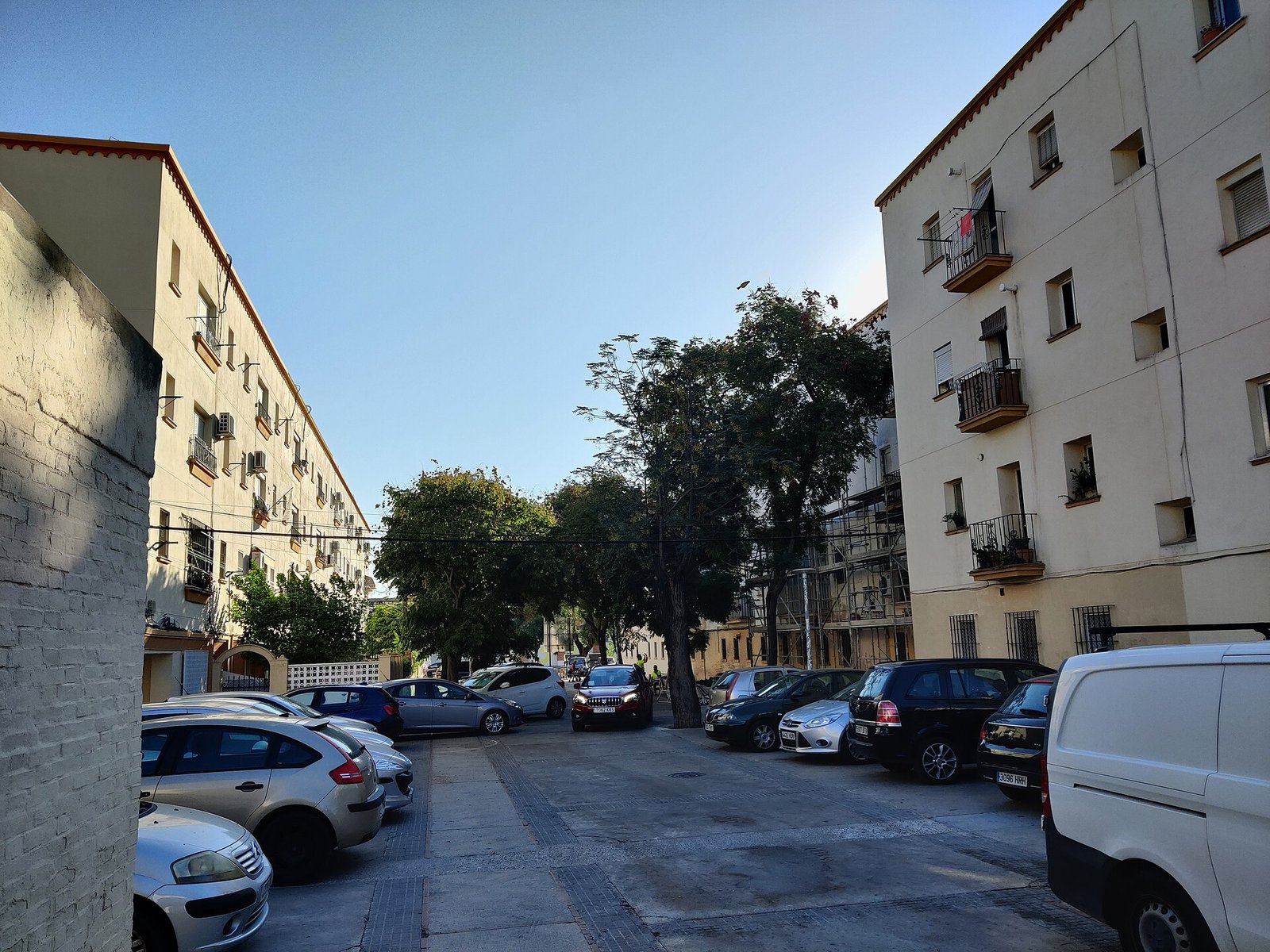
Let us be honest: the conversation about housing in the Canary Islands has become a bit of a headache in recent years. Between rising prices and a market that often feels geared towards investors or holiday lets, many young locals have been left wondering if owning their own place was a realistic dream. The regional government recognised this tension and, for 2026, put a concrete number on the table to help: a direct subsidy of up to 11,000 euros. This was not a loan, not a tax break, and definitely not a mortgage guarantee. It was a straightforward grant designed to ease the financial burden of buying a completed first home.
The official call opened in April 2026, with a strict deadline of 18 May 2026. The programme was managed by the Instituto Canario de la Vivienda (ICAVI) and backed by a total budget of 3 million euros. The core idea was simple: if you are a young resident, you want to buy a place to actually live in, and you meet the financial criteria, the government would chip in a significant sum to help you get the keys. While the window is now firmly shut, understanding the mechanics of this aid gives a valuable insight into the direction of housing policy on the islands and what might return in future calls.
Who Could Actually Apply?
The eligibility criteria were quite specific, and for good reason. This was a targeted measure, not a blanket handout. First and foremost, you had to be a young person, defined by the programme as being 35 years old or younger. Crucially, this was a programme for residents. Applicants needed to have Spanish nationality or legal residence in Spain, and the property in question had to be located in any municipality across the Canary Islands. This firmly ruled out non-resident investors or those looking for a holiday home.
The property itself had to be a completed, existing dwelling—off-plan new builds were not eligible. It had to become the applicant’s habitual, main residence. To prove this commitment, the buyer needed to be registered on the municipal padron at that address, or at least have applied for registration, by the application deadline. The purchase deed also had to be formalised between 1 January 2025 and the end of the application period. A key financial condition was that at least 50% of the purchase had to be financed through a mortgage loan, ensuring the grant worked alongside, not instead of, traditional bank financing.
Income Limits and Property Price Caps
To ensure the aid reached those who needed it most, the government set clear income and price ceilings. The general income cap was set at three times the IPREM (a public income indicator used in Spain). This threshold was more flexible for families with specific circumstances, rising to four times the IPREM for certain disability cases or large families, and even up to five times the IPREM in very specific situations. This tiered system acknowledged that a single person’s financial reality is very different from that of a family of five.
On the property side, the maximum eligible purchase price was adjusted to reflect the diverse market across the archipelago. On the more expensive capital islands, the cap was set at 170,000 euros. On the non-capital islands, or for large families regardless of location, the limit was raised to a more generous 200,000 euros. The government explicitly stated that these price limits were increased for the 2026 call to better reflect the “current market reality” in the Canary Islands, a nod to the fact that finding a decent home under the old limits had become a real challenge.
The Application Process and Its Strict Deadline
Applying was a purely digital affair, reflecting the modern push for e-government. The preferred route was through the Government of the Canary Islands’ electronic office, which required a digital certificate or the Cl@ve identification system. The official application form was hosted on the ICAVI website. The clock was ticking from the moment the call was published: the application period ran for 20 working days, from 17 April 2026 to 18 May 2026, inclusive. There was no wiggle room on this, and late submissions were not accepted.
With the deadline now passed, the administrative machinery is in processing mode. For those who applied, the grant comes with long-term strings attached. The purchased home must remain the beneficiary’s habitual residence for at least five years. During this period, the property cannot be sold or rented out without explicit authorisation from the housing institute. This condition ensures the programme fulfills its social goal of providing stable, long-term homes for young people, rather than creating a quick-flip investment opportunity.
Not to Be Confused: The Separate Mortgage Guarantee Scheme
It is easy to mix up the various housing initiatives, so a word of clarity is useful. The 11,000 euro grant is a completely different beast from the so-called “Hipoteca Joven” or “Mi Primera Vivienda” scheme. That separate measure is a mortgage guarantee line, where the government acts as a guarantor to help young buyers secure a loan covering up to 95% of the property value. The goal there is to solve the deposit problem, not to provide direct cash.
The direct grant, in contrast, was cold, hard cash to reduce the overall purchase price. While one helps you get the loan, the other helps you pay less for the home itself. Both tools were designed to work in the same ecosystem of making home ownership more accessible, but they operated through entirely different mechanisms. For a young buyer, being able to combine both—a state-guaranteed high-percentage mortgage and an 11,000 euro grant—would have been a powerful financial combination, though the specific compatibility rules would need to be checked with ICAVI for future calls.
Common questions
- Can I still apply for this 11,000 euro grant now?
- No, the application window for the 2026 call closed on 18 May 2026. You would need to wait for a potential new call in the future.
- Was this grant available to non-residents or tourists?
- No, it was strictly for people with Spanish nationality or legal residence in Spain, buying a home in the Canary Islands to use as their main residence.
- Could I use the grant to buy a holiday home or an investment property?
- No, the purchased property had to be your habitual residence for at least five years, and it could not be sold or rented out during that period without permission.
- Did the grant cover taxes and notary fees?
- No, the maximum 11,000 euros was a contribution towards the purchase price of the property itself, not the associated acquisition costs.
- Is this the same as the 95% mortgage guarantee for young people?
- No, that is a separate scheme. The grant was a direct cash subsidy, while the other is a government guarantee to help you get a larger mortgage.
Read on
- Canary Islands: time difference, clocks and calima guideCanary Islands · 19 October
- Canary Islands 19 October: Michael show, Periplo, San RafaelCanary Islands · 19 October
- La Laguna: €500 grant for driving licenceTenerife · 14 October
- Canary Islands 17 October: festivals, concerts and partiesCanary Islands · 17 October
- Canary Islands doctors' strike resumes 19 OctoberCanary Islands · 19 October
- All events on the Canary Islands →
Stand: July 2026. This article summarises the 2026 grant programme whose application period is now closed. Details are based on official government publications and are for informational purposes only.