High in the ravines of La Gomera, a cave carries the weight of an island’s turning point. The Cueva de Guahedum, tucked into the landscape near Degollada de Peraza, is the place most commonly identified with the dramatic events of 1488 — the killing of the island lord Hernán Peraza el Joven and the indigenous rebellion that followed. Now, the Cabildo Insular de La Gomera is working to give this fragile piece of history the highest level of legal protection Spain can offer: a declaration as a Bien de Interés Cultural, or BIC.
The move is not new, but it is gaining fresh momentum. Back in July 2022, the insular plenary agreed to start the BIC process for the cave and its surroundings. More recently, the local political group Iniciativa por La Gomera has been pressing the Cabildo publicly, asking for clarity on where the file stands. The answer matters not just for paperwork, but for how the island safeguards a site that sits at the crossroads of archaeology, oral tradition, and identity.
A cave, a rebellion, and layers of story
To understand why Guahedum matters, you have to step back to 1488. The conquest of the Canary Islands was in its final chapters, and La Gomera was under the seigneurial rule of Hernán Peraza el Joven. The relationship between the Castilian lord and the indigenous Gomeros had soured, and what happened next is a mix of documented history and oral tradition that has been retold for centuries.
The widely reported sequence goes like this: the indigenous Gomerans rose up, Peraza was killed, and the repression that followed was brutal, effectively sealing the end of the conquest of La Gomera and cementing seigneurial control. Popular retellings often weave in the figures of Iballa and Hautacuperche, and place a council or ambush at the cave itself. Some of the romanticized details around motive and exact sequence should be treated as tradition rather than firmly documented fact, but the core of the story — a rebellion, a death, and a landscape that still holds the memory — is very real.
What a BIC declaration actually means
A Bien de Interés Cultural is Spain’s top-tier heritage designation, and it comes with serious legal teeth. In the Canary Islands, archaeological sites of major importance are commonly protected under the category of zona arqueológica, which safeguards not just a single point but the wider landscape that gives it context. For Guahedum, that means the cave itself, the terrain around Degollada de Peraza, and the visual and historical connections that make the site legible.
The protection initiative is being driven at the Cabildo Insular, the island’s governing council. With IxLG now publicly asking for the status of the file, the process is back in the spotlight. If the declaration moves forward, it would place Guahedum alongside the island’s other protected heritage assets and open the door to more careful management, research, and interpretation for visitors.
More than one episode: the living heritage of La Gomera
For La Gomera, Guahedum is bigger than a single dramatic event. The cave is tied to the island’s aboriginal memory, the survival of oral tradition across generations, and the wider heritage of the pre-Hispanic Gomeros. It sits within a cultural landscape where archaeology, story, and geography are inseparable — the deep ravines that shaped indigenous life are the same ones that carry the whistled language of Silbo Gomero, recognised by UNESCO as Intangible Cultural Heritage.
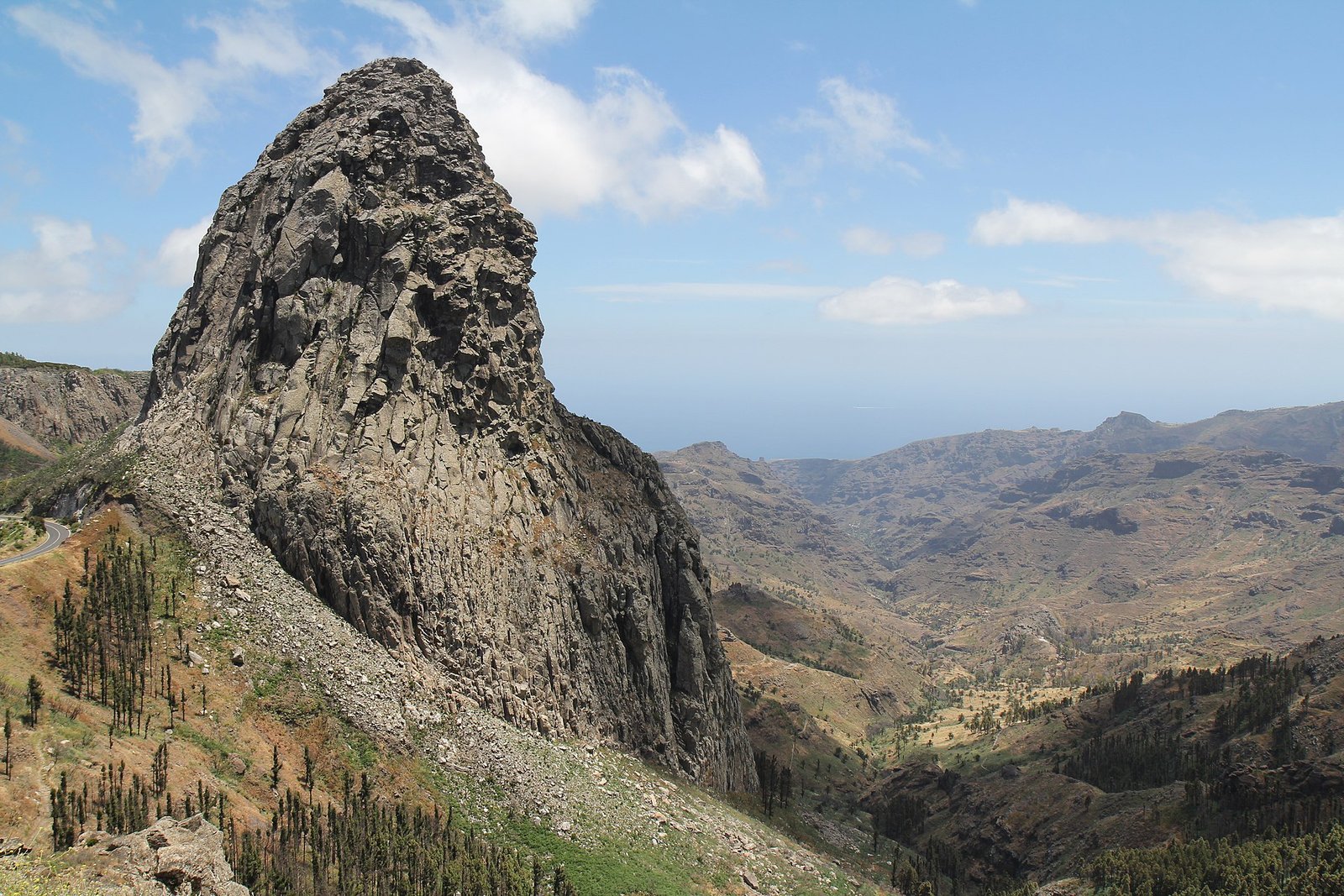
Visitors who come with a culturally curious eye can trace a route that connects several meaningful stops. The cave area near Degollada de Peraza is the emotional anchor, but the Museo Arqueológico in San Sebastián provides the material culture and historical framework. Heritage viewpoints around Roque de Agando and the island’s ravines help you read the landscape that shaped the rebellion story. And experiences tied to Silbo Gomero show how the same geography that once carried warnings and calls to arms now carries a living language that is inseparable from the island’s identity.
What happens next for the cave
The path to a full BIC declaration is rarely fast. The file has been open since 2022, and the current push from Iniciativa por La Gomera is aimed at making sure it does not stall. For residents and visitors alike, the outcome will shape how the site is presented, protected, and understood in the years ahead.
In the meantime, the cave remains accessible to those who want to stand in a place where history and legend blur together. The landscape around Degollada de Peraza is stark and beautiful, and even without a plaque or a visitor centre, it carries a quiet weight. If the BIC process succeeds, that weight will finally be matched by the legal recognition it deserves.
Common questions
- What is the Cueva de Guahedum?
- It is a cave near Degollada de Peraza in San Sebastián de La Gomera, most commonly identified as the site associated with the 1488 indigenous uprising and the death of Hernán Peraza el Joven.
- What does BIC mean?
- Bien de Interés Cultural is Spain’s highest heritage protection category. For archaeological sites in the Canary Islands, it is often applied as a zona arqueológica, protecting the site and its surrounding landscape.
- Who is pushing for the protection?
- The Cabildo Insular de La Gomera began the process in July 2022. The political group Iniciativa por La Gomera is now publicly asking for an update on the file’s progress.
- Can I visit the cave?
- Yes, the area near Degollada de Peraza is accessible. It is best combined with a visit to the Museo Arqueológico in San Sebastián for context, and with other heritage viewpoints around the island.
- Is the story of the rebellion fully documented?
- The core event — the 1488 uprising and Peraza’s death — is historical. Some popular details involving Iballa and Hautacuperche contain legendary elements and should be understood as oral tradition.
Read on
- La Gomera: Valle Gran Rey holiday let rules explainedLa Gomera · 25 October
- La Gomera: Ruta 17 closed until 31 OctoberLa Gomera · 22 October
- La Gomera: Vocal Sampling on 9 Oct, fiestas end 11 OctLa Gomera · 6 October
- La Gomera: CV-14 shut 21–22 Oct, 07:00–13:00, Garajonay hitLa Gomera · 21 October
- La Palma, La Gomera and El Hierro this weekend, 23–25 October 2026La Gomera · 19 October
- All events on La Gomera →
Stand: 26 July 2026. This article is based on verified reporting and publicly available heritage information. Some historical details in popular retellings are treated as oral tradition unless separately documented.