What changes for visitors and residents on El Hierro?
The Cabildo has not published a new rule, closure or deadline for travellers or residents. The decree is addressed to the Canary Islands government and the state, not to visitors.
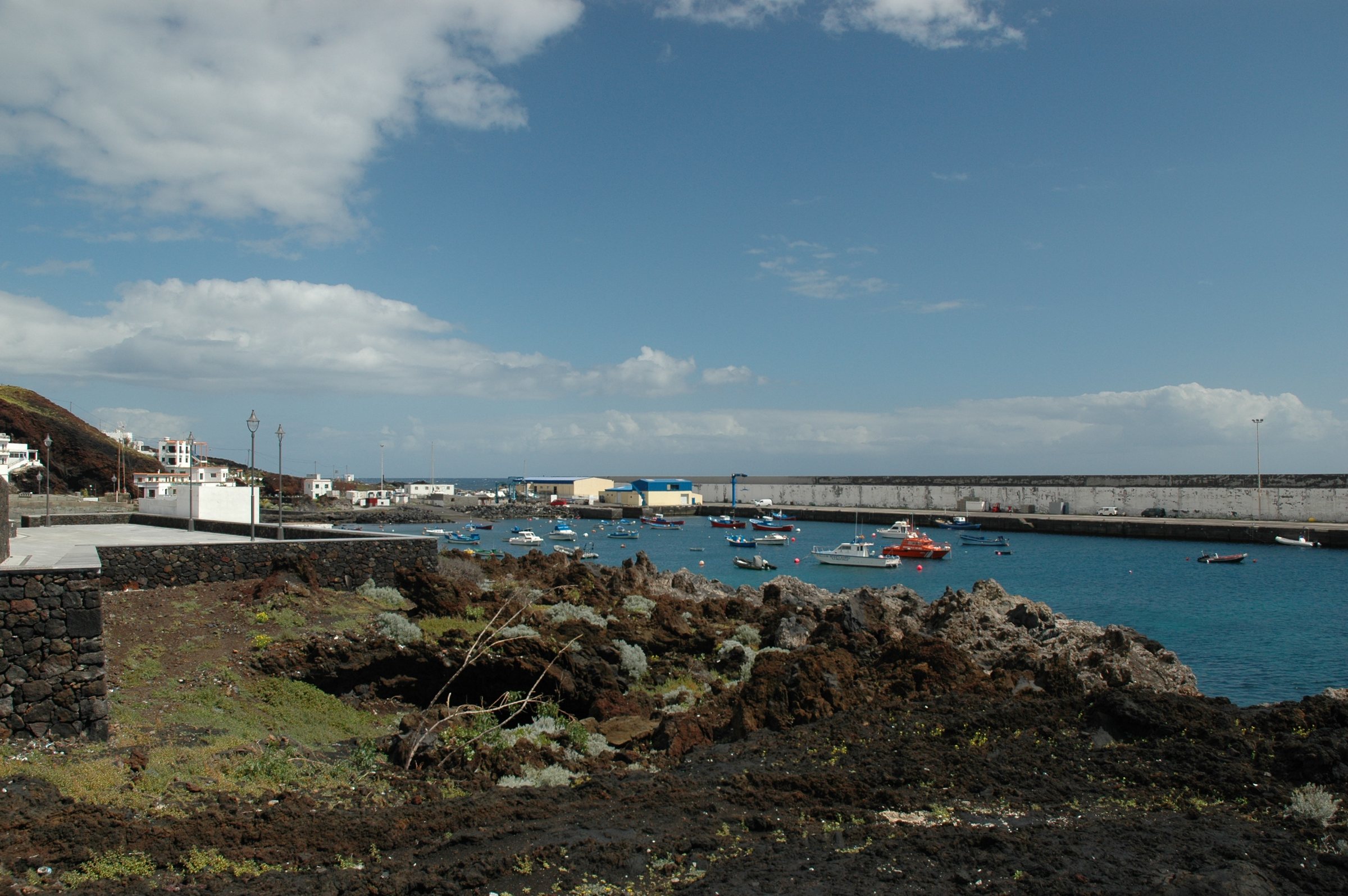
La Restinga, the harbour village in the municipality of El Pinar, is hit directly. The Cabildo cites direct effects on residents, shops, fishing firms and dive operators, and speaks of considerable strain in the village.
Anyone planning to swim or dive there should ask first. Check with the town hall and the dive operator.
In late October, police moved about 250 people on the regular ferry between Tenerife and El Hierro. No timetable changes have been reported, but anyone with a booked crossing should still check the service with the operator.
What does the Cabildo's decree say?
Cabildo president Alpidio Armas formalised the “emergencia social” by decree. The date remains open: one report says Friday 6 November 2026, another says 7 November.
The declaration cites more than 8,000 arrivals in five weeks. The available information does not say who counted them or which weeks it means.
The pressure has grown further, the Cabildo says: more than 3,000 people arrived on about 30 cayucos in five days. That works out at about 600 people a day.
Armas says the situation has recently worsened and states: “El Hierro cannot cope with this alone”. The decree warns that the reception protocol could be overloaded or collapse without reinforcements.
What does the Cabildo ask of the Canaries and the state?
The Cabildo wants more staff and more funding from the Canary Islands government and the state. Teams should be able to rest in rotation, including Salvamento Marítimo (sea rescue), the Canary health service, the state security forces, the Red Cross and aid groups.
People should be moved in a coordinated way to islands with more capacity. First-reception facilities should also be strengthened.
Humanitarian aid should stay compatible with the fishing and dive businesses of La Restinga. The Cabildo has already taken health measures at the landing area and set up temporary first-reception centres.
The centres are meant to relieve the CATE (reception centre for foreigners) in San Andrés, Valverde. According to one assessment in the coverage, the declaration suspends no rights, gives the Cabildo no special powers and sets no deadlines for the two governments.
How many boats arrived recently, and where do people go?
On 23 and 24 October, three cayucos carrying 252 people reached the island, with 78, 102 and 72 on board. They went to the CATE in San Andrés, where the group Corazón naranja – Ebrima Sonko cared for them under police guard.
On 25 October, the Delegación del Gobierno (central government's local office) moved 471 people to Gran Canaria on a chartered Fred. Olsen ferry from La Estaca harbour in Valverde. Of these, 390 came from the CATE and 81 from the former Convento de La Frontera, which the Red Cross runs.
Since 23 October, 900 people in total have left the island. According to reports, the aim was to keep the reception centres from overcrowding.
Four cayucos carrying 377 people arrived on 3 and 4 November, including 21 women and 19 minors. The Canary Islands government accused the state of negligence and said eleven boats came within 24 hours without the Sánchez government calling.
According to reports, 314 people landed on three cayucos at La Restinga overnight into 7 November. On 8 November almost 600 people arrived in four boats, by preliminary figures. The numbers conflict, and about 26 boats queued at the pier after a harbour crane failed.
Who is responsible, and who pays?
In October 2024, the Cabildo said it has no powers over immigration and only provides infrastructure. The Spanish government and the Canary Islands government are responsible, the latter for protecting unaccompanied minors.
In 2023, the Council of Ministers approved a direct grant of 50 million euros for the Canaries. El Hierro received 5.8 million euros of it for a temporary reception centre.
On 10 February 2026, minister Ángel Víctor Torres announced 10 million euros for a full renovation of the “el monasterio” centre in Echedo. He gave no figures for places, no timetable and no operator.
El Hierro was already the main landing point: in 2023, 152 boats carrying 14,417 people arrived, according to the Cabildo. By 1 October 2024, the Cabildo had counted 191 boats with 15,025 people.
What is still open, and what happens next?
The Canary Islands government and the state have not yet replied to the decree. One media report says the Comisión Interministerial de Inmigración (interministerial immigration committee) has been convened, but gives no date or place.
The text of the decree has not been published online so far. There are also no figures for extra staff or transfers, and no budget in euros.
Across the Canaries, arrivals fell at first in 2026. According to the Interior Ministry, 8,970 people arrived by 15 October, 33.5% fewer than in 2025.
From 1 to 15 October 2026 the figure was 1,837, against 643 a year earlier, a rise of 185%. Autumn thus brings a clear increase from a low yearly level overall.