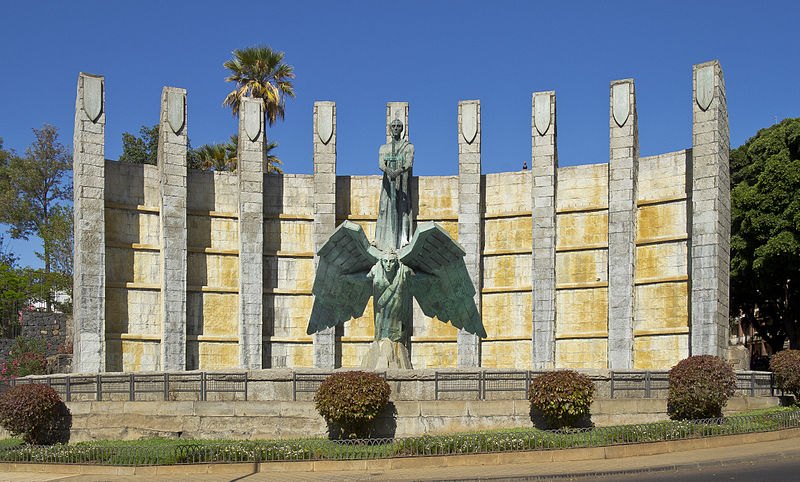
The monument is the work of Juan de Ávalos — the same sculptor behind the monumental figures in the "Valley of the Fallen" near Madrid, the largest Francoist structure in Spain. That authorship alone makes the work in Santa Cruz politically charged. Its defenders call it the "Monument to Peace", its critics the "Franco monument". The very argument over the right name shows how deep the divide runs.
The decision: no heritage protection
What set things in motion was a 2024 court ruling that obliged the island council (Cabildo) to open a protection procedure and assess whether the sculpture was a "Bien de Interés Cultural" — the highest heritage protection under Canarian law. The advisory body, the Cultural Heritage Council, reached a clear result: by 16 votes against, with one abstention and not a single vote in favour, it rejected the status. Its reasoning: the work does not possess the exceptional values required for the highest form of protection.
Without that protection, the Canarian law on historical memory applies — and that provides for the removal of Francoist symbols from public space. So everything points towards removal. Yet experts stress that this does not "condemn" the sculpture; it merely leaves it without special protection.
The two camps
On one side are the supporters of removal, led by the Association for the Recovery of Historical Memory of Tenerife (ARMHT). For its president, Mercedes Pérez Schwartz, the monument is "an affront to the victims" and a Francoist symbol that has no place in public space in a democracy. Her proposal: move the sculpture to the military museum (Cuartel de Almeida) and turn the site into a memorial for the victims — preserve it, but in an explanatory context, not as a monument of honour.
On the other side, the San Miguel Arcángel association is fighting to keep it, backed among others by the Canarian Academy of Fine Arts. Its president, Luis Sosa-Tolosa, argues from the artistic and historical value of the work, and stresses that the sculpture itself bears no Francoist symbols or inscriptions. Removal, they charge, is purely ideologically motivated. The association says it will "exhaust all available legal avenues".
Why it could take a long time
And here lies the catch that quick headlines like to overlook: the pro-retention association intends to challenge the regional government's procedure over alleged formal and assessment errors. If the challenge is admitted, the final decision on the sculpture's fate could be delayed by two to three years. As long as the procedure is open, the defenders argue, a protection similar to heritage status still applies. So removal is "planned" — but neither decided nor carried out.