What does the dispute mean for guests and residents?
So far, the reports show no change for guests or residents. No source mentions price rises, access rules or beach closures, and residents face no deadlines.
The hotel in the municipality of La Oliva is open, and the permit has not been revoked for good. Anyone with a booking does not need to act at present.
The permit mentions a temporary hotel closure during the building work as an option for the operator. The authority backs that option, but there is no date.
During the demolition work in summer 2025, RIU told tour operators on 7 July, according to reports at the time, and announced compensation for guests. Anyone in doubt should ask their tour operator or the hotel before travelling.
What does Turcón accuse the hotel of?
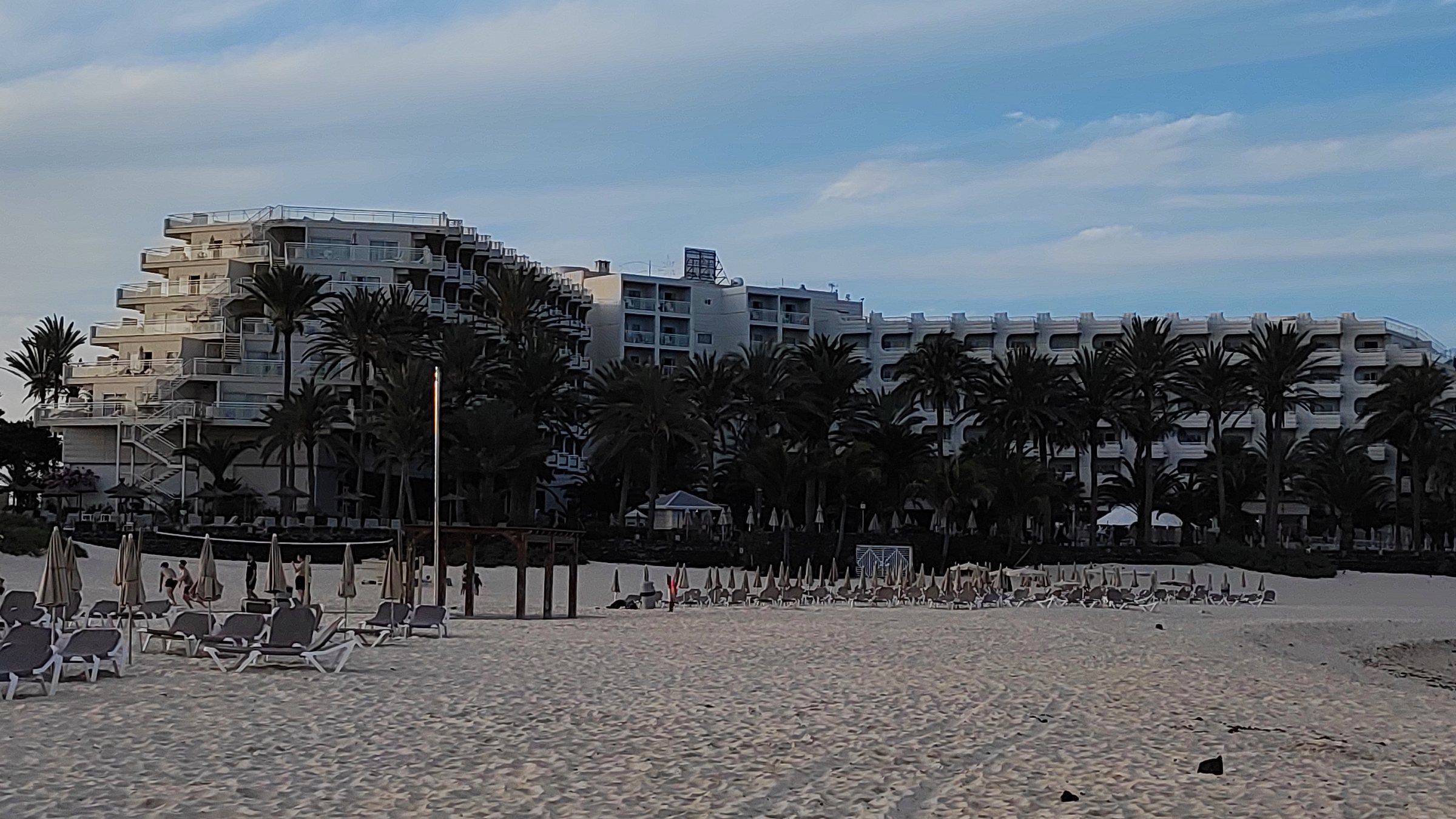
On 22 November 2026, Turcón-Ecologistas en Acción said building work is continuing on the hotel grounds. Its photos show mobile cranes, support structures and a lot of building material, and were reportedly taken in the previous week.
The group wants the Demarcación de Costas de Canarias (the coastal authority, known as Costas) to carry out an immediate inspection and write a report. If the work falls under the suspended permit, Costas should stop it.
According to Turcón, the images so far show only machinery, building aids and material. No official finding says whether anyone is working without permission.
RIU has not commented in the reports available, and Costas has not replied. Nobody has said whether the authority has already inspected.
Why is the permit suspended at all?
On 5 August 2026, Costas approved renovation and modernisation work by RIU Hotels S.A. at the Tres Islas. On 11 August, Turcón lodged an appeal (recurso de alzada) and asked for the permit to be suspended until a decision.
Costas did not rule on that request within a month. Under article 117(3) of Law 39/2015, the permit is therefore treated as suspended.
The Costas letter is dated 21 September 2026 and went to Turcón and Ben Magec. The suspension thus results from the authority's silence, not from an explicit decision.
The appeal itself has not yet been decided. No deadline for a decision has been found.
What did Costas approve, and what did it refuse?
Costas approved only part of the project, including accessibility, air conditioning, fire protection, water saving, lift replacement, electrics, interior work and pool work. It refused six new rooms on the sixth floor.
Those rooms would be an expressly banned change of use under article 32.2 of the Coastal Law. RIU says the work concerns only the existing building, with no extra volume, height or floor area.
The Órgano Ambiental de Fuerteventura (the island's environmental body) found no significant effects in a simplified environmental assessment. Its report is dated 2 August 2026, and RIU cites salt-air damage and ageing technology as the reasons for the work.
The conditions include ecological supervision of the building work and protection of plants and birds such as Cory's shearwater. They also require less noise, dust and light, and ban the use of land outside the project area.
What is known about the hotel and its history?
The hotel opened in 1976, before the natural park was created, and lies in the Natura 2000 zone ZEC Corralejo. The concession went to Sonco Canarias in April 2007 and runs until 2037.
The concession allows repairs and improvements but no increase in volume. In 2008 Costas penalised unauthorised work, and an excess of almost 3,000 square metres was found later.
Demolition of illegal suites, whose construction began in 2007, started in summer 2025. The hotel stayed partly open, and in February 2026 Costas confirmed that the required measures had been met.
Turcón wants a full review of the concession (revisión integral) and wants Tres Islas and the neighbouring Oliva Beach hotel assessed together. Costas has made no decision on this.
What happens next?
No date is known. Things to watch are a response from Costas to the complaint, the decision on the appeal and a statement from RIU.
No one has said whether the case is with an investigating authority or a court. The original Costas documents were not available, so much of this rests on media reports and papers from the environmental groups.