Bahía de Formas: an informal settlement in south-east Gran Canaria
Bahía de Formas is one of the largest informal settlements in the south-east of Gran Canaria. It sits on protected rustic land — terrain classified as non-developable — along the coastal strip of the municipality of Santa Lucía de Tirajana, between Pozo Izquierdo and Castillo del Romeral. According to La Provincia (24 August 2026), the situation at this settlement remains open.
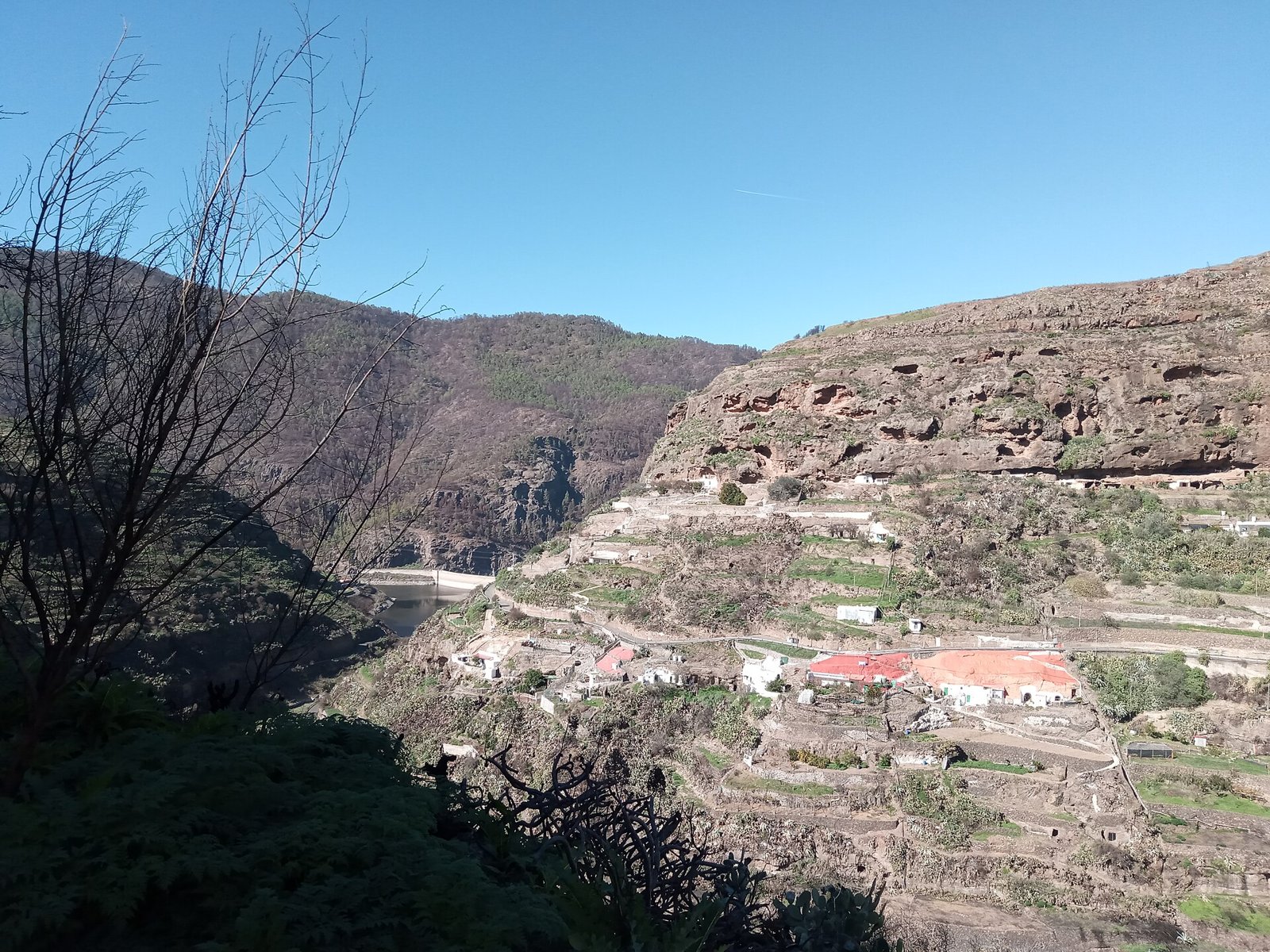
Photo: Sino Yu, CC0 (Symbolbild).
The newspaper revisits a place that, according to the figures cited, houses between 500 and 1,000 people of different nationalities. About a year ago, around late 2025, a coordinated operation by public administrations and security forces entered the settlement to notify residents that they had to identify themselves by court order. It is worth being clear from the outset: that identification phase is not from now, but from roughly a year ago.
What Bahía de Formas is and where it lies
Bahía de Formas is described as one of the largest shanty settlements in the south-east of Gran Canaria. It lies on the coast of the municipality of Santa Lucía de Tirajana, in the area between Pozo Izquierdo and Castillo del Romeral, on protected rustic land — that is, terrain classified as non-developable.
That land classification matters for understanding the legal framework of the site: these are areas where, because of their protected status, ordinary residential building is generally not permitted. The settlement has taken shape outside that planning regime, placing the issue at the intersection of land-use planning and the social reality of the people who live there.
How many people live there
According to the figures reported by La Provincia, between 500 and 1,000 people of different nationalities live in Bahía de Formas. It is a wide range, typical of an informal settlement, where the exact number of residents is hard to pin down.
The paper offers no breakdown by country of origin or by age. The figure should therefore be read as an estimate rather than a closed count. Even so, it gives a sense of a sizeable community established along the coastal strip in the south-east of the island.
The court-ordered identification, about a year ago
About a year before the report of 24 August 2026 — that is, around late 2025 — a coordinated operation took place in the settlement. According to La Provincia, it involved the Guardia Civil, the Policía Local of Santa Lucía, and municipal officials (técnicos) from Urban Management (Gestión Urbanística) and Social Services (Servicios Sociales).
The aim, by order of the Juzgado nº 3 de San Bartolomé de Tirajana, was to notify residents that they had to identify themselves. As part of that operation, around 400 people were identified. It is worth stressing that this phase dates to about a year ago and not to the present; the August 2026 report reviews how the situation has evolved since.
Diverse profiles and assistance work
Municipal officials described the roughly 400 people identified as a mix of diverse profiles: foreign nationals, people of working age, complete family households, and varied situations of social and administrative vulnerability. No breakdown by nationality or age was provided.
The officials themselves framed their role as "assistance work" and as an "inventory" of the buildings, and not as an operation of detentions. That is an important distinction: the measure was, by this description, framed in terms of assistance and information, not as a police action against the people living there.
What remains open
The August 2026 report is a follow-up piece: the settlement still exists. The source confirms neither an eviction nor a demolition of the site, and sets no timeline for future action.
Open questions therefore remain about how, in the medium term, the relationship will be handled between the protection of the land and the situation of the people who live in Bahía de Formas. For now, what the available information confirms is that the situation continues and that the figures cited are estimates.
On this kind of land, ordinary residential building is generally not permitted; that legal status of the terrain is separate from the social situation of the people who live on it.
Key facts
- Bahía de Formas: one of the largest informal settlements in south-east Gran Canaria, in Santa Lucía de Tirajana, between Pozo Izquierdo and Castillo del Romeral (La Provincia, 24 August 2026)
- It sits on protected rustic land (non-developable) along the coastal strip
- It houses, according to estimates, between 500 and 1,000 people of different nationalities
- About a year ago (around late 2025), some 400 people were identified by order of the Juzgado nº 3 de San Bartolomé de Tirajana
- The Guardia Civil, the Policía Local of Santa Lucía and municipal officials from Urban Management and Social Services took part
- Officials described their work as "assistance work" and an "inventory", not as detentions; no eviction or demolition is confirmed
FAQ
- Where is Bahía de Formas?
- On the coast of the municipality of Santa Lucía de Tirajana, in south-east Gran Canaria, between Pozo Izquierdo and Castillo del Romeral, on protected rustic land, according to La Provincia.
- How many people live in the settlement?
- According to the figures cited, between 500 and 1,000 people of different nationalities. It is an estimated figure, with no breakdown by country or age.
- When did the identification of residents take place?
- About a year before the report of 24 August 2026 — that is, around late 2025; it is not a current operation.
- Who took part, and with what aim?
- The Guardia Civil, the Policía Local of Santa Lucía and municipal officials from Urban Management and Social Services, by order of the Juzgado nº 3 de San Bartolomé de Tirajana, to notify residents that they had to identify themselves. Around 400 people were identified.
- Has an eviction or demolition been ordered?
- The source confirms neither an eviction nor a demolition. The August 2026 report indicates that the settlement's situation continues.
Read on
- Gran Canaria weather 13 October: wet north, dry southGran Canaria · 13 October
- Gran Canaria this weekend, 16–18 October: Miralta, Walking FestivalGran Canaria · 12 October
- 21 Per Cent of Purchasing Power: Why a Waste Strike Looms in South-East Gran CanariaGran Canaria · 10 September
- Maspalomas Winter Pride: 2–8 November 2026Gran Canaria · 12 October
- Maspalomas forum 25–26 Nov: cooking, science and AIGran Canaria · 12 October
- All events on Gran Canaria →