Gran Canaria is often sold as a sunshine-and-sand destination, but locals have long known a different truth. The island is a miniature continent, a place where you can stand in a pine forest at 1,500 metres in the morning and walk through a humid laurisilva ravine by lunchtime. The Gran Canaria Walking Festival, now in its fifteenth edition, was designed to share exactly that secret with the world. Over four days in mid-October, the event strings together a carefully chosen set of guided routes that read like a greatest-hits tour of the island’s interior.
Organised by Gran Canaria Natural & Active and backed by the island’s tourism board, the festival is not a race. There are no timing chips, no competitive categories. Instead, the focus is on immersion: walking at a comfortable pace with expert guides who know the geology, the plant life, and the stories behind every hamlet and volcanic plug along the way. The 2026 edition runs from Thursday 15 October to Sunday 18 October, and registrations are already live on the official festival website. You can sign up for a single route that catches your eye or commit to all four for a proper island traverse.
Day 1: Descending into the Heart of the Caldera
The festival opens on 15 October with a route that captures the essence of Gran Canaria’s high country. Starting from Llanos de La Pez, a popular recreational area in the central mountains, the trail leads walkers on a descent towards the village of Tejeda. This is not a casual stroll—the path drops significantly in elevation—but the payoff is immense. You cross a volcanic landscape studded with Canary Island pine, following old mountain paths that generations of locals used to move between the high pastures and the caldera floor.
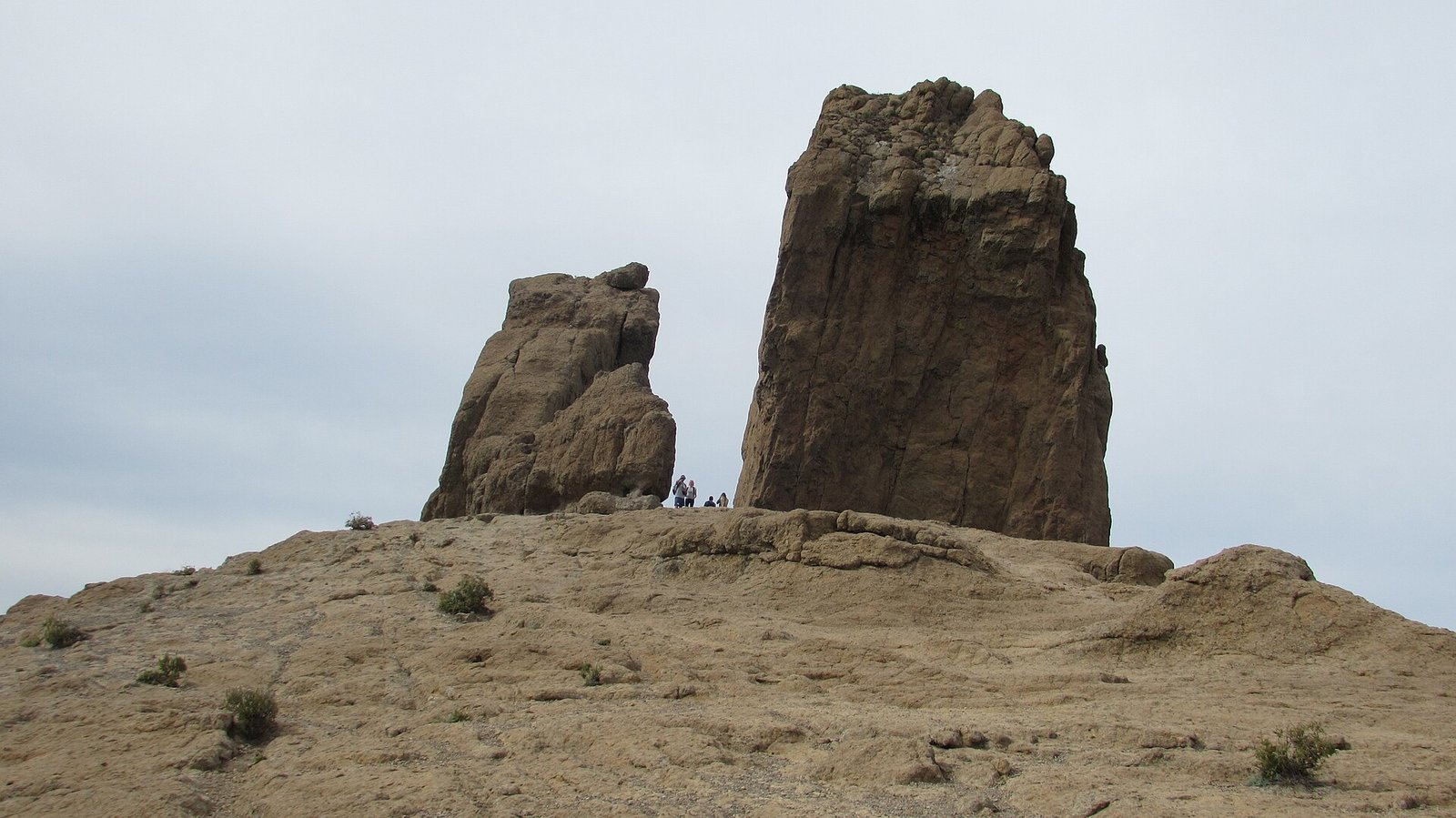
The visual anchor of the day is Roque Nublo, the island’s most famous rock monolith, which dominates the skyline for much of the walk. As you lose altitude, the views open up into the Caldera de Tejeda, a vast volcanic depression that looks like a geological amphitheatre. Deep ravines cut into the terrain, and the finish line in Tejeda places you in one of the prettiest villages in Spain, known for its almond trees and traditional architecture. It is a powerful introduction to the week, setting a tone of big landscapes and cultural authenticity.
Day 2: From the Summit Crossroads to a Marian Town
On 16 October, the festival shifts its starting point to Cruz de Tejeda, the high-mountain crossroads that marks the geographic heart of Gran Canaria. At around 1,500 metres above sea level, this is where roads from all four cardinal directions meet, and the air is noticeably cooler and crisper. The route heads north, linking the summit area with the midlands and eventually reaching the historic town of Teror.
Teror is a place of deep religious and architectural significance for Canarians, home to the Basilica of Our Lady of the Pine, the island’s patron saint. The walk itself traces a path that pilgrims and traders once used, transitioning from exposed volcanic ridges into greener, more cultivated terrain. The vegetation thickens as you descend, and the scent of damp earth and wild herbs replaces the dry pine-needle aroma of the higher slopes. By the time you arrive in Teror, with its wooden-balconied houses and cobbled streets, the contrast with the morning’s start point feels like crossing into a different season.
Day 3: Water, Laurisilva, and the Green North
The third day, 17 October, takes the festival into Gran Canaria’s wetter, greener face. The route connects Firgas and Valleseco, two municipalities in the north that receive significantly more rainfall than the sunny south most tourists know. The centrepiece is the Barranco de Azuaje, a deep ravine that forms part of the Parque Rural de Doramas. This is a landscape shaped by water: streams run along the ravine floor, ferns cling to vertical rock walls, and the vegetation shifts into laurisilva, a relic of the subtropical forests that once covered much of Macaronesia.
Walking through the Barranco de Azuaje feels almost tropical. The canopy closes overhead in places, filtering the light into a green glow, and the sound of running water is a constant companion. It is a world away from the volcanic austerity of Day 1. The route also passes through traditional farmland and small hamlets where agriculture still follows rhythms set centuries ago. For many participants, this is the surprise highlight: a reminder that Gran Canaria is not one island but several, stitched together by trails like this one.
Day 4: Rural Southeast, Ravines, and a Farm Finish
The festival wraps up on 18 October with a route through the island’s southeastern interior. Starting in Santa Lucía de Tirajana, a town perched on the edge of a dramatic ravine, the walk heads towards Agüimes, finishing at Finca La Jaira de Ana, a working farm and educational centre. This is a landscape of deep barrancos, terraced hillsides, and historic settlements that tell the story of rural Gran Canaria before tourism reshaped the coast.
The southeast is often overlooked by visitors, who tend to gravitate towards the dunes of Maspalomas or the capital. But this route reveals a quieter, more introspective side of the island. The path winds past traditional farmsteads, cactus groves, and palm-filled valleys, with the ocean occasionally glinting in the distance. The finish at La Jaira de Ana adds a local-food dimension: the farm is known for its commitment to sustainable agriculture and Canarian produce, making it a fitting endpoint for a festival that celebrates the island’s natural and cultural heritage in equal measure.
Common questions
- Do I need to be an experienced hiker to join?
- The festival offers guided routes designed for walkers with different interests and fitness levels, though some days involve significant elevation changes. No technical climbing skills are required.
- Can I sign up for just one route instead of the full four days?
- Yes, registration is available for individual routes or a complete four-route package, depending on your schedule and preferences.
- What is included in the registration fee?
- The service typically covers transport to and from the route, insurance, expert guides, picnic or lunch tastings featuring local products, and small gifts from the organisation.
- Why is Gran Canaria so special for hiking?
- The island packs extraordinary landscape variety into a compact area—coast, ravines, pine forests, laurisilva, midlands, and volcanic summits—with nearly half of its territory designated a Biosphere Reserve.
- Where can I find the official registration page?
- Registrations are open via the official Gran Canaria Walking Festival website; links and updates are also shared through Gran Canaria Natural & Active’s channels.
Read on
- El Paso Rock and Blues Festival 2026: Four Days of Rock, Blues and Classic Cars on La PalmaLa Palma · 29 August
- Gran Canaria this weekend, 16–18 October: Miralta, Walking FestivalGran Canaria · 12 October
- LPA BMusic Festival 2026: 13th Edition Hits Gran Canaria with Free Entry & 4 Days of MusicGran Canaria · 6 August
- Gáldar: Frontón King 2026 and comedy from 20 eurosGran Canaria · 27 October
- Gran Canaria: Vueling bomb threat proved falseGran Canaria · 27 October
- All events on Gran Canaria →
Stand: 28 July 2026. All information based on official festival announcements and verified sources. Prices and exact route details may be updated by the organiser; please check the official website before booking.