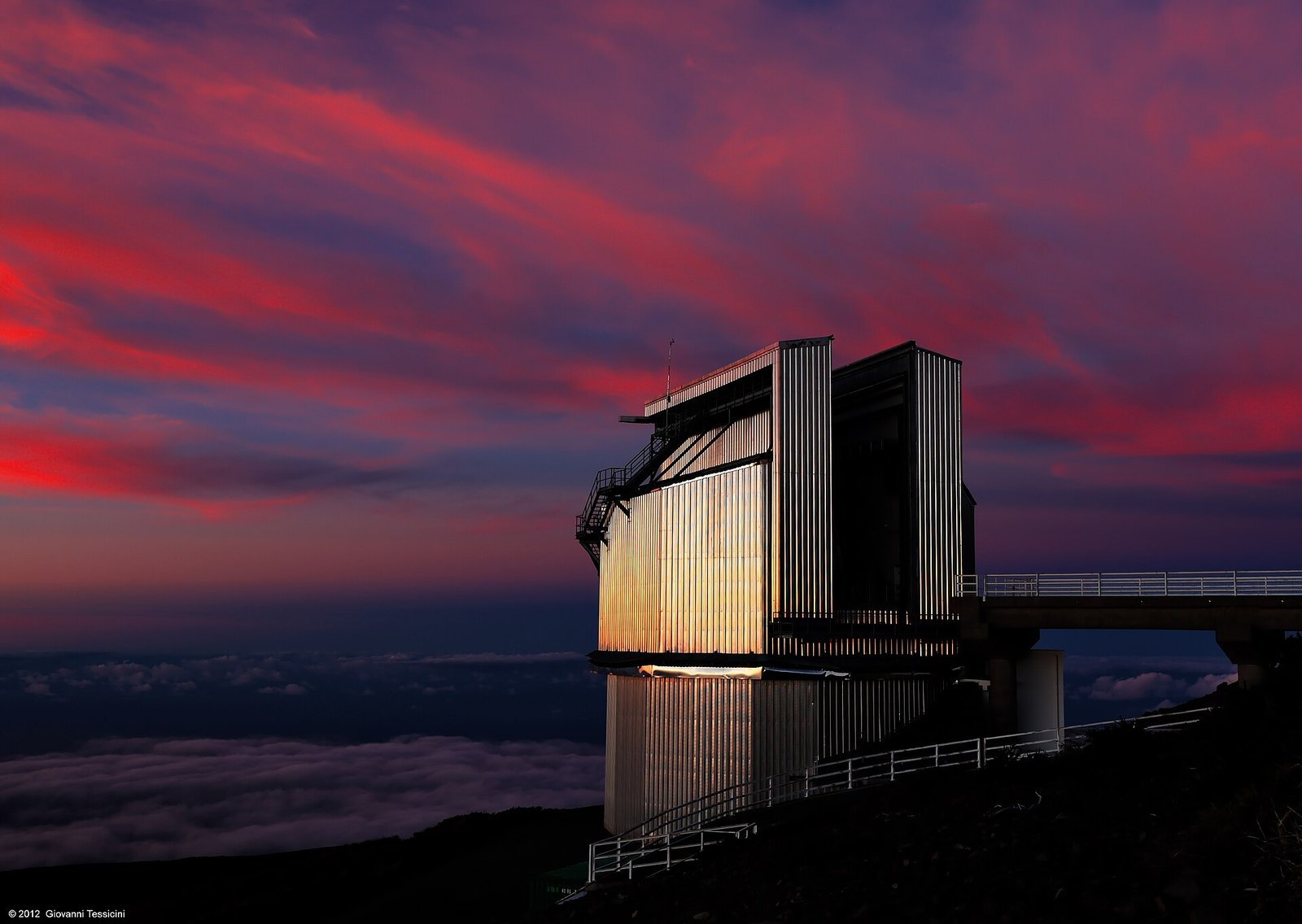
It was a Friday night like any other on the Canary Islands, until the sky decided to put on a show. At around 23:35 local time, a brilliant green-and-white light silently raced across the heavens. It wasn't a plane, nor a piece of space junk, but something far more ancient and poetic: a bolide, a chunk of space rock ending its long journey in a blaze of glory. The spectacle was so bright it was visible to the naked eye from numerous points across the archipelago, even prompting calls to the emergency coordination centre from surprised onlookers.
Thankfully, one of the world's most powerful eyes was watching. The All-Sky camera of the Gran Telescopio Canarias (GTC), affectionately known as the Grantecan, perched high atop La Palma's Roque de los Muchachos, captured the entire event. The Instituto de Astrofísica de Canarias (IAC) later shared the stunning footage on social media, describing it as a "brilliant green-and-white bolide" crossing the Canarian sky. The same fleeting visitor was also caught by the AMOS camera system at the Teide Observatory on Tenerife, confirming the sighting from multiple high-altitude perches.
So, What Exactly is a Bolide?
In simple, friendly terms, a bolide is a show-off meteor. While a common shooting star is a tiny grain of dust burning up in a blink, a bolide is a much larger fragment of a comet or asteroid that enters our atmosphere at tremendous speed. It appears as an exceptionally bright fireball, often leaving a luminous trail in its wake and sometimes even ending with a dramatic fragmentation or an audible boom. Think of it as the difference between a sparkler and a full-blown firework.
This particular visitor appeared low over the eastern-northeastern horizon, heading towards the constellation Pegasus, according to the Grantecan's footage. Scientific analysis confirmed its nature: a meteoroid of sizeable mass, not man-made debris, putting on a spectacular light show as it disintegrated high above us. It’s a powerful reminder that we live on a planet in a very dynamic, and often stunningly beautiful, cosmic shooting gallery.
The Secret Behind the Emerald and Ivory Glow
The bólido's striking colours were not just for show; they were a tell-tale sign of its chemical composition. The vivid green flash, often described as almost phosphorescent, is a cosmic signature of metals burning up. Experts link this characteristic green light to the presence of elements like magnesium and nickel in the space rock. As the meteoroid ablates—superheating and vaporizing as it slams into the atmosphere—these metals ionise and glow with a distinct green hue.
The brilliant white portion of the light, on the other hand, comes from the sheer incandescence of the object. The extreme temperatures, often reaching thousands of degrees, cause the meteoroid and the surrounding ionised atmospheric gases to emit a near-white continuum of light. This blend of a specific metal signature and general thermal glow painted the beautiful green-and-white streak that captivated the Canaries. It was, quite literally, a piece of the solar system revealing its inner chemistry for all to see.
La Palma: A Front-Row Seat to the Universe
This event perfectly underscores why La Palma is not just a beautiful island, but a world-renowned sanctuary for the stars. The island is a certified Starlight Reserve and Starlight Tourist Destination, a prestigious recognition formalised in 2012 by the Fundación Starlight. This certification is a testament to the island's fiercely protected, inky-black night skies, safeguarded by a specific "Sky Law" that strictly limits light pollution. It was here, in 2007, that the First International Starlight Conference was held, leading to the World Declaration in Defence of the Night Sky and the Right to Starlight.
At the heart of this astronomical haven is the Observatorio del Roque de los Muchachos (ORM). Sitting at an altitude of around 2,400 metres on the rim of the Caldera de Taburiente National Park, it is often above a sea of clouds, enjoying incredibly stable and clear air. This is the home of the Gran Telescopio Canarias, the largest single-aperture optical-infrared telescope on the planet, and a suite of other world-class instruments like the William Herschel Telescope. It's one of the best places on Earth to peer into the cosmos, and as the recent bolide proves, it's also a perfect spot for the cosmos to peer back at us.
How You Can Chase Stars on La Palma
You don't need to be an astrophysicist to experience the magic of La Palma's skies. The island has beautifully woven astro-tourism into its identity, offering structured and accessible ways for everyone to connect with the universe. A daytime visit to the Roque de los Muchachos Observatory is a must. Guided tours, which must be reserved in advance, take you to see some of the telescopes, including the mighty GTC. These morning visits typically start from the modern Visitors' Centre, which is open every day from about 10:00 until 16:00 in winter and around 16:30–17:00 in summer.
For the real magic, however, you need to stay after dark. Accredited Starlight Guides offer unforgettable night excursions to designated astronomical viewpoints and trails across the island. These tours provide telescopes and expert interpretation, turning the night sky into a grand, open book. Many rural houses and hotels also cater to star-lovers, offering basic telescopes for guests to use at their leisure. It’s an island where a casual glance upwards can turn into a profound, personal moment with the cosmos.
Common questions
- What is the difference between a meteor and a bolide?
- A meteor is a general term for a shooting star. A bolide is a specific type of exceptionally bright meteor, appearing as a large fireball, often leaving a trail and sometimes fragmenting.
- Why was the bolide green and white?
- The green colour is a signature of metals like magnesium and nickel burning in the atmosphere. The white light is from the general, extreme incandescence of the rock and ionised air.
- Who recorded the bolide over the Canary Islands?
- It was recorded by the All-Sky camera of the Gran Telescopio Canarias (Grantecan) at the Roque de los Muchachos Observatory on La Palma, and announced by the IAC.
- Can I visit the telescope that captured the event?
- Yes, daytime guided visits to the Roque de los Muchachos Observatory, including the GTC, are possible but must be booked in advance through accredited guides or the IAC.
- What makes La Palma so special for stargazing?
- La Palma is a certified Starlight Reserve with a law protecting its dark skies. Its high-altitude observatory sits above the clouds, offering some of the clearest, most stable skies in the world.
Read on
- La Palma: the complete 2026 travel guideLa Palma · 17 October
- La Palma: Full Moon Trail Tijarafe on 24 OctoberLa Palma · 15 October
- La Palma: Rubén Simeó plays Los Llanos on 17 OctoberLa Palma · 15 October
- La Palma: Jet2 cancels flights from 30 October 2026La Palma · 14 October
- La Palma diesel at €1.90: 57 cents more since FebruaryLa Palma · 12 October
- All events on La Palma →
Stand 20 July 2026. This article is based on verified reports from the Instituto de Astrofísica de Canarias and local news sources.