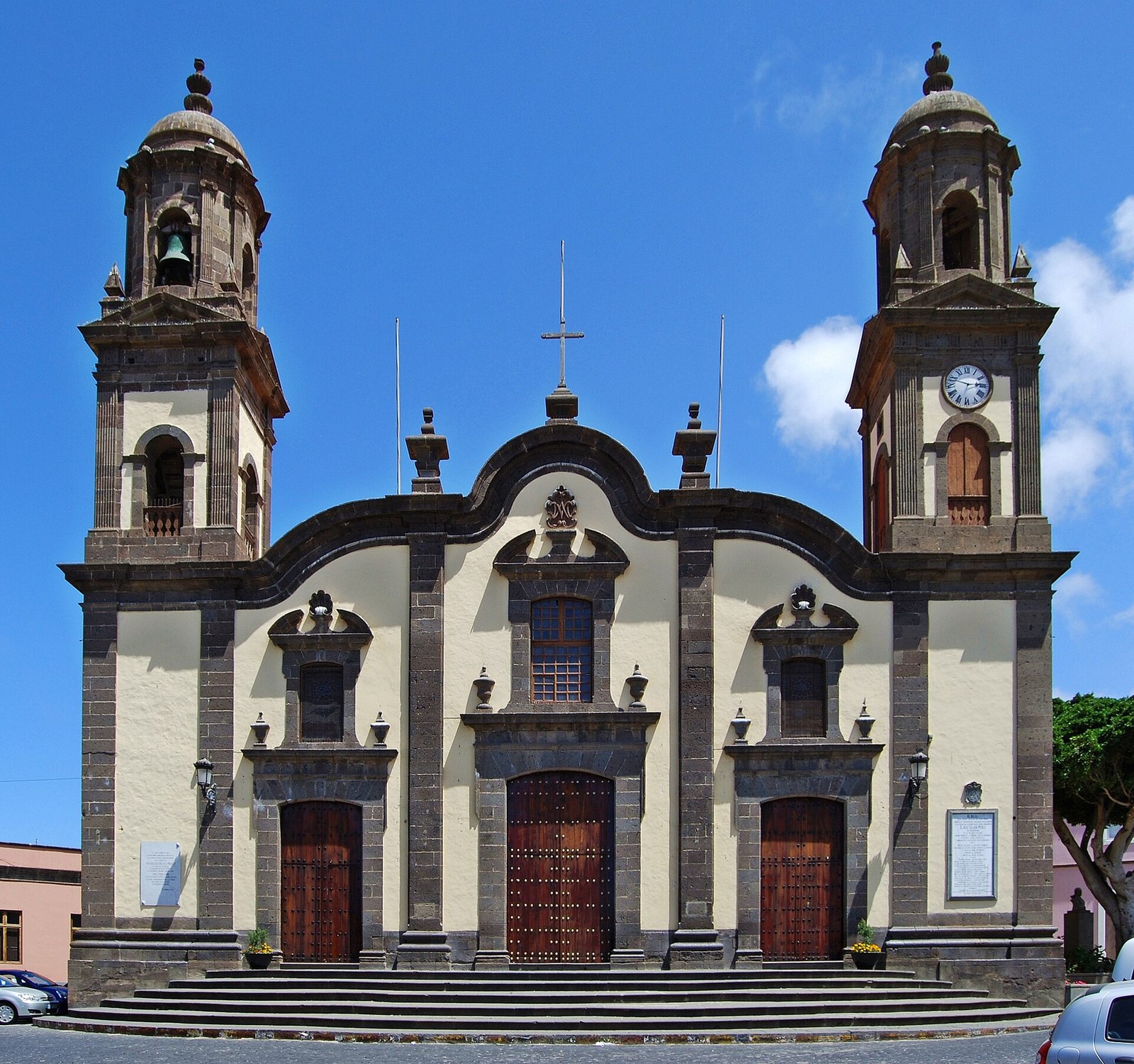
There is a moment in early August when the narrow streets of Santa María de Guía begin to hum. Bunting goes up between the balconies, the smell of fresh flowers drifts across Plaza Grande, and the first giant papagüevos figures appear on the corners. This year, the town has added an extra layer of colour: the Parks and Gardens Department has installed more than 2,000 seasonal plants across the plazas, parterres and green spaces of the historic centre, giving the old town what the council calls a "new image" for the fiestas.
The Fiestas de la Virgen are the heartbeat of Guía's summer. They mix deep religious devotion with street parties, folklore, and a programme that stretches across the first half of August. For visitors, it is a chance to see a traditional Canarian town at its most vibrant, framed by flowers and filled with music. The exact dates for 2026 have not yet been published, but based on recent years you can expect the programme to run from early August through to around the 17th, with the peak falling on 15 August, the Día de la Patrona.
A historic centre in bloom
Walk into Guía's casco histórico this August and you will notice the difference. The town's Parks and Gardens team has been busy planting more than 2,000 seasonal plants in the run-up to the fiestas. The idea is simple: to dress the old town in its best clothes for the thousands of locals and visitors who will fill the streets for processions, concerts and verbenas.
The planting covers the main plazas, the smaller garden corners, the parterres along the walking routes, and the green areas that frame the church and the town hall. It is not a one-off display for a single day; the flowers are there to last through the whole fiesta period, giving every event a greener, more colourful backdrop. For anyone who loves photographing Canarian old towns, this is a particularly good year to visit Guía.
The heart of the fiestas: 15 August
If you can only come for one day, make it 15 August. This is the Día de la Patrona, and the town pours everything into it. The morning begins with a solemn Mass in the church that dominates Plaza Grande. Afterwards, the image of the Virgen de Guía is carried out into the sunlight, and the main procession begins its slow journey through the historic centre.
The route winds along streets like Luis Suárez Galván, Canónigo Gordillo, Médico Estévez and Marqués del Muni. Balconies are draped with shawls and flags, families line the pavements, and the cofradías walk alongside the Virgin in a display of quiet devotion. It is the most important religious moment of the fiestas, and even if you are not religious, the atmosphere is deeply moving.
By the afternoon, the tone shifts. First comes the Carrera de Cintas, a traditional horse-mounted ribbon race that is one of Guía's most distinctive events. Riders gallop along a set course trying to spear small ribbons with a lance, a spectacle that draws cheers from the crowd. Then, as the afternoon slides into evening, the Batalla de Flores takes over. Floats decorated with flowers roll through the streets, showers of petals fill the air, and the whole town becomes an open-air theatre of colour and noise. It is, year after year, the signature spectacle of Guía's summer.
Music, verbenas and nights in the plaza
The Fiestas de la Virgen are not just about tradition. Almost every evening, Plaza Grande turns into a concert venue and dance floor. The programme typically includes a Noche Joven dedicated to youth music, with current Canary artists drawing a younger crowd. In recent years, names from the urban and pop scene have headlined this night, and you can expect a similar energy in 2026.
Another night is reserved for a major headline concert on 15 August itself, after the Batalla de Flores. This is a free show in Plaza Grande, and past editions have featured well-known national artists. The concert is followed by a big verbena, an open-air street dance with orchestras and DJs that keeps the plaza alive into the early hours.
Throughout the fiestas, you will also find the Festival Nacional de Folklore "Isla de Gran Canaria", a long-running event that brings together folk groups from across the islands and beyond. Local group A.C.R. Estrella y Guía is usually at the heart of it, and the performances are a window into the deep musical roots that Néstor Álamo, one of Guía's most famous sons, helped to preserve. There is also a humour festival, the Festival del Humor "Xayo", which brings Canarian comedians to the stage for a night of laughter.
Beyond August: Las Marías in September
If you fall in love with Guía's fiesta spirit, there is a beautiful follow-up in September. The Fiesta de Las Marías, held on the third weekend of the month, is a separate devotion to the Virgin but shares the same deep roots. It commemorates the Virgin's intercession in a locust plague in 1811, and the tone is more rural and devotional than the August celebrations.
On the Saturday, the Bajada de la Rama sees pilgrims bring branches down from the Montaña de Vergara to the town, accompanied by caracoles (shell horns), war drums and music. The branches are danced before the Virgin in front of the church, a ritual that feels ancient and raw. On Sunday, a Romería-Ofrenda fills the streets with carts, folklore groups, parrandas, decorated horses and traditional dress. The weekend closes with a Tarde de Parranda, where folk groups play late into the afternoon and the mayordomos of the fiesta draw prizes of traditional costumes or crafts.
Common questions
- When exactly are the Fiestas de la Virgen in 2026?
- The official dates have not yet been published, but based on recent years the programme runs from early August to around 17 August, with the main day on 15 August.
- What is the Batalla de Flores?
- It is a colourful parade of flower-decorated floats with showers of petals, held on the afternoon of 15 August. It is one of Guía's signature spectacles.
- Can I try queso de flor de Guía during the fiestas?
- Yes. While the main Fiesta del Queso is in late April, local shops and stalls often feature queso de flor and other Guía cheeses during the August celebrations.
- Is the historic centre easy to walk around?
- Yes. The casco histórico is compact and pedestrian-friendly, with most events concentrated around Plaza Grande and the surrounding streets.
- What is Las Marías and when does it happen?
- Las Marías is a separate devotion to the Virgin held on the third weekend of September, featuring the Bajada de la Rama and a Romería-Ofrenda.
Read on
- Gran Canaria this weekend, 23–25 October: WOMEX, La Oreja de Van GoghGran Canaria · 20 October
- Puerto de Mogán: 4 verified restaurants, from fish to IrishGran Canaria · 20 October
- Fiestas del Pino 2026 in Teror: a guide to Gran Canaria's biggest celebrationGran Canaria · 27 August
- Triana Is Losing Shops and Buzz: Concern for the Historic Heart of Las Palmas de Gran CanariaGran Canaria · 12 August
- Gran Canaria: Halloween parties on 31 October at a glanceGran Canaria · 20 October
- All events on Gran Canaria →
Stand: 22 July 2026. Programme details for 2026 are not yet confirmed; this guide is based on the 2024 and 2025 editions and the confirmed floral decoration.