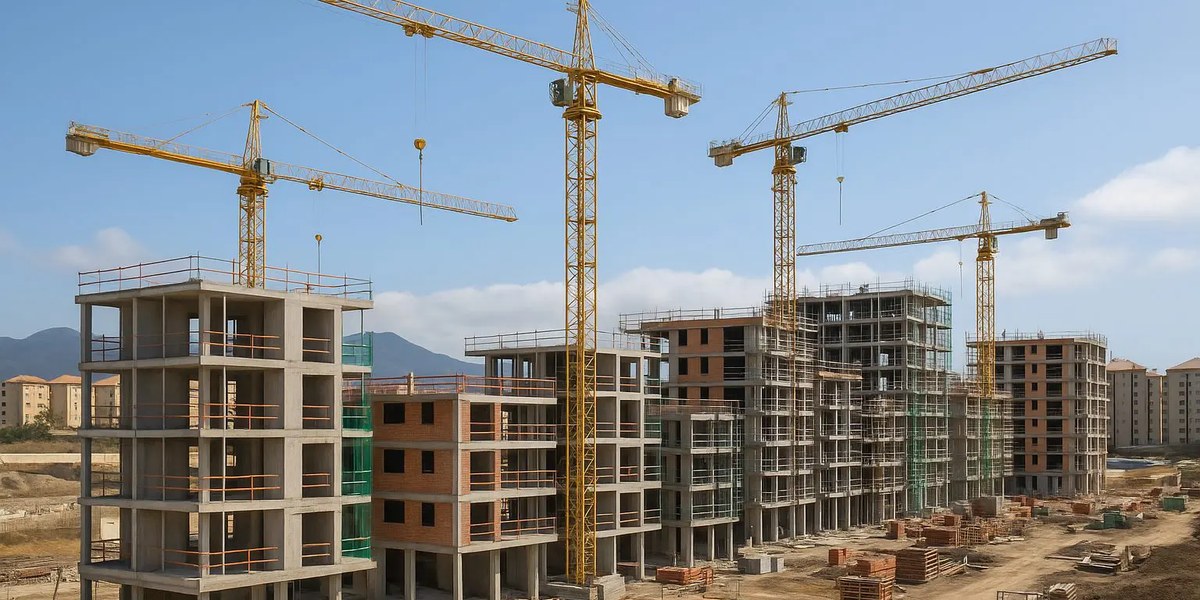
Let's start with the figure that captures it all. According to the statistics office INE, Spain's housing stock grew by just under 95,000 units in 2025 — while almost 239,000 new households were added at the same time. Nationwide, then, new supply covered only around 40 percent of demand; in the Canaries the balance was even slightly worse. Put another way: for every three new households, only about one new home was built. This is not a one-off slip but a persistent imbalance.
Why so little is built
The Canary business association CEOE has translated the imbalance into concrete annual figures: around 10,000 new households a year face only about 2,500 homes built. That yields an estimated deficit of around 37,600 homes — which the association says explains about 40 percent of the recent price rise on the islands. The causes are structural and typical of an island region: scarce and expensive building land (around half the archipelago is under nature protection), the island location itself, and years of barely any publicly funded housing. On top of that, only around 60 percent of demand is for permanent housing — the rest comes from foreign buyers and second homes.
The paradox: 30,000 empty new builds — and still a shortage
Here comes the figure that surprises many: despite the acute shortage, around 30,000 new, unsold homes sit empty in the Canaries. How does that add up? The answer lies in the detail — and it is the key to understanding the whole crisis. These empty homes do not solve the problem, because they are not where demand is, and not offered at prices that match island wages. The Banco de España sums it up in its annual report: it is not just about the sheer number of homes, but about affordable housing being built in the right place.
Frequently asked questions
- How big is the gap exactly?
- In 2025 the Canaries added around one new home per three new households; supply covered about 40 percent of demand. Per year, around 10,000 new households face only about 2,500 homes.
- How large is the overall deficit?
- The business association CEOE estimates it at around 37,600 missing homes and attributes about 40 percent of the recent price rise to it.
- Why are there empty new builds anyway?
- Around 30,000 new homes sit unsold, but do not solve the problem because they are not where demand is and not offered at affordable prices.
- Why is so little built?
- Scarce and expensive building land, around half the archipelago under nature protection, the island location, and years of barely any publicly funded housing.
- Will it get better?
- Forecasts point rather to growing pressure: over 100,000 additional households by 2041. A new housing plan 2026–2030 is in preparation.
Read on
- Canary Islands: ten-year residence rule planned for home buyersCanary Islands · 16 October
- Canary Islands holiday lets: 90% of homes for residentsCanary Islands · 12 October
- Canaries housing strike 11 Nov: 24 hours, 18 days pre-voteCanary Islands · 8 October
- Canary Islands rent: 60.7% of tenants can't afford a new letCanary Islands · 7 November
- Canary Islands: orange rain warning on 8 November, 5 islandsCanary Islands · 6 November
- All events on the Canary Islands →
As of 24/06/2026. Sources include Atlántico Hoy, the Instituto Nacional de Estadística (INE), CEOE Canarias, the Banco de España (annual report 2025) and BBVA Research. Figures are estimates and approximations and may vary by source and methodology; the current official data is what counts. This article is general guidance, not investment or legal advice. Illustration.