Which sights are a must-see on La Gomera?
The Parque Nacional de Garajonay is the island's centrepiece. According to UNESCO, the World Heritage Site protects the largest continuous laurel forest in the Canaries. The higher areas are often cloudier, more humid and noticeably cooler than the coastal towns.
The Centro de Visitantes Juego de Bolas is the national park's official visitor centre. It provides information about the island's natural and cultural history. The Alto de Garajonay is the island's highest point and a viewpoint when visibility is suitable.
San Sebastián de La Gomera is the island capital. It preserves the Torre del Conde, the Iglesia de la Asunción, the Casa de Colón and the historic harbour.
Valle Gran Rey offers terraced landscapes, ravines, palm groves and coastal villages. Agulo lies on the north coast with views of Tenerife and Mount Teide when the sky is clear. Hermigua is a fertile valley with banana growing and walking routes towards the national park.
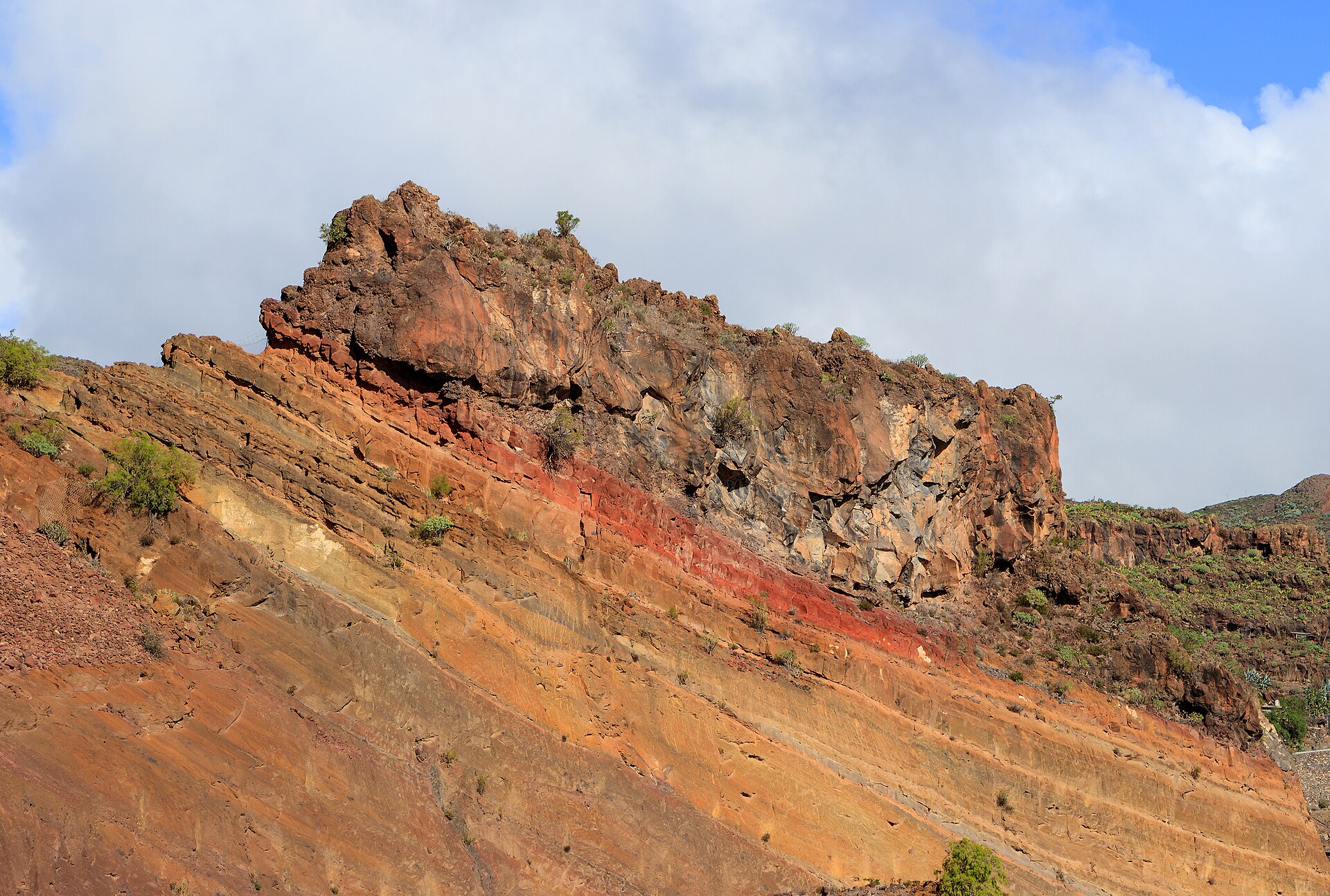
The Mirador de Morro Agando shows volcanic rock needles and deeply cut valleys. Further viewpoints are listed in the official catalogue of Turismo de La Gomera.
How do you get to La Gomera and get around once there?
La Gomera Airport is near Playa de Santiago. Connections exist mainly via Tenerife. Current flight schedules and fares are published by Binter.
The main ferry connections run from Los Cristianos on Tenerife to San Sebastián de La Gomera. Timetables and prices change seasonally. They are published by Fred. Olsen Express and Naviera Armas.
Because of the winding mountain roads, journey times are longer than the distances suggest. Hire cars offer the greatest flexibility. Regular buses connect the municipalities, but with a limited frequency.
Information on public transport is provided by the portal gomera-island.com and the official tourism portal lagomera.travel. Prices for ferries, hire cars and buses should be checked with the respective provider before booking.
What should you bear in mind when hiking in the national park?
Special rules apply in the national park for fires, camping, litter, drones and motorised access. The instructions of the national park authority of the Gobierno de Canarias are binding.
Visitors must stay on marked paths and observe closures. It is forbidden to remove plants, stones or animals. Dogs are only allowed on a lead. Camping or overnight stays in the park are not permitted.
In strong wind, rain, fog or when there is a forest fire risk, paths may be closed. The Canary Islands emergency authority publishes warning levels and behavioural recommendations. The emergency number 112 applies throughout Spain.
For walks, sturdy shoes, sufficient water, sun protection and an additional warm layer are advisable. Coastal and mountain weather can differ considerably over a short distance. The park authority recommends suitable walking clothing and provisions.
When is the best time to visit La Gomera?
The values must be queried for the specific measuring station or grid for La Gomera.
In winter the coast is usually mild. In the mountains there is more frequent cloud, wind and rain. Spring and autumn offer good conditions for walking, although north-east slopes are often wetter and cloudier.
In summer it is usually dry and sunny. At higher altitudes the trade winds can cause low cloud. Calima, warm dust-laden air from the Sahara, can occur at any time of year in principle and worsen visibility and air quality.
Individual daily values are not suitable for long-term travel planning. Current values and warnings are published separately by AEMET. The general AEMET help page still partly shows the older 1981–2010 period; the two reference periods should not be mixed.
What rules apply outside the national park?
La Gomera has been a UNESCO Biosphere Reserve in its entirety since 2012. There are also Natura 2000 sites and numerous protected natural areas.
Protection rules also apply outside the park, for example in natural monuments and landscape protection areas. Camper vans and caravans may not simply use protected areas as overnight parking.
The Canary Islands government advises people not to go onto breakwaters or sea walls during coastal warnings. Water sports should be postponed. Do not swim at remote or unguarded beaches.
These recommendations were also expressly published for La Gomera during a coastal pre-alert.
What is new on La Gomera in 2026?
The available official results do not prove any clearly designated, larger new attraction or new permanent visitor rule for La Gomera in 2026. The tourism site does, however, carry updated content.
The entry for Los Telares Parque Etnográfico carries an update from 29 September 2026. This alone does not imply any structural change.
For 2026, the official sources consulted do not name a reliable, generally applicable entrance fee for Garajonay. The national park is generally accessible without a regular entrance ticket.
Costs typically arise for ferries, hire cars, buses, guided tours, museums and restaurants. Prices should be checked with the respective provider before booking, as they vary seasonally and by departure point.