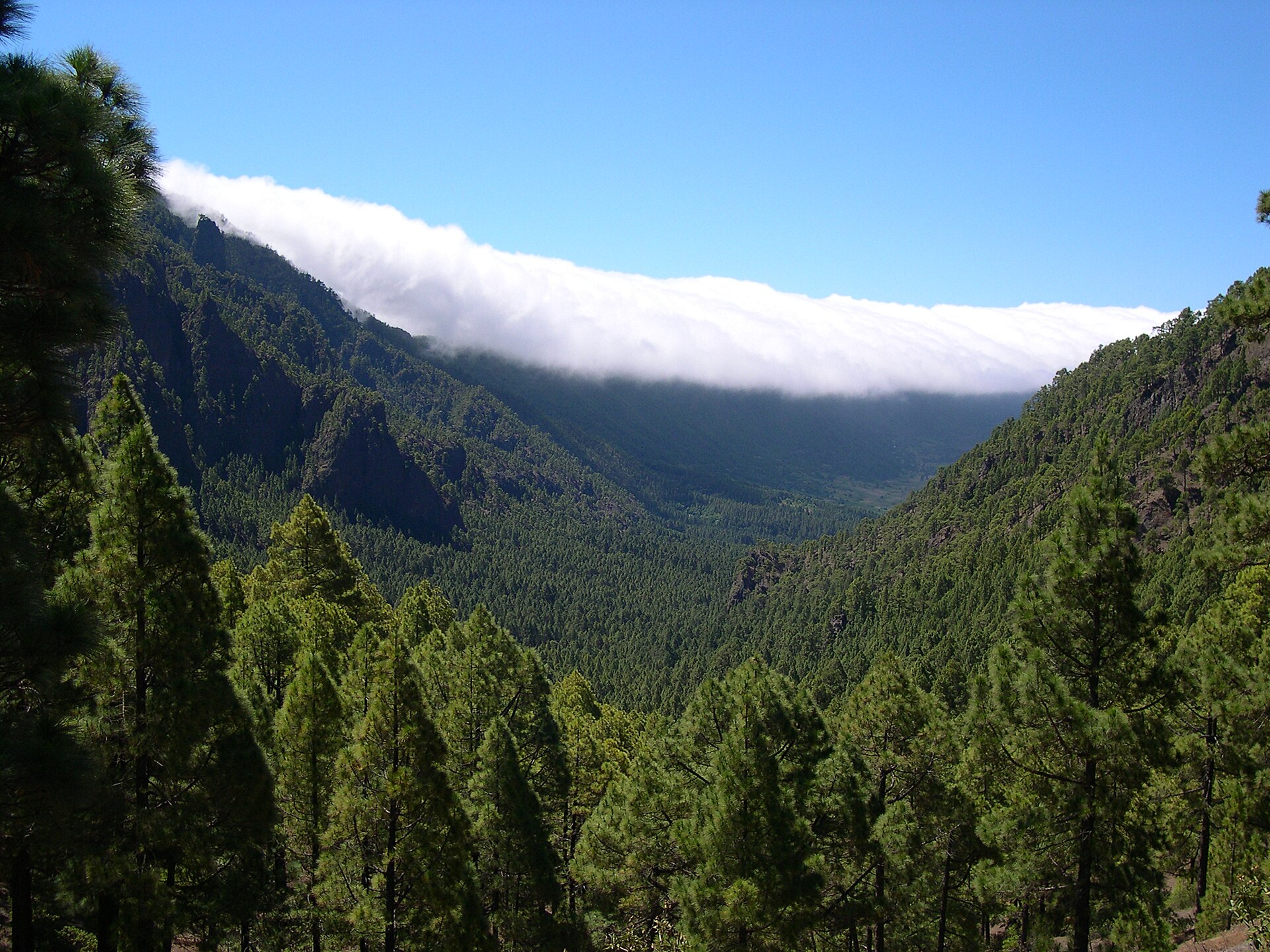
What is the climate like on La Palma?
The AEMET station La Palma Aeropuerto is in Breña Baja at an altitude of 33 m. The published climate normals refer to the period 1981–2010.
According to AEMET, the mean annual temperature is 20.7 °C. The average rainfall is 369 mm per year, relative humidity is 72 percent and sunshine duration is 2,106 hours.
The driest months at this station are June to September. The wettest months are October to February, with 80 mm in December and 70 mm in November.
These values apply exclusively to the airport location. They must not be applied without further consideration to the higher or north-eastern areas of the island.
Which official offices matter for people moving to the island?
The Canary Islands electronic administration lists two places on La Palma for identity verification or digital certificates. The Oficina de Empleo de Los Llanos de Aridane is at Calle Convento 31, 38760 Los Llanos de Aridane.
The Oficina de Empleo de Santa Cruz de La Palma is at Calle Doctor Santos Abreu 42, 38700 Santa Cruz de La Palma. The source confirms the names and addresses, but does not provide complete opening hours.
Before registering your residence, you must sign on the municipal padrón of your municipality. Registration is free and confirms your usual place of residence.
For the responsible foreigners office on La Palma, the state register lists an office in Santa Cruz de La Palma. The exact address was not published in the sources available.
What applies to EU citizens and non-EU citizens?
EU/EEA citizens may enter and settle. If they stay for more than three months, they must generally register.
Depending on the situation, proof of employment, self-employment, sufficient resources and health insurance are required.
Non-EU citizens should check the appropriate route before moving. This includes work, self-employment, family, study or non-lucrative residence permits.
A tourist stay is not a permanent relocation solution. Registering on the municipal padrón replaces neither a residence permit nor a property or rental check.
Where should you live on La Palma?
La Palma is not a single type of place to live. Santa Cruz de La Palma and Los Llanos de Aridane offer the most services.
Smaller municipalities are quieter, but more dependent on a car and on limited shopping options. Distances are often underestimated, because winding roads make short kilometre figures time-consuming.
For location-independent work, a stable internet connection and a backup connection should be planned. If you do not speak Spanish, it is advisable to live initially in Santa Cruz or Los Llanos.
For seasonal stays, you should check whether a long-term rental is available outside the high season. Specific rental and purchase prices vary greatly by municipality, condition, sea view and tourist use.
Which protected areas and rules apply on La Palma?
Large parts of the island are subject to special protection rules. The Caldera de Taburiente National Park, natural parks, landscape protection areas and the UNESCO-recognised biosphere reserve restrict construction, access, camping, fires, agriculture and tourist use depending on the area.
After the volcanic eruption of 2021, special hazard, building and access rules apply in parts of the south-west. Before buying land, the municipality, Cabildo and cadastre or Registro de la Propiedad should be consulted.
Typical mistakes include buying a flat without checking the building permit or protected-area status. Holiday rental rules and municipal permits must also be checked in advance.
Risks from volcanic hazards, forest fires, rockfall and closed hiking trails should not be ignored. Current values and warnings are provided by CITA weather and AEMET.
What should be sorted out practically before moving?
For a reliable move, you should first rent for two to six months in different municipalities. A part-time residence can be tested instead of buying a property immediately.
You should also budget for a deposit, agency or contract costs, electricity, water, internet, car, ferries or flights, private insurance and possible renovations.
Private health insurance, tax obligations and social security should be clarified before starting work. For more employment and education options, Tenerife or Gran Canaria can serve as comparison locations.
La Gomera and El Hierro are similarly quiet, but usually even smaller and with fewer economic alternatives. Lanzarote and Fuerteventura are drier and more shaped by beach and package tourism.