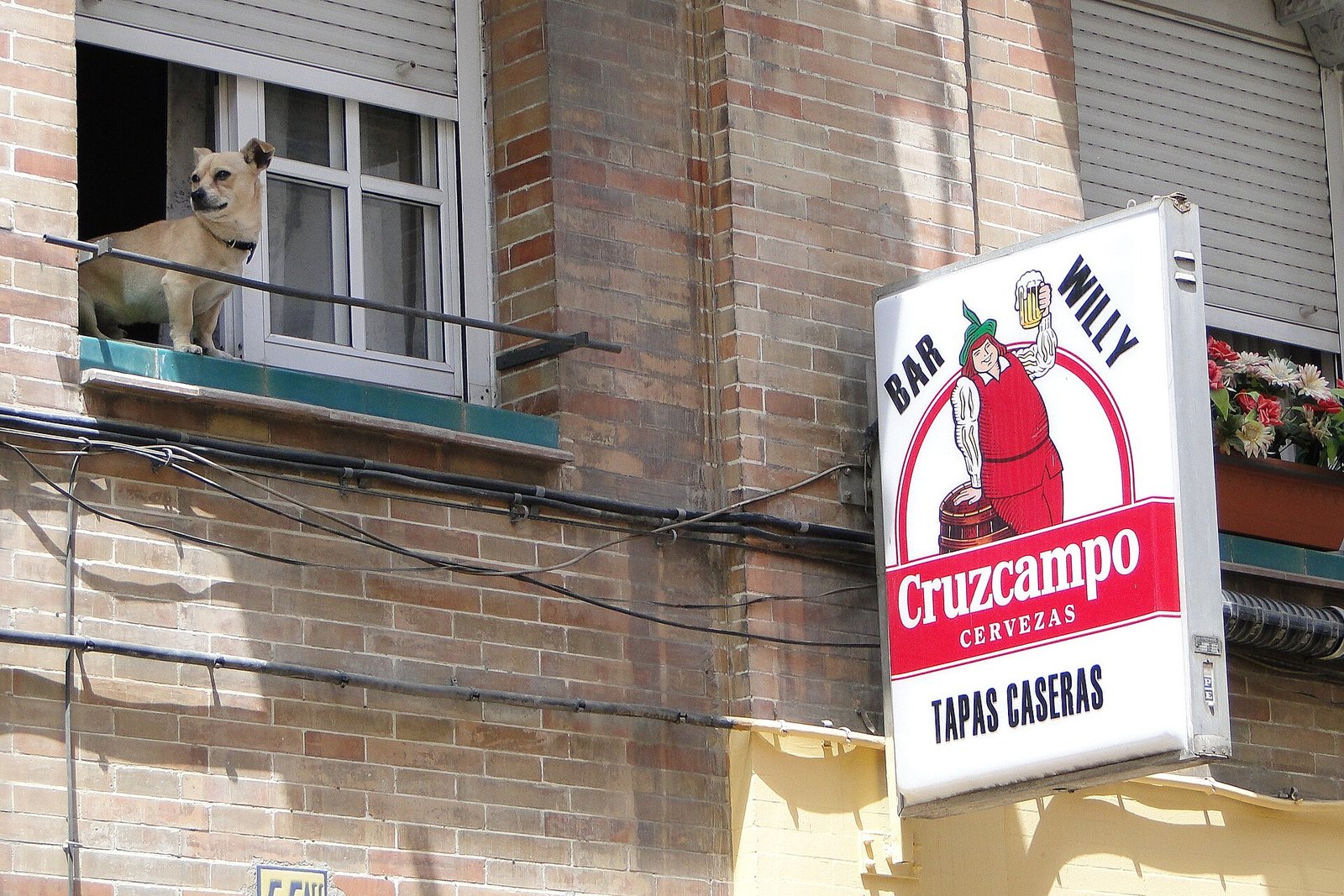
You are strolling along a sunny promenade in Corralejo or through the cobbled streets of La Laguna, your dog happily trotting beside you. You spot a inviting terrace and wonder: can we sit down together? Until recently, the answer was often a guessing game. Now, a nationwide rule makes things much clearer. Spain’s Ley 7/2023, the comprehensive animal welfare law, does not force every bar to welcome pets. But it does something almost as useful: it obliges any venue that says “no” to say it loudly and visibly, with a sign you can see before you even reach the door.
This is a practical shift that affects everyone from lifelong residents to digital nomads and holidaymakers exploring the islands with their companions. The law applies right across Spain, including here in the Canary Islands, though local ordinances can still add their own nuances. Let’s walk through what the law actually says, how it works in practice on the islands, and what you should know whether you are a dog owner or a bar owner.
What the Law Actually Says
The heart of the matter sits in Article 29 of Ley 7/2023. The framework is surprisingly straightforward. Bars, restaurants, cafés and similar venues “may allow the entry of companion animals,” provided those animals do not pose a risk to people, other animals or property. There is one firm red line: animals can never enter areas used for preparing, storing or handling food. That means kitchens and behind-the-bar food prep zones are always off-limits, in line with standard food hygiene rules.
The real game-changer is the signage requirement. Article 29.2 states clearly that if an establishment decides not to admit animals, it “must display a distinctive sign indicating this, visible from the exterior of the establishment.” The practical upshot is widely accepted: if you see no “no pets” sign from the street, access with your dog is presumed to be allowed, as long as the animal is under control and not causing a nuisance. A venue that turns you away without displaying that sign could be in breach of the law. The same principle applies to public buildings: pets are permitted unless there is an express, clearly signposted prohibition visible from outside.
How It Works in the Canary Islands
Because Ley 7/2023 is a state law, it applies in the Canary Islands just as it does in Madrid or Barcelona. However, the law itself leaves room for regional health regulations and municipal ordinances to add extra conditions. This means your local ayuntamiento in, say, Santa Cruz de Tenerife or Las Palmas de Gran Canaria can still set specific rules about dogs in interiors, on certain beaches or in public spaces.
In everyday practice, the islands are already adapting. Many venues that were always dog-friendly are simply updating their signage to make it official, with welcoming stickers like “se admiten mascotas.” Others that prefer a pet-free environment are putting up the required prohibition signs. The key change is one of clarity. Where no sign is visible, people increasingly assume dogs are allowed, and a refusal can be politely challenged by citing Article 29. Tourist areas, with their sprawling terraces and outdoor lifestyles, tend to be particularly pet-friendly, though interiors still depend on the owner’s decision and local hygiene rules.
Fines and Enforcement: What’s at Stake
Ley 7/2023 classifies offences as minor, serious and very serious, with broad fine ranges. Minor infractions can reach up to 10,000 euros, serious ones up to 50,000 euros, and very serious ones up to 200,000 euros. The law does not list a specific fixed fine for “bar refuses dog without proper signage,” but legal commentary suggests that wrongly restricting access or failing to put up the required sign could be treated as a minor infraction. In practice, this might mean fines starting from around 500 euros, though the exact amount depends on the competent authority and the specific circumstances.
It is worth keeping expectations realistic. Concrete enforcement cases in the Canary Islands are not widely documented in public sources. Real-world practice is likely to involve warnings or inspections first for minor issues like a missing sign, with fines reserved for clear refusals contrary to the law, mistreatment or repeated non-compliance. The headline figures of 200,000 euros refer to the maximum range for very serious offences generally, not specifically to a missing sticker on a bar door.
Practical Guidance for Dog Owners
So, how do you navigate this as a resident, expat or visitor with a dog in the Canaries? Start by looking for signage at the entrance. If you see a clear “no se admiten animales” sign, respect it and find another spot. If no prohibition sign is visible, the law supports the presumption that access with your pet is allowed, subject to hygiene rules and any municipal by-laws. Always keep your dog on a leash in public or publicly accessible spaces. For breeds previously classified as potentially dangerous, a muzzle and specific conditions remain mandatory under older regulations.
When you enter, make sure your dog is clean, calm and under control. Respect any house rules the venue states, such as dogs only on the terrace or a maximum number of animals per table. If you are refused entry despite there being no visible sign, you can ask calmly for the legal basis and mention Article 29. If you consider the refusal unlawful, you can request the official complaints form and later contact local consumer services or animal welfare authorities. In practice, many people prefer to simply choose another venue, but knowing your rights is always empowering.
Common questions
- Does the law force all bars to accept dogs?
- No. Venues can still choose to be pet-free, but they must display a visible sign from the street stating that animals are not allowed.
- What if there is no sign and I am turned away?
- Without a visible prohibition sign, access is generally presumed allowed. You can politely ask for the legal basis and, if needed, request a complaints form.
- Can my dog sit inside the restaurant?
- It depends on the owner’s decision and local ordinances. Dogs are never allowed in kitchens or food preparation areas, but dining rooms and terraces are generally permitted spaces.
- Are the rules different on each Canary Island?
- The national law applies everywhere, but municipal ordinances can add extra conditions. It is wise to check local rules for your specific destination.
- What about assistance dogs?
- Assistance dogs are protected by specific regulations and always have the right of access to spaces accompanying the person they assist.
Read on
- Where to Watch the World Cup Final in the Canary Islands: Giant Screens and BarsCanary Islands · 17 July
- Canaries to Dakar: Binter direct flight, entry rules, DSSCanary Islands · 30 October
- Canaries: 211,400 homes empty as new rental scheme opensCanary Islands · 28 October
- Canary Islands 16–18 October: fiestas, concerts, partiesCanary Islands · 16 October
- Canary Islands doctors' strike extended to 10 NovemberCanary Islands · 28 October
- All events on the Canary Islands →
This article offers practical information based on Ley 7/2023 and public commentary, not personalised legal advice. Rules can change and local ordinances may vary. Always check with your local ayuntamiento for the most current regulations.