Pájara's new master plan scraps over 12,000 planned tourist beds
The new master plan (Plan General de Ordenación, PGO) for the municipality of Pájara, in southern Fuerteventura, would remove more than 12,000 tourist beds allowed under the existing planning framework. The figure was announced by the Asamblea Majorera–Coalición Canaria (AM-CC) group and reported by outlets including Canarias7, La Voz de Fuerteventura and Fuerteventura Digital.
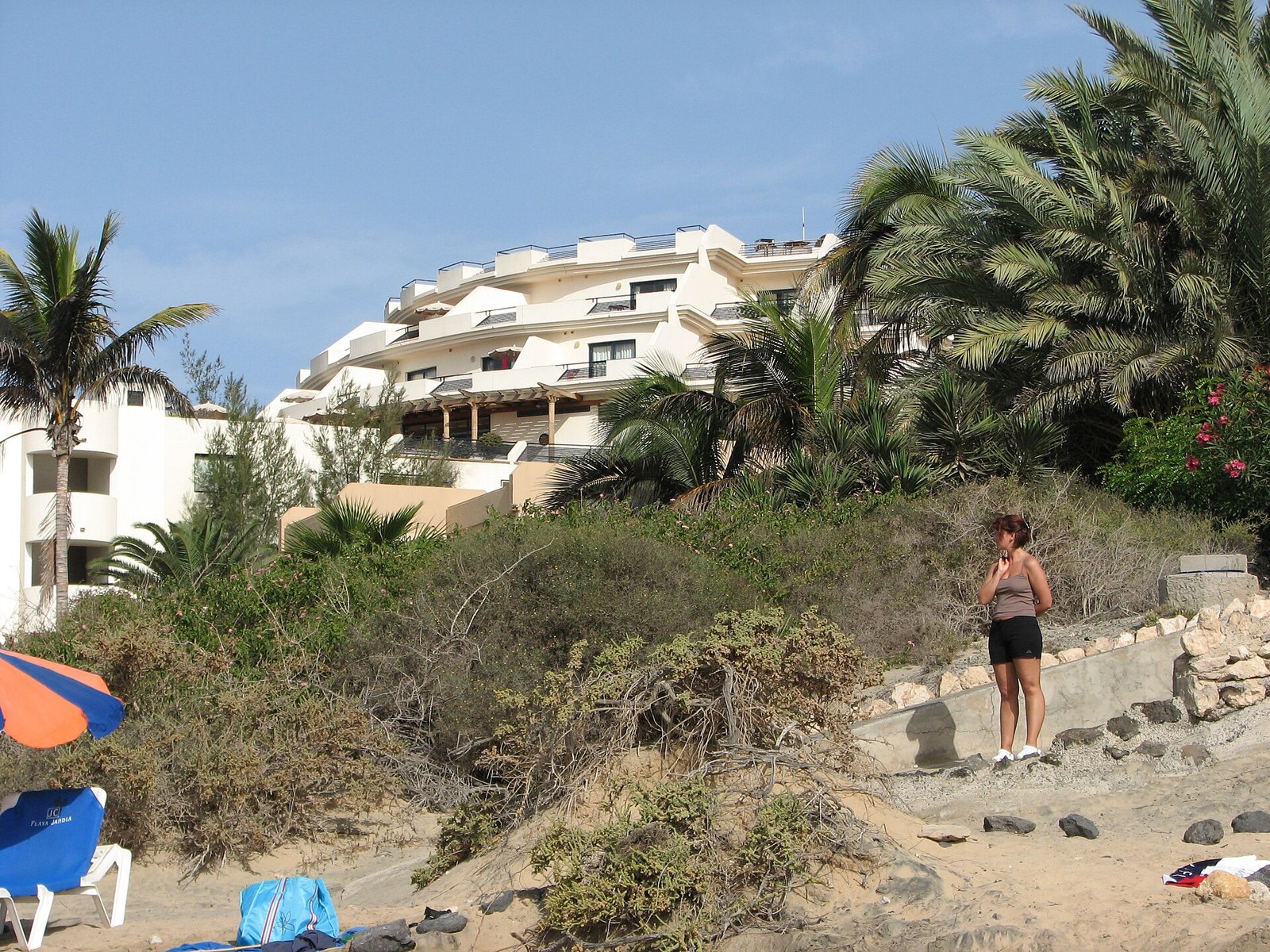
Photo: Thomas Strauß, CC BY-SA 3.0 (Symbolbild).
Pájara is home to the island's main resort zones — Costa Calma, Jandía and Morro Jable — so a cut of this scale reopens the local debate between curbing overdevelopment and preserving room for economic growth. One nuance matters: these are beds "foreseen" on paper (camas previstas), not existing rooms slated for demolition.
What the plan does
According to the municipal announcement circulated by AM-CC, the document still being drafted withdraws more than 12,000 tourist beds that current planning allowed, reclassifies more than 1.2 million square metres of developable land, and raises territorial protection to around 90% of the municipality, per figures compiled by Fuerteventura Digital, Canarias7 and La Voz de Fuerteventura.
The first deputy mayor and planning councillor, Alexis Alonso (CC), summed up the plan's philosophy: "it is not about growing more, but about growing better" ("no se trata de crecer más, sino de crecer mejor"). He described the PGO as "the road map that will shape the development of Pájara over the coming years".
Why: "grow better"
The governing team defends a model of restraint against limitless tourism expansion. AM-CC argues the plan aims to prevent uncontrolled development, preserve the municipality's landscape and identity, and answer the needs of the resident population — housing, public facilities and services — ahead of adding new hotel beds, as reported by Canarias7 and Dunas FM.
The party frames the decision within a long record of opposition to large developments in sensitive areas such as the Saladar de Jandía. The approach connects with the wider Canarian debate over tourism "degrowth", or recalibrating growth, and the territory's carrying-capacity limits.
Where it applies
The AM-CC announcement did not break the figures down zone by zone, but a more detailed reading of the document by Diario de Canarias and Diario de Fuerteventura points to the reclassification of around 15 urbanizations across the main tourist and residential areas, with sectors around Costa Calma (Matas Blancas, El Rancho, El Granillo), Morro Jable (Tablero del Moro), La Lajita, La Pared and Tarajalejo.
Under that technical reading, more than 5.7 million square metres would shift from developable to rural (rústico) land, leaving roughly 2.1 million square metres of developable land. That figure differs from the 1.2 million cited in the July announcement, suggesting different accountings and scopes; both numbers should be treated with due caution while the document is not yet final.
What happens to the removed land
Land taken out of the tourism count is reclassified as rural or redirected to other uses. According to AM-CC, the plan reserves ground for residential housing, for the expansion of several population centres, and for new public facilities and infrastructure, with the stated goal of improving services for residents.
That shift affects large projects promoted in earlier planning phases. Per Diario de Canarias and Diario de Fuerteventura, the reclassification would frustrate schemes such as those promoted by Satocan at Matas Blancas (around 9,000 beds, plus a marina, water park and golf course) and by the Lopesan group at Tablero del Moro, south of Morro Jable's port (some 9,335 beds, a 684-berth marina, a theme park and a golf course). The reporting reviewed does not, so far, record any formal appeals or objections from these companies.
The debate and why it matters
Two views collide. The sustainability case sees the cut as a way to protect the coastline and rein in growth deemed excessive; the economic-interest case warns of lost investment expectations and reduced land value in a municipality heavily dependent on tourism. Added to that is criticism from parts of the opposition, which, per Fuerteventura Digital, has called the process "opaque and exclusionary" and complained about the scarcity of information committees.
It matters because Pájara is one of Fuerteventura's main tourism engines and the PGO will set the development framework for years. The current planning dates from 1989 and the new document has been in process since the start of the decade; by mid-2026 it was still being drafted, without final approval or a confirmed date. Pájara's mayor is Alejandro Jorge (PSOE).
The cut applies to beds "foreseen" on paper, not to hotels already operating or to holiday lets already registered, which are unaffected.
If you have an interest in land or a licence in the municipality, check the exact stage of the process with Pájara's town hall before making decisions.
The data come from the municipal announcement (AM-CC) and the press; the document has not yet received final approval and its scope may change.
Sources give different land figures (1.2 million m² in the July announcement versus more than 5.7 million in the technical reading), so treat them as approximations subject to the final version.
Key facts
- More than 12,000 planned tourist beds removed from current planning (AM-CC, via Canarias7, La Voz de Fuerteventura and Fuerteventura Digital).
- More than 1.2 million m² of developable land reclassified, per the municipal announcement of July 2026.
- Territorial protection raised to around 90% of the municipality (AM-CC).
- Technical reading by Diario de Canarias and Diario de Fuerteventura: around 15 urbanizations reclassified and more than 5.7 million m² shifting to rural land, with about 2.1 million m² of developable land remaining.
- Zones cited: Costa Calma (Matas Blancas, El Rancho, El Granillo), Morro Jable (Tablero del Moro), La Lajita, La Pared and Tarajalejo.
- Current planning dates from 1989; the PGO was still being drafted in mid-2026, without final approval.
FAQ
- Will existing hotels be demolished?
- No. According to the sources, the plan removes beds "foreseen" in planning — projected, unbuilt places; establishments already operating are not affected.
- How many beds and how much land are removed?
- More than 12,000 planned beds and over 1.2 million m² of developable land, per AM-CC; a technical reading in the press puts the reclassified land at more than 5.7 million m².
- Which zones are affected?
- The municipality of Pájara, with sectors in Costa Calma, Morro Jable, La Lajita, La Pared and Tarajalejo, per Diario de Canarias and Diario de Fuerteventura.
- Why is it being done?
- To curb overdevelopment, protect landscape and identity, and prioritise housing, facilities and services; "it is not about growing more, but about growing better", says councillor Alexis Alonso.
- Has it been approved yet?
- Not definitively. As of mid-2026 the document was still being drafted, with no confirmed approval date.
Read on
- Las Palmas general strike: 8,000 march over housingTenerife · 11 November
- Canary Islands: general strike this autumn over housing, payCanary Islands · 6 October
- 75 percent protected housing: Mogán's new general plan locks in around 3,000 subsidised homesGran Canaria · 26 September
- Fuerteventura: Pastor Vico warns pupils about screensFuerteventura · 13 November
- Puerto del Rosario: Santa Cecilia week, free concert 19 NovFuerteventura · 13 November
- All events on Fuerteventura →