What the engineers say
According to Canarias Ahora, the Consejo Insular de Aguas looked at three options: patching the crack, laying a 240-metre bypass, or relining the pipe from inside. All three were "inviables", unworkable. The "structural" fix is a new project on a different route. Until then the damaged pipe would stay in use, and the treatment plant would get extra ultrafiltration and flotation units to cut suspended solids and send more water to farming. The Cabildo plans to take the matter to its plenary on Friday 25 September or the one after.
How the outfall works and why it leaks
An outfall (emisario submarino) is a pipe laid on the seabed. It carries water from the treatment plant far out so that it dilutes before it reaches the shore. The Punta Brava outfall runs 1.1 kilometres out to sea, according to Canarias Ahora, and relieves the valley's treatment plant. Leaks and cracks have been known since 2020. According to the Cabildo, the crack is in a section of glass-fibre-reinforced polyester that was to be replaced with polyethylene.
The filter wells were meant to bypass the pipe: treated water would soak into the ground instead of going to sea. One relief well and three 95-metre boreholes were built, nearly 70 metres below sea level. According to the report, well P-3 could not absorb enough water and the microfiltration failed to hold back suspended solids. It partly clogged and was shut on 30 July.
Where swimming stands
From July 2024 to June 2025 swimming was advised against; Náyade marks samples from that period with a temporary ban. The Playa Grande sampling point had already failed in 2023. According to Diario de Avisos, the beach reopened on 17 June 2025. On 22 June 2026 a new bad result came in; the PSOE says Náyade listed it as a ban, yet the beach was not closed. The council calls it a single one-off sample and says the next day's result was fine. In August the Punta Brava cove was shut for two days, and in September Playa Grande and Charcón for one.
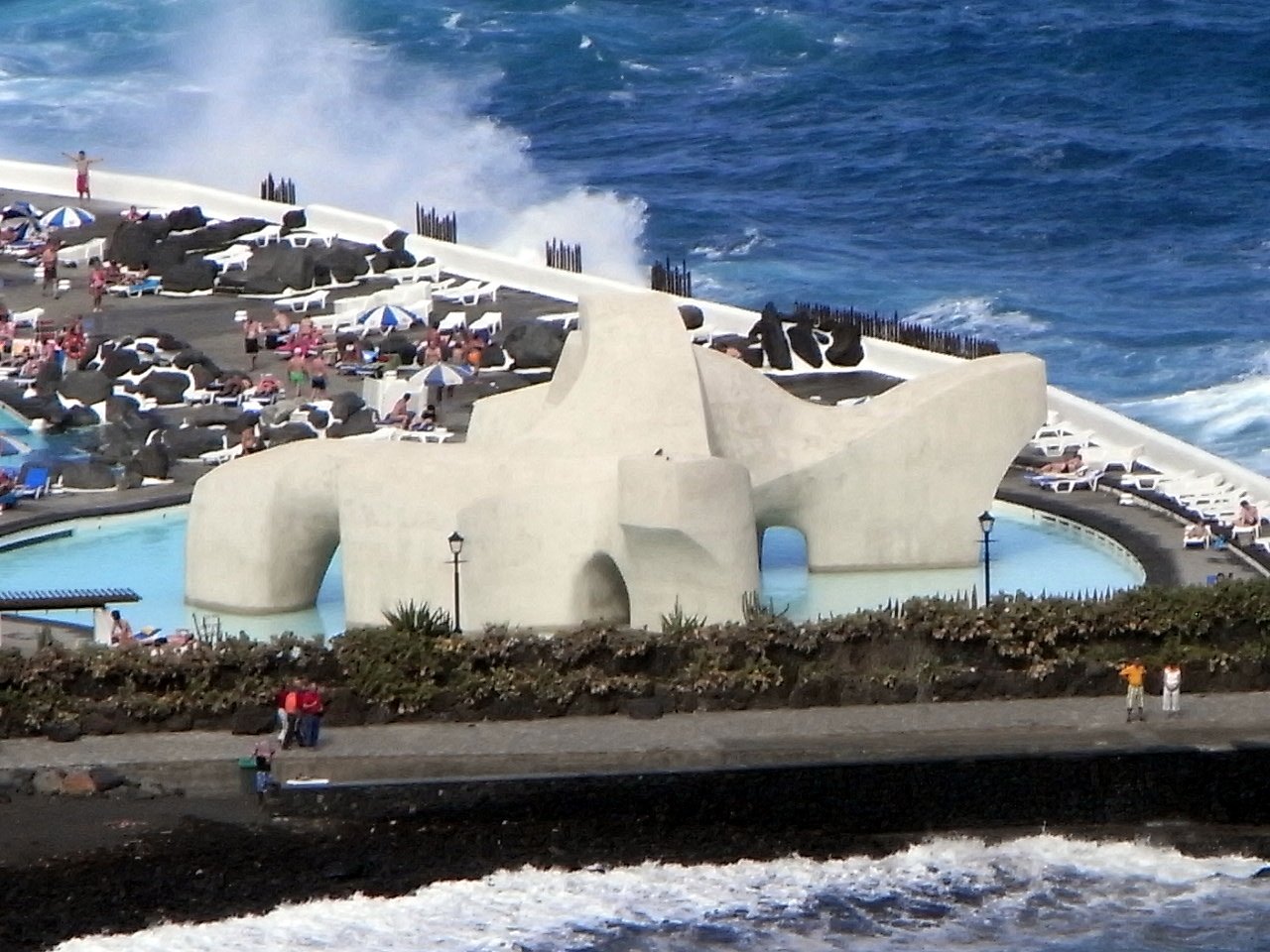
Náyade lists only three bathing zones in Puerto de la Cruz. Playa Martiánez and Playa San Telmo have been "apta" in every sample since 2023. Lago Martiánez is a seawater pool complex, not a Náyade zone; we found no reports of restrictions there.
What a new outfall costs
Neither the cost nor a timetable has been published. The Consejo Insular de Aguas awarded the now-abandoned repair to Ferrovial in June 2025 for 2.7 million euros and 16 months of work. Cabildo president Rosa Dávila spoke at the time of more than 30 million euros for the valley, 25 million of it for a new treatment plant. Mayor Leopoldo Afonso said on radio, according to Diario de Avisos, that the works would not come before May 2027.
Who is responsible and who says what
The treatment plant and the outfall belong to the Cabildo's Consejo Insular de Aguas; sampling and bans are for the Canary government's Salud Pública. The council enforces closures. Councillor David Hernández called Playa Jardín "la playa más vigilada de Canarias", the most monitored beach in the Canaries, in August. Cabildo vice-president Lope Afonso stressed that the August closure lasted "apenas 47 horas", barely 47 hours. According to Diario de Avisos on 22 September, the council has demanded answers from the Consejo Insular de Aguas because the plant expansion is allegedly not meeting its environmental conditions.
In July the PSOE accused Dávila of failing to start works announced as urgent, while saying it does not claim the outfall is the direct cause. Residents' platform Stop Vertidos al Mar says the only answer it gets is "el silencio", silence.