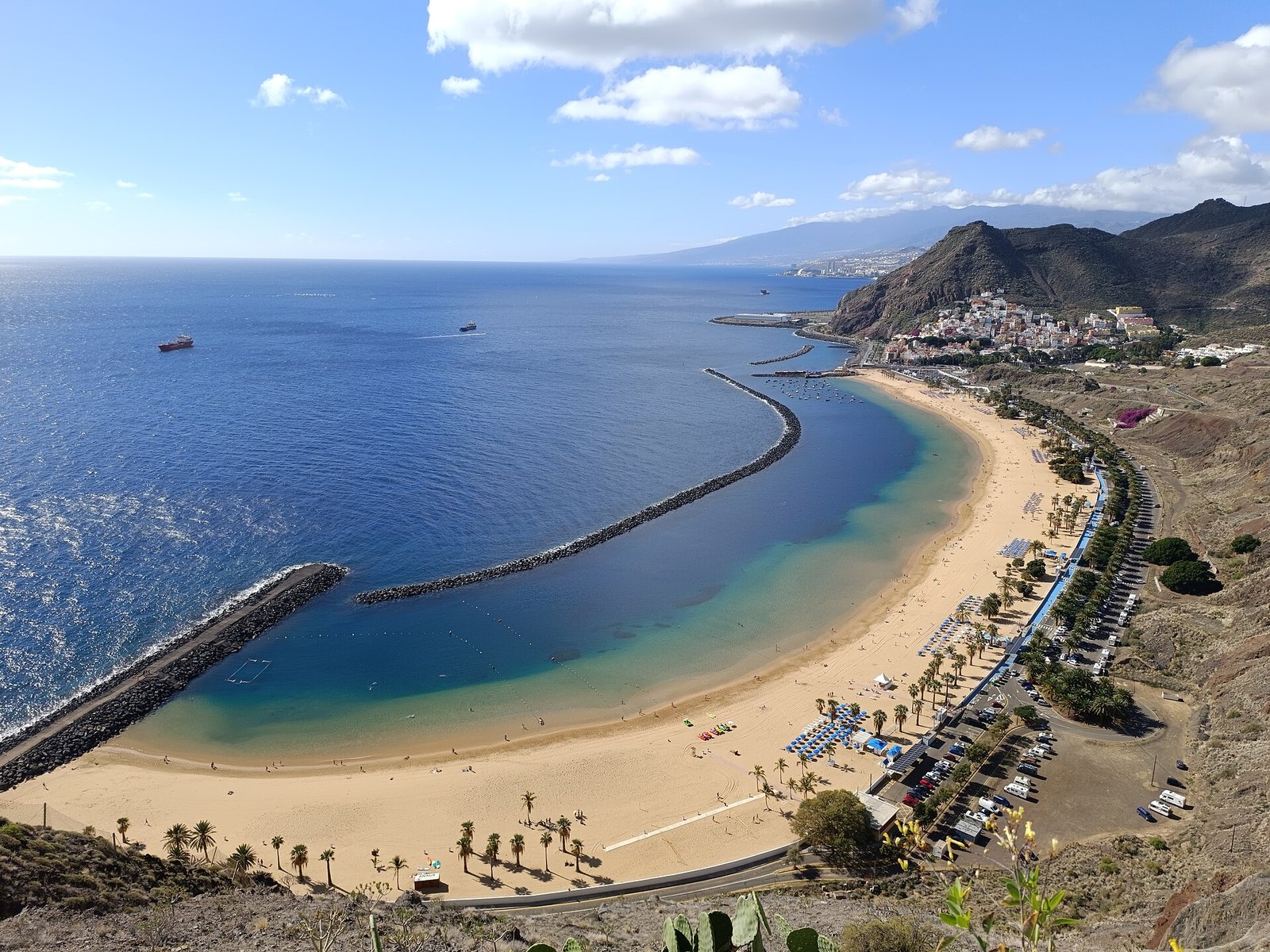
Tenerife has dozens of beaches, and the vast majority are perfectly fine — golden or black sand, clear Atlantic water, lifeguards on duty. Yet every year the same headline pops up: „Bathing banned at beach X". Usually the reason is a vertido, a discharge of wastewater into the sea, or a heavy downpour that overwhelms the drains.
That sounds more dramatic than it is for you as a visitor. The bans almost always hit a handful of well-known spots, typically last only a few days, and can be checked in seconds beforehand. Here is which beaches are affected most, why it happens, and how to stay on the safe side without any fuss.
Which beaches are affected most
According to reporting by Canarian outlets such as Atlántico Hoy and eldiario/Canarias Ahora, it is mainly a few spots in the south and north where the red flag goes up over bacteria again and again. In the south these are Playa de Troya and El Puertito in Adeje — which, per those reports, see closures for bacteriological contamination „practically every summer". Also prone to it is the popular windsurf town of El Médano (Granadilla de Abona), with coves such as La Jaquita and the Leocadio Machado stretch, where swimming was banned in July 2026 over elevated E. coli levels.
The best-known case in the north is Playa Jardín in Puerto de la Cruz: it was closed for nearly a year over faecal contamination and reopened in 2025, before fresh debate flared in 2026. The key takeaway: these are specific, named beaches — no reason to write off Tenerife's coast as a whole.
Why the spills happen at all
Behind it lies a well-documented infrastructure problem. According to environmental groups and media reports, Tenerife has around 180 discharge points into the sea, of which only about 59 are officially authorised — the rest are overflows and emergency outlets from a sewage network that is ageing or overloaded in many places. Add heavy rain and the system spills over, sending untreated wastewater briefly into the sea.
That is exactly why bacteria levels (E. coli, enterococci) often jump after rain or a pipe burst. The authorities then take water samples, and if a reading exceeds the limit, they impose a precautionary bathing ban until the next sample comes back clean.
How to check the status before you go
The fastest official route is „Infoplayas Canarias", the beach app and website run by the Gobierno de Canarias (infoplayascanarias.es). It shows condition, cleanliness and warnings for many beaches. It is worth adding the relevant town hall's page too — Santa Cruz de Tenerife, for instance, publishes its own „Estado de las playas" listing current closures.
On the spot, the flag at the lifeguard post is your most important signal: green means swimming is allowed, yellow means caution (stay near the shore), red means no swimming. A purple flag warns of jellyfish or other marine life. If a red flag is flying or a „Prohibido el baño" sign is up, it applies even under a blazing sun.
What a closure actually means
A bathing ban means just that: stay out of the water. The beach itself stays open — sunbathing, strolling, a coffee on the promenade are all fine. Canarian town halls often stress the point: the beach is not closed, only swimming is prohibited.
And the bans are usually short. As soon as two consecutive water samples are back in the green, the ban is lifted — often within a few days. If you are flexible, simply switch to the next beach along; on Tenerife's coast the nearest clean cove is rarely far.
Common questions
- Are Tenerife's beaches safe for swimming?
- Yes, the vast majority. Only a few well-known beaches see short summer bathing bans due to spills or bacteria.
- Which beaches close most often?
- Mainly Troya and El Puertito in Adeje, plus El Médano in Granadilla; up north, Playa Jardín in Puerto de la Cruz was a long case.
- How do I know if I can swim?
- By the flag: green = yes, yellow = caution, red = no swimming. Beforehand, the Infoplayas Canarias app or the town-hall page helps.
- Why do the spills happen?
- Usually an overloaded or ageing sewage network, especially after heavy rain. Bacteria levels rise and the authorities close as a precaution.
- How long does a ban last?
- Usually just a few days — until two water samples come back clean. The beach stays open meanwhile; only swimming is banned.
Read on
- Loquillo's only Canaries gig: Peñón Fest Tenerife, 23 OctTenerife · 14 October
- Tenerife: TF-1 crash near Arona injures motorcyclistTenerife · 14 October
- Tenerife: the most beautiful beaches at a glanceTenerife · 4 October
- Canary Islands beaches to avoid this summer according to The SunTenerife · 19 July
- Tenerife Halloween 28–31 Oct: haunted house, free eventsTenerife · 13 October
- All events on Tenerife →
As of July 2026, per Canarian media (Atlántico Hoy, eldiario/Canarias Ahora), environmental groups and the authorities. Closures and water readings change at short notice — check the current status before you swim.