Key facts at a glance
When in the Canary Islands: Thursday 11 June (Gran Canaria) and Friday 12 June 2026 (Tenerife)
Whole Spain trip: 6 to 12 June — Madrid, Barcelona, Gran Canaria, Tenerife
Trip motto: «Alzad la mirada» — «Lift up your eyes» (John 4:35)
Main theme in the Canaries: migration and integration on the Atlantic route
Mass registration: pre-register via conelpapa.es; confirmation open since early June — physical ticket mandatory
Stadium mass Gran Canaria: over 50,000 registered for a capacity of 31,250 — outdoor zones with screens
Schools: closed on Gran Canaria on 11.6. and on Tenerife on 12.6.
Work: the Labour Ministry recommends working from home on the visit days
Historical context: first papal visit to the Canaries since John Paul II in February 1982
Live broadcast: RTVC (Radiotelevisión Canaria) worldwide and Vatican News
Sources: Vatican / Holy See (official programme), Spanish Bishops' Conference, Diocese of the Canaries, Diario de Avisos, El Día, Canarias7, COPE, La Provincia, Vatican News
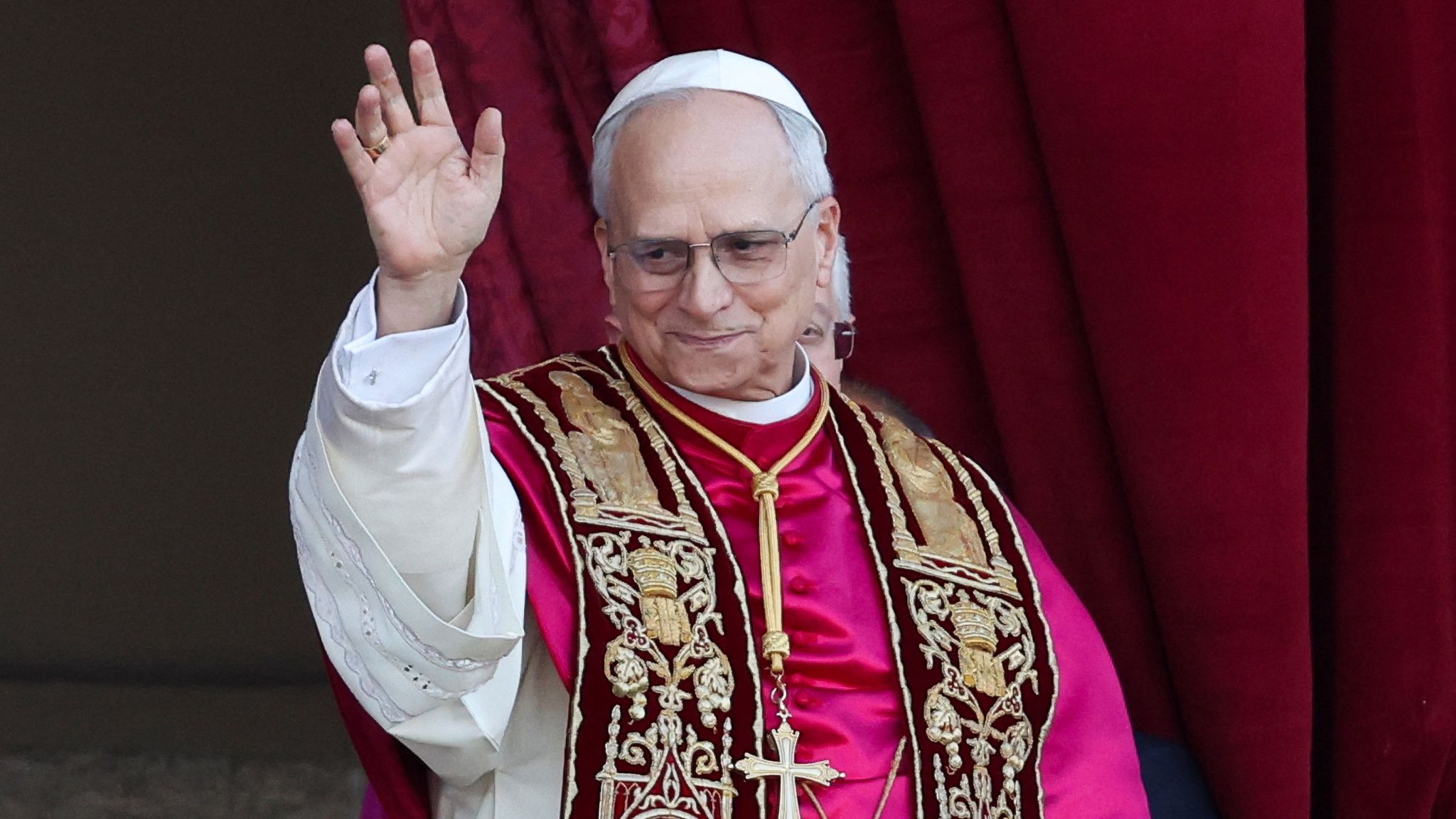
The two-day visit to the Canary Islands is the finale of a week-long trip to Spain by Pope Leo XIV — the first apostolic journey by a pope to Spain since Benedict XVI in 2011. In the Canaries, the pope will set two priorities: the migration question (with stops at Arguineguín and the Las Raíces migrant centre) and two large public masses — on 11 June at the Estadio de Gran Canaria and on 12 June at the port of Santa Cruz de Tenerife.
For residents in the affected municipalities this means: heavy security measures, road closures, school and administrative closures, disruption to public transport, and pilgrim numbers comparable to the major religious feast days. Canarian security agencies call it the largest security operation in the islands' history — coordinated in parallel with the operations in Madrid and Barcelona.
The official programme, day by day
The programme has been officially released by the Vatican. All times are in Canary Islands local time (one hour behind mainland Spain and Central European Time).
Thursday, 11 June 2026 — Gran Canaria
- Morning
- Arrival in Las Palmas de Gran Canaria, travel from Barcelona
- 11:40
- Port of Arguineguín (Mogán): meeting with migrants, aid organisations and families of the deceased — floral tribute to the sea in memoriam
- 13:30
- Las Palmas, popemobile from the Teatro Pérez Galdós to the Cathedral of Santa Ana
- Afternoon
- Meeting with religious and pastoral workers in the cathedral
- 18:30
- Large Holy Mass at the Estadio de Gran Canaria with papal homily
- Evening
- Overnight stay at the Diocese of Las Palmas
Friday, 12 June 2026 — Tenerife
- 08:30
- Departure from Gran Canaria / Gando Airport
- 09:10
- Arrival at Tenerife North «Los Rodeos» Airport
- 09:30
- «Las Raíces» migrant centre (San Cristóbal de La Laguna): papal greeting
- 10:10
- Plaza del Cristo, La Laguna: meeting with migrant integration organisations — papal address
- 12:15
- Port of Santa Cruz de Tenerife: closing Mass of the journey with papal homily
- Afternoon
- Farewell at the airport
- 20:10
- Arrival at Rome-Fiumicino — end of the journey
At the closing Mass in Santa Cruz the Virgen de Candelaria — the patron saint of the Canary Islands — is expected to be present. Confirmation from church authorities is still pending, but preparations are under way.
Road closures and security zones
The Spanish traffic authority DGT (Dirección General de Tráfico) has ordered extensive closures on both islands. Nine days before the visit, the key points are now concrete.
Gran Canaria, 11 June:
- GC-1 (main southern motorway): fully closed for around four and a half hours during the papal convoy between Gando, Arguineguín and Las Palmas. This is the island's central artery — if you need to get to or from the south, replan the whole day.
- Arguineguín (Mogán): traffic closure from the early hours until midday. Complete closure of the harbour area, access roads and neighbouring promenades. Schools across all of Gran Canaria are closed on 11 June.
- Central Las Palmas: closures along the popemobile route Teatro Pérez Galdós → Cathedral of Santa Ana from around 12:30 pm. Triana, Vegueta and the immediately adjacent streets affected. The city is suspending non-essential municipal services and setting up transit priority zones for public transport.
- Estadio de Gran Canaria: large-scale closures from late afternoon until late into the night. Parking near the stadium practically impossible.
Tenerife, 12 June:
- TF-5 (northern motorway): blocked several times or reduced to fewer lanes during the papal convoy Los Rodeos–La Laguna–Santa Cruz.
- Santa Cruz and La Laguna: car traffic completely banned on 12 June. Both cities go largely car-free. Get around on foot or by tram/bus that day.
- Los Rodeos Airport (TFN): restricted access; arriving and departing passengers should expect delays.
- San Cristóbal de La Laguna: 48-hour closure of the historic old town around the Plaza del Cristo.
- Santa Cruz harbour area: complete closure of the eastern port for the closing Mass. Limited access to the Avenida Marítima.
How to get to the venues
The Canarian authorities are preparing for tens of thousands of pilgrims and visitors. The main options:
Estadio de Gran Canaria (Mass 11.6., 6:30 pm): the stadium is in the south of Las Palmas, next to the Centro Comercial 7 Palmas. Best route: guagua (bus) — lines 25, 26, 80 from the city centre. Special services will run. Private car: barely any parking, strongly discouraged.
Arguineguín (meeting with migrants 11.6., 11:40 am): on-site public participation only possible in limited numbers — the area is a security zone. Anyone wanting to attend should have applied for the official pilgrim accreditation through the diocese. Otherwise live broadcast on RTVC.
Plaza del Cristo La Laguna (meeting 12.6., 10:10 am): only reachable on foot (old town closure). Best route: Tranvía Línea 1 from Santa Cruz, then on foot through the old town to the plaza. Early arrival recommended — the square will be full long before the pope arrives.
Santa Cruz harbour (closing Mass 12.6., 12:15 pm): reach by TITSA bus or tram to Plaza Weyler/Plaza de España, then on foot. Extra services planned. With car traffic completely banned in Santa Cruz that day, the tram is the key way to get around. For pilgrims from the other islands: additional flights between the Canary Islands and Tenerife North for 9–13 June.
Travel from the mainland and abroad: Canarian airports expect increased passenger volumes from 10 to 13 June. Ferries from Baleària and Naviera Armas between Gran Canaria and Tenerife will run with increased frequency in those days. British pilgrims should note that flight prices for the period are well above seasonal norm, and that post-Brexit the 90/180 Schengen day-count applies unless you hold Spanish residency — worth checking before booking a longer stay around the visit.
What residents need to know in practice
☐ Do your shopping one or two days in advance
☐ Consider working from home — the Labour Ministry officially recommends it
☐ School-age children: schools closed across Gran Canaria on 11.6. and across Tenerife on 12.6. — arrange care
☐ Move deliveries (parcels, groceries) to other days — they won't get through otherwise
☐ If you live in the closed zones: keep your residency document at hand
☐ Emergency services remain available, but response times may be longer
Work from home recommended: the Spanish Labour Ministry has officially recommended that companies on Gran Canaria and Tenerife promote working from home on the visit days, to reduce congestion and crowds. If your commute runs through a closure zone, this is a good occasion to agree home working or flexible hours with your employer.
Schools closed: unlike first expected, schools are closing not just locally but island-wide — across all of Gran Canaria on 11 June and across all of Tenerife on 12 June. This also covers nurseries and secondary schools. Parents should arrange care early.
Shops open and closed: most shops and restaurants in the closure zones will be closed or operating reduced hours. Outside the closure zones, normal operation. Shopping centres in Maspalomas, Telde, Adeje open as normal.
Authorities: town halls in La Laguna, Santa Cruz, Las Palmas and Mogán will be at least partially closed or on minimum service on the relevant visit day. Las Palmas is suspending non-essential municipal services on 11 June.
Waste collection, street cleaning, postal services: likely suspended in the affected areas on the day of the visit — expect overflowing bins.
Emergency services: hospitals, fire, police, the 112 emergency line will operate normally. But: longer response times in closed areas. Anyone in a closure zone with a chronic condition should stock up on medication in advance.
Background: why is Leo XIV coming to the Canaries?
The visit to the Canary Islands is not a routine stop on a Spain trip. It has a specific backstory that goes back to Pope Francis. Francis had repeatedly expressed the wish to make visible the migration reality on the Atlantic route — the Canaries route, which since 2020 has become the deadliest migration route in the world. His death in April 2025 prevented his personal visit.
Leo XIV, elected as his successor on 8 May 2025, took over the trip and kept the concept: the Canaries as a symbol for a migration and asylum policy that many in the church consider inadequate.
Three stations embody this message:
1. Arguineguín, 11 June. The small harbour in the south of Gran Canaria was the epicentre of the first major Canary Islands migration crisis in 2020. In the makeshift reception camp set up at the time, up to 2,600 people were held — many for days, in undignified conditions, on the pier in the sun. The pope's visit here is a deliberate symbolic act. The announced floral tribute to the sea is a memorial to the thousands who lost their lives on the crossing from West Africa.
2. Las Raíces, 12 June. The migrant centre near San Cristóbal de La Laguna was opened in March 2021 during the acute phase of the migration crisis. It has at times housed more than 1,600 people; around 500 migrants live there today. Many are currently preparing for the meeting with the pope through Spanish-language courses.
3. Plaza del Cristo, La Laguna. Here the pope will meet representatives of integration and social-work organisations — Caritas, Red Cross, local diaconal services, NGOs working daily in language teaching, asylum advice and initial reception.
The visit also has an internal-church dimension. Leo XIV is an Augustinian — and one of the last remaining Augustinian communities in Spain is in Puerto de la Cruz on Tenerife. Representatives of this community will meet the pope in La Laguna.
There is a further, less publicised aspect: activists from El Hierro, who have for years been involved in the rescue and care of shipwrecked migrants in La Restinga, will be received in audience by the pope. The visit will also include a remembrance of the seven migrants who drowned in the bay of La Restinga in February 2025.
Symbols, encounters and the migration focus
The visit involves a number of smaller but notable encounters that together complete the picture:
A multilingual mass with migration at its heart. The Vatican has published the official mass book for the Canaries masses. The liturgy is multilingual and puts the islands' migration and Atlantic history at the centre — an unusual emphasis for a papal mass.
Two popemobiles from Rome, an electric buggy from Tenerife. The Spanish military is coordinating the transport of two official popemobiles from Rome to the islands. In addition, Tenerife is building its own electric buggy to Vatican specifications for the pope's journeys on the island.
Mogán declares Saint Anthony of Padua honorary mayor. On 13 June, a day after the pope's departure, the municipality of Mogán will formally bestow the title of «perpetual honorary mayor» on Saint Anthony of Padua — a gesture towards the pope, who is from the Augustinian order.
Thousands of volunteers. The church-accredited volunteers — young believers, parishioners, Caritas workers — have received their uniforms in recent weeks: T-shirt, cap, backpack. They will guide pilgrims, translate, coordinate.
€2 million from the Canary Islands government. The regional government is providing the dioceses with €2 million to finance the preparations. Donations from private supporters to the dioceses are tax-deductible.
Scepticism remains. Despite all preparations, some of the Canary Islands public remains sceptical that the visit will actually take place. Papal trips have been cancelled at short notice in the past — but there are no signs of that now.
An open conflict in the background. In San Cristóbal de La Laguna, a tax dispute between the town council and the diocese over the taxation of church-owned property has been smouldering for four years. It is still unresolved — making the papal visit a diplomatically delicate encounter.
FAQ, contacts, sources of information
Frequently asked questions
- Do I need a ticket for the masses?
- Yes. For the Gran Canaria stadium (11.6. evening) and the port of Santa Cruz (12.6. midday), pre-registration via conelpapa.es plus confirmation is required. The ticket must be brought in printed, physical form. All the steps are in section 09.
- I pre-registered — what do I do now?
- You must actively confirm attendance: confirm your registration with your DNI on the dedicated website, print the ticket, and collect the accreditation wristband (pulsera). Without a physical ticket and wristband you won't get through the security checks.
- I didn't pre-register — can I still go to the mass?
- The stadium places are oversubscribed (over 50,000 registrations for 31,250 seats). Anyone without a confirmed place can follow the mass in the outdoor zones with big screens. From 2:00 pm a fan zone with Canarian culture and music opens in the stadium annexe.
- Will the stadium pitch be used?
- No. The pitch (césped) will not be seated — the option for up to 14,000 extra chairs on the field was not authorised. The regular capacity of 31,250 applies.
- Can I just turn up and watch?
- Along the popemobile route in Las Palmas (11.6. around 1:30 pm) you can stand along the route if you position yourself in time. Arguineguín and La Laguna are largely security zones with restricted access.
- Is the live broadcast free?
- Yes. RTVC (Radiotelevisión Canaria) broadcasts both days in full. Vatican News streams on vaticannews.va and YouTube — including English, German and Italian audio tracks.
- What do I tell my employer if I can't get to work?
- The Labour Ministry has officially recommended working from home on the visit days. If your commute runs through a closure zone, that is a legitimate reason. When in doubt, ask HR.
- Is it safe? Are there security warnings?
- No specific warnings so far. Spanish security agencies are mobilising the largest operation in the Canaries' history — coordinated in parallel with Madrid and Barcelona. Anyone attending a public event should expect long security checks.
- What happens after the visit?
- The pope lands in Rome on Friday 12.6. at 8:10 pm. Canarian traffic returns to normal over the weekend — clean-up works will continue until Sunday.
Official sources of information:
- conelpapa.es — official website of the Spanish Bishops' Conference for the papal visit (programme, registration, confirmation, updates)
- inscripciones.conelpapa.es — pre-registration and seat allocation
- vaticannews.va — Vatican coverage in multiple languages
- diocesisdecanarias.es — Diocese of the Canaries (Gran Canaria, Lanzarote, Fuerteventura)
- obispadodetenerife.es — Nivariense Diocese (Tenerife, La Palma, La Gomera, El Hierro)
- rtvc.es — Radiotelevisión Canaria (live broadcast)
- dgt.es — traffic authority (road closures)
- laspalmasgc.es, sctfe.es, aytolalaguna.es, mogan.es — town councils with local details
For English-speaking pilgrims: several international Catholic communities on the islands hold English-language services in the days around the visit, including the parish of Our Lady of Mount Carmel in Playa de las Américas (Tenerife) and St Anthony of Padua in Maspalomas (Gran Canaria). Confirmation directly with each parish.
New: how to register for the masses
Since the start of June, the confirmation phase is open. Anyone who pre-registered must now act — otherwise the place lapses. Enélida Hernández from the organisation explained the steps and stressed one point in particular: the ticket must be brought in physical, printed form. A ticket on the phone alone is not enough and causes problems at the checks.
- Pre-register. If you haven't yet: register via inscripciones.conelpapa.es. Places are allocated in order of registration until the quota is full.
- Confirm with your DNI. After pre-registering — and after passing the security check — confirm attendance on the dedicated website with your DNI (or NIE/passport). Once confirmed, you receive a personal QR code with access details, entry point and seat.
- Print the ticket. Print the ticket physically and bring it on the day of the mass. Mandatory — no digital ticket.
- Collect the wristband. Collect the accreditation wristband (pulsera) that lets you pass through all the security checks.
Registration help points: anyone needing help with the online process can find support at dedicated diocesan information points on Gran Canaria, Lanzarote and Fuerteventura. Parishes also have information material.
Tenerife closing mass registration (12 June): for the mass at the port of Santa Cruz the same principle applies — pre-register via conelpapa.es, confirm, physical ticket. The Nivariense Diocese communicates details via obispadodetenerife.es.
cita.news will report live from Arguineguín, La Laguna and Santa Cruz. We update this dossier continuously as new details — especially on closures, school cancellations and registration deadlines — become available.
Read on
- Canary Islands: €47.5m for free buses and tramsCanary Islands · 14 October
- Canary Islands 14 October: fiestas, opera and club nightsCanary Islands · 14 October
- Tenerife: Triathlon European Cup road closures on 11 OctTenerife · 9 October
- Puerto del Rosario 7 Oct: road closures on Fiestas finaleFuerteventura · 7 October
- Canary Islands on 13 Oct: fiestas, opera and storytellingCanary Islands · 13 October
- All events on the Canary Islands →
As of 02.06.2026. Programme, closures and registration deadlines may change at short notice. The binding information is what the DGT, the town councils, the dioceses and the official website conelpapa.es publish.