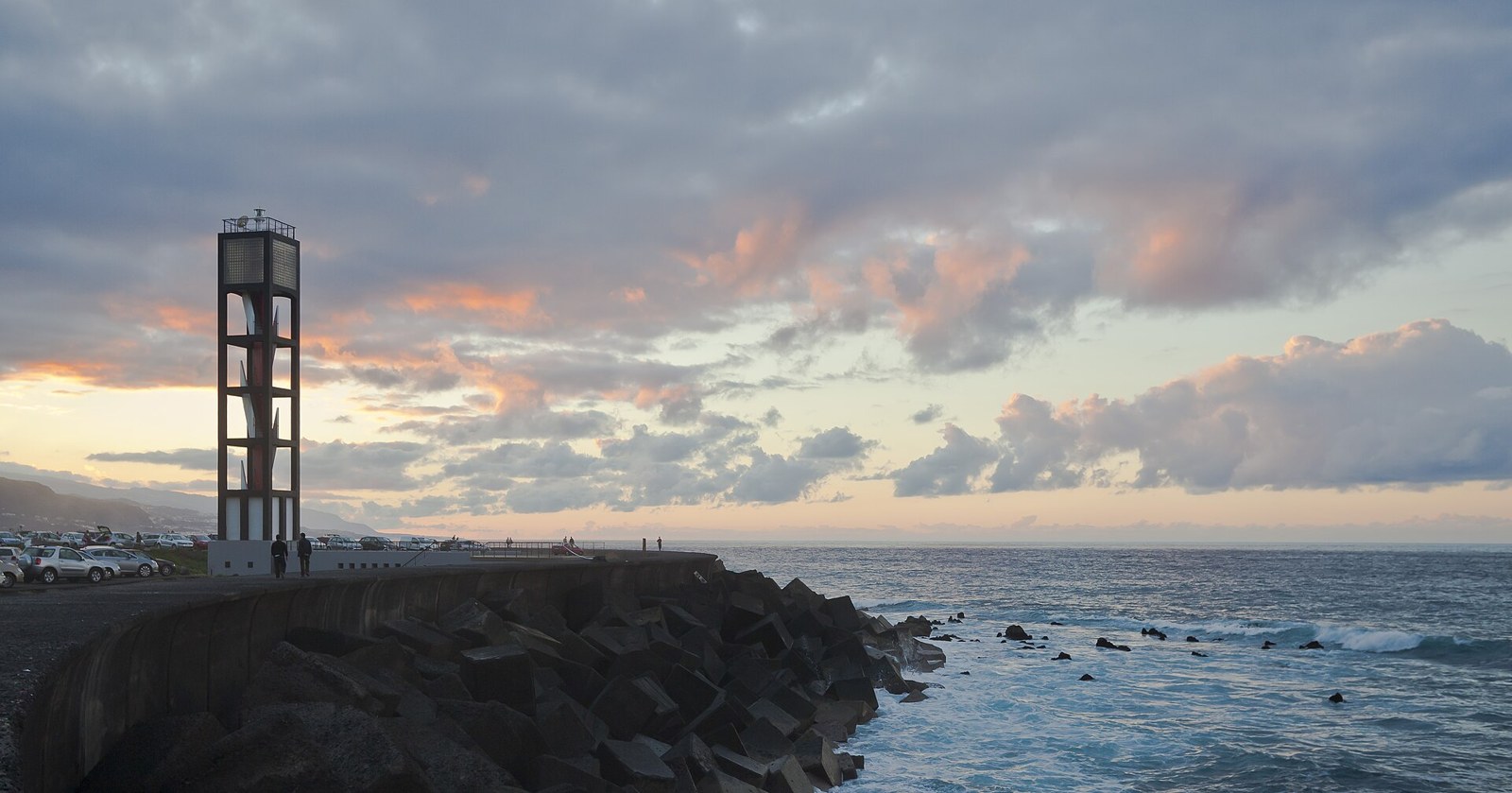
What happened on Saturday night
What was affected, the Cabildo says, is the tertiary stage of the Punta Brava plant, which treats the wastewater of the Orotava valley. What escaped was ferric chloride in solution, a coagulant that clumps suspended solids together so they settle. RTVC and the agency EFE put the amount at around 1,000 litres; Diario de Avisos notes those figures still have to be pinned down in the investigation. The rupture was about one centimetre across, in a line that had been serviced that same morning. Aqualia told RTVC that ferric chloride is corrosive and toxic at certain concentrations, and that if it reached the sea the effect would be «a possible alteration of the pH in the affected zone».
Who is investigating, and what is open
The Consejo Insular de Aguas de Tenerife, the Cabildo's water authority, opened proceedings against Aqualia on Sunday under article 17 of the Reglamento Sancionador en Materia de Aguas. Aqualia must hand over all documentation on the incident and on compliance with the protocols; the local police inspected the site and Seprona, the Guardia Civil's environmental unit, also attended. The decisive point is still open: the Cabildo itself acknowledges «versiones contradictorias» over whether the product reached the storm-drain network and then the sea. Aqualia has raised the hypothesis of sabotage, the Cabildo says; cameras are reported to have recorded a person with no connection to the plant. The Cabildo insists it rules out no line of inquiry and will not anticipate conclusions. Nobody is accused, and the presumption of innocence applies.
Which coves exist, and what Náyade shows
Officially it is not the place name Punta Brava that counts but the bathing zone. Náyade, the Spanish health ministry's national bathing-water system, lists only three zones in Puerto de la Cruz: Playa Jardín, Playa Martiánez and Playa San Telmo. Punta Brava is not a zone of its own; the coves all sit inside the 720-metre Playa Jardín zone, whose season runs to 30 November. Náyade keeps three sampling points there: PM1 at Charcón (right), PM4 at Playa Grande (centre) and PM5 at Playa Chica (centre). El Castillo, named in news reports as the third cove, is not a sampling point of its own. In our check on 28 September at 17.26, all three points carried «Zona Apta para el baño» for the sample of 23 September, with single-digit E. coli values.
The August and September closures
There were two closures this summer, both short. On 12 August the mayor signed a bando ordering the preventive temporary closure of the Playa Grande bathing area, while Playa del Castillo and Playa del Charcón stayed open. The trigger was one unfavourable public-health result, against which the town hall set five samples of its own that, on its account, came out optimal. The Cabildo's vice-president, Lope Afonso, said on 21 August on Gente Radio that the closure «apenas duró 47 horas». The second closure came on 3 September, for Playa Grande and Charcón. Diario de Avisos and eldiario.es/Canarias Ahora reported, citing the residents' platform Stop Vertidos, values above 800 E. coli in both coves against a recommended maximum of 500. Náyade records the 800 CFU only at Playa Grande, classified as «Zona donde queda prohibido el baño temporalmente»; for Charcón it lists 29 on the same date and «apta». The Charcón result therefore comes from the town hall's private laboratory. Public health lifted the restriction on 4 September.
The other side, and the works from Tuesday
The town hall has asked the Cabildo and the Consejo Insular de Aguas for «información completa y documentada» and wants the outfall replaced and the plant expanded. The Cabildo's president, Rosa Dávila, said of a new outfall: «Corresponde a los técnicos del Consejo Insular determinar la solución técnica.» The platform Stop Vertidos al Mar complains to esarena.es about a lack of answers. On 20 September, Diario de Avisos reported, residents of Los Frailes and the Fundación Telesforo Bravo criticised work starting too early on the 20 million euro expansion. We found no statement from Ben Magec – Ecologistas en Acción on this incident; its «Banderas Negras 2026» report does not include Playa Jardín. Separately, a prosecutor-driven case over sewage discharges is running, in which the town hall announced on 14 August that it would join as a private prosecutor; we name nobody. From Tuesday a section of the collector is also being replaced as an emergency.