The Supermarket Landscape — who's who
Anyone moving to the Canary Islands will quickly learn the key names. Hiperdino belongs to the DinoSol group and is the dominant player — over 230 branches across five of the seven islands. The staff member in the green apron who explains the Manchego to you is practically part of the furniture. SuperDino is the smaller neighbourhood format, HiperDino Express the even smaller version in tourist areas. Together with Spar, the two chains hold roughly half of the Canarian supermarket market.
Mercadona is the Spanish giant with 81 branches in the Canary Islands — anyone arriving from mainland Spain will feel right at home. The own-brand Hacendado is something of a cult, the olive oil aisle is legendary, and the Tarradellas hummus finds its way into thousands of flats every week. Lidl brings German efficiency — and according to the 2025 OCU study, Lidl is now the cheapest supermarket on Gran Canaria, saving €87 to €123 per year compared to Hiperdino. Atlántico Hoy has the full breakdown.
Carrefour is the French hypermarket with a large range, often inside a shopping centre — ideal for the once-a-month top-up run. Carrefour Meridiano in Santa Cruz de Tenerife is reportedly the cheapest supermarket in all of Spain, according to the OCU. Alcampo, the other French brand from the Auchan group, has one location in La Mareta on Gran Canaria and keeps price competition meaningful. El Corte Inglés, with its premium Supercor counter, is the place for German bread, Italian pasta and Swiss chocolate — but also, per the OCU, the most expensive supermarket in the Canary Islands. Those who live near Mesa y López still go, because it stocks a Spanish mustard selection you won't find anywhere else.
The rule of thumb: weekly shop at Mercadona or Lidl, fresh produce from the mercadillo (weekly market), Carrefour once a month for bulk items, Hiperdino for the spontaneous errand round the corner. If you're serious about the numbers, keep your receipts for three months and see where the money actually goes. It's usually an eye-opener.
What Northern Europeans Miss — and where to find it anyway
Quark (German curd cheese) is simply not here. Not a litre, not a pot, not a trace. Instead there's queso fresco — young fresh cheese, similar texture, but not tangy. Anyone who really can't live without Quark has to try El Corte Inglés (occasionally) or order it from back home. Dark sourdough bread, dense wholegrain rye loaves — all scarce. There are a few German bakeries, mainly in Maspalomas (Bäckerei Kraus, Bäckerei Bavaria) and a couple in Las Palmas, but for a spontaneous supermarket find you're looking at Pan integral at best. Mercadona has a decent wholegrain, Lidl sometimes has fresh rye bread.
A whole range of Central European staples turns up if you know where to look: mustard at Lidl and El Corte Inglés, dark chocolate in any decent branch, sauerkraut in jars at Lidl, beer (Erdinger, Paulaner, Bitburger) at most larger supermarkets. What's really worth learning, though, is the local alternatives. The Canarian cheese — Queso de Flor de Guía, Queso curado de Valsequillo — is easily the equal of a good Camembert. Pan de millo, the island's maize bread, is sweet, dense, with a flavour all of its own that takes some getting used to. The tomatoes from Gran Canaria actually taste of tomato, which in February is something close to a miracle.
Mercadillos and Market Halls — the weekend essential
The Mercadillo Agrícola y Artesanal de Vega de San Mateo is the place to do your weekend shopping in the middle of the island. 105 stalls, two large halls plus an outdoor area, open Friday, Saturday and Sunday. In summer the halls stay open later — until 7pm on Saturdays — in winter slightly less. Go there and you come back with a bag full of tomatoes, avocados, fresh mountain cheese, honey from the Cumbre, a bottle of mojo, sometimes a whole leg of ham. A word of warning: Sunday after 11am is chaos; Saturday morning is the right time. The official island produce route overview has more.
The Mercadillo de Teror takes place every Sunday from 9am to 3pm around the Basílica del Pino. The speciality: Canarian chorizos and morcillas made by the village's own butchers. The whole village smells of smoked meat on Sunday mornings. Add almond sweets, bread and the inevitable tourist market around the edges. Authentic all the same, because island families come here themselves.
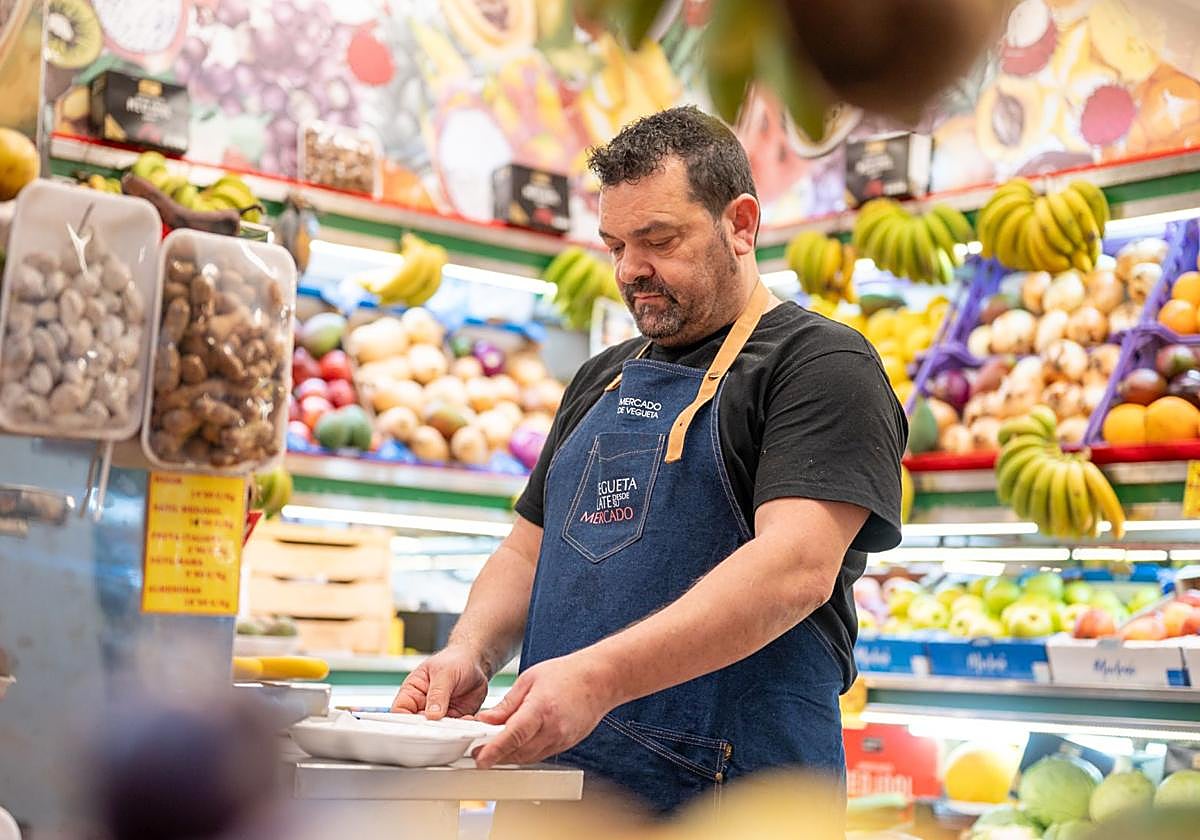
Within Las Palmas you'll find the historic covered markets. The Mercado de Vegueta, inaugurated in 1858, is the oldest — Calle Mendizábal 1, Monday to Saturday, from 6:30am at weekends. The fish counter (pescadería) is legendary. On Thursday lunchtimes regular customers queue in rows, the vendor calls out names, the whole system runs on trust. Beside it there's a cheese counter with samples — the vendor slices a piece of Semicurado de Valsequillo without being asked, presses it into your hand, smiles, and waits. Say yes and you'll leave with a whole cheese wheel. Vegueta launched the "Vegueta late desde su mercado" initiative in 2026, a four-day event that drew over 18,000 visitors.
The Mercado Central on Calle Galicia is the largest — functional, less picturesque, but complete. The Mercado del Puerto near the harbour is market and tapas bar in one: busy at Sunday lunchtime, a meeting point for locals, expats and cruise-ship passengers alike. Go there and you'll find yourself in conversation over oysters, Iberian ham and gambas pintxos before long. A full list of all markets is maintained by the Sistema de Información Empresarial de Canarias.
Pescadería and Carnicería — where Spanish really helps
The Spanish fishmonger is called a pescadero; the pescadería (fish counter) is his stage. What lies in cling film at the supermarket is here laid out in the open — sama, vieja, cherne, bocinegro, sometimes fresh tuna from the north of the island. The pescadero looks you in the eye and asks: "¿Para hacer al horno o a la plancha?" Oven or griddle. The answer determines which fish he cuts for you, and how. For someone doing this for the first time it's a small adventure. Three months in, you know how to say "limpio sin escamas" — cleaned and descaled — and the pescadero recognises you.
The carnicería is a different world, because Spanish meat vocabulary is a language of its own. Solomillo is fillet, lomo is loin, aguja is neck cuts, costilla is ribs. For pork, ask for cerdo; for chicken, pollo; for lamb, cordero. The butcher at Mercadillo San Mateo often sells meat from animals reared in the village itself — ask where it's from and you'll get a precise answer. The price isn't cheaper than Mercadona, but the flavour justifies the effort. And along the way you'll pick up the best Spanish you'll ever learn — small talk about the weather, politics, the weekend.
Using Delivery Services Wisely
There are three major apps in the Canary Islands. Glovo is the Spanish all-rounder — restaurants, supermarkets, pharmacy, flowers, sometimes even hardware from the ironmonger. Open around the clock in Las Palmas. Uber Eats is more restaurant-focused, with real-time tracking. Just Eat is the general option, with over 116 partner restaurants in Las Palmas alone since 2014. In the south — Maspalomas, San Bartolomé, Playa del Inglés — all three cover the area. In the mountains, in Agüimes or Teror, less so.
If you want to do your weekly shop via app, do the maths first. Glovo Supermarket is convenient, but the prices in Glovo's catalogue are often 10–20% higher than in the actual shop — plus delivery fee, plus service fee. A €70 weekly shop can quickly become a €95 bill. Ordering directly from Mercadona Online is usually cheaper: €7.21 delivery to the Canaries, €50 minimum order, next-day delivery. Lidl Online delivers for up to €6.99, free from €79 — but Lidl's website doesn't deliver fresh food, only non-food, clothing and household items. For fresh produce, you need to go in person. Hiperdino Online has its own app and delivers well on the island, on similar terms to Mercadona.
Practical tip: if you have no car and live in Las Palmas, take the bus to the nearest Lidl or Carrefour at least once a month for the heavy stuff — water, beer, olive oil, washing powder — and use your weekend errands for the rest. Over the course of a year that saves a few hundred euros in delivery costs.
How Tenerife Differs
Tenerife has two hypermarket giants on the island: Carrefour and Alcampo, each with two locations. That keeps prices down. Gran Canaria has only one Alcampo and less competitive pressure. Carrefour Meridiano in Santa Cruz is the cheapest supermarket in the Canary Islands overall according to the OCU, closely followed by Alcampo Telde on Gran Canaria. The Hiperdino branches in Tomé Cano and Anaga also rank among the cheapest on the islands.
The mercadillo tradition is strong on Tenerife. The Mercado de Nuestra Señora de África in Santa Cruz, housed in a striking caravanserai-style building, is the counterpart to Mercado de Vegueta. The Mercadillo del Agricultor de Tegueste runs at weekends, the market in La Matanza de Acentejo on Saturdays, the Tacoronte market on Sundays — the island has its own thriving mercadillo culture. In the south, around Costa Adeje and Los Cristianos, the offer is more tourist-oriented and less agricultural. Those who live there either drive up to Tegueste or make do with what's nearby.
On the smaller islands — La Palma, El Hierro, La Gomera, Lanzarote, Fuerteventura — almost everything arrives by container ship from Las Palmas or Tenerife. Prices are similar, but the range is thinner. Hiperdino is everywhere; Mercadona is on Lanzarote and Fuerteventura; Carrefour is on the bigger islands. For fresh local produce, go directly to the farmers' market — on Fuerteventura the Mercado Agrícola in La Oliva is a must on Sundays.
Common Mistakes
Shopping exclusively at one chain. If you're loyal only to Hiperdino, you're paying €80–120 more per year than you need to, according to the OCU. Mixing pays off: dry goods at Lidl, fresh produce from the mercadillo, specialities at Mercadona, premium items at El Corte Inglés.
Underestimating the mercadillo. If you think it's just for tourists, you've missed the point. The vegetables from San Mateo were harvested six hours before you got there. In the supermarket they come from Morocco, the Netherlands or the Spanish mainland — and are three to seven days old. For tomatoes and salad, that's a world of difference.
Doing your entire weekly shop through Glovo. Glovo is great for last-minute gaps — you've run out of lemonade, the beer is finished, the babysitter needs pizza. For the weekly shop, order directly from the supermarket's own website.
Not paying attention to IGIC. The Canary Islands use IGIC, not IVA. For certain products — electronics, cosmetics — the islands are noticeably cheaper than the mainland. If you have friends or family back home looking for cameras or face creams, this is the place to buy.
Avoiding the pescadería because of the language barrier. It's the only source of truly fresh fish, and the pescadero remembers his regulars — even the ones with an accent. Three weeks of practice and it flows.
Living in the south and expecting to shop in Las Palmas. Maspalomas to Las Palmas is an hour's drive each way. Not worth it. The south has Hiperdino, Mercadona and Lidl in every town. Local mercadillos: Mogán, Maspalomas, San Fernando.
Questions and Answers
Frequently Asked Questions
- Which supermarket is cheapest?
- According to the 2025 OCU study, Lidl is the cheapest option for the average shopping basket on Gran Canaria, saving between €87 and €123 per year compared to Hiperdino. On Tenerife, Carrefour Meridiano comes out on top. If you're happy to skip branded products, Aldi and Lidl are your best bets.
- Is Mercadona Online worth it in the Canary Islands?
- Yes, if you don't have a car or are genuinely short on time. €50 minimum order, around €7–8 delivery to the Canaries, next-day delivery. For a weekly shop with drinks and water it's the simplest solution — the delivery fee is usually cheaper than the effort of carrying it all yourself.
- Are the weekly markets more expensive than the supermarket?
- For fruit and vegetables, often cheaper; for cheese and cured meats, roughly on a par with a decent supermarket; for processed products like mojo or jam, more expensive. The price advantage isn't really the point — it's the quality, the freshness, and the chance to talk to the people who grew it.
- Which delivery services work on Gran Canaria?
- Glovo, Uber Eats and Just Eat cover Las Palmas and the Maspalomas area. Glovo has the widest range, including supermarkets, pharmacies and flowers. Uber Eats and Just Eat are more restaurant-focused. For a weekly grocery shop at Hiperdino or Mercadona, ordering directly from the supermarket's own website is cheaper than going through Glovo.
- Can I shop in English or German?
- At Hiperdino or Mercadona checkouts, Spanish is the default, but many cashiers understand English. At the weekly markets and the pescadería (fish counter), it's mostly Spanish. A few gestures, a smile and a handful of words will get you through. Speak Spanish and you'll get better tips — often an extra slice of cheese thrown in as a sample.
- How does the receipt work with IGIC instead of IVA?
- The Canary Islands don't use Spain's standard VAT (IVA) — they have their own local tax called IGIC. The standard rate is 7%, significantly lower than the 21% IVA on the mainland. On food it's usually 0–3%. Your receipt will say IGIC, not IVA. The practical upshot: many products are noticeably cheaper in the Canaries than in Madrid or Barcelona.