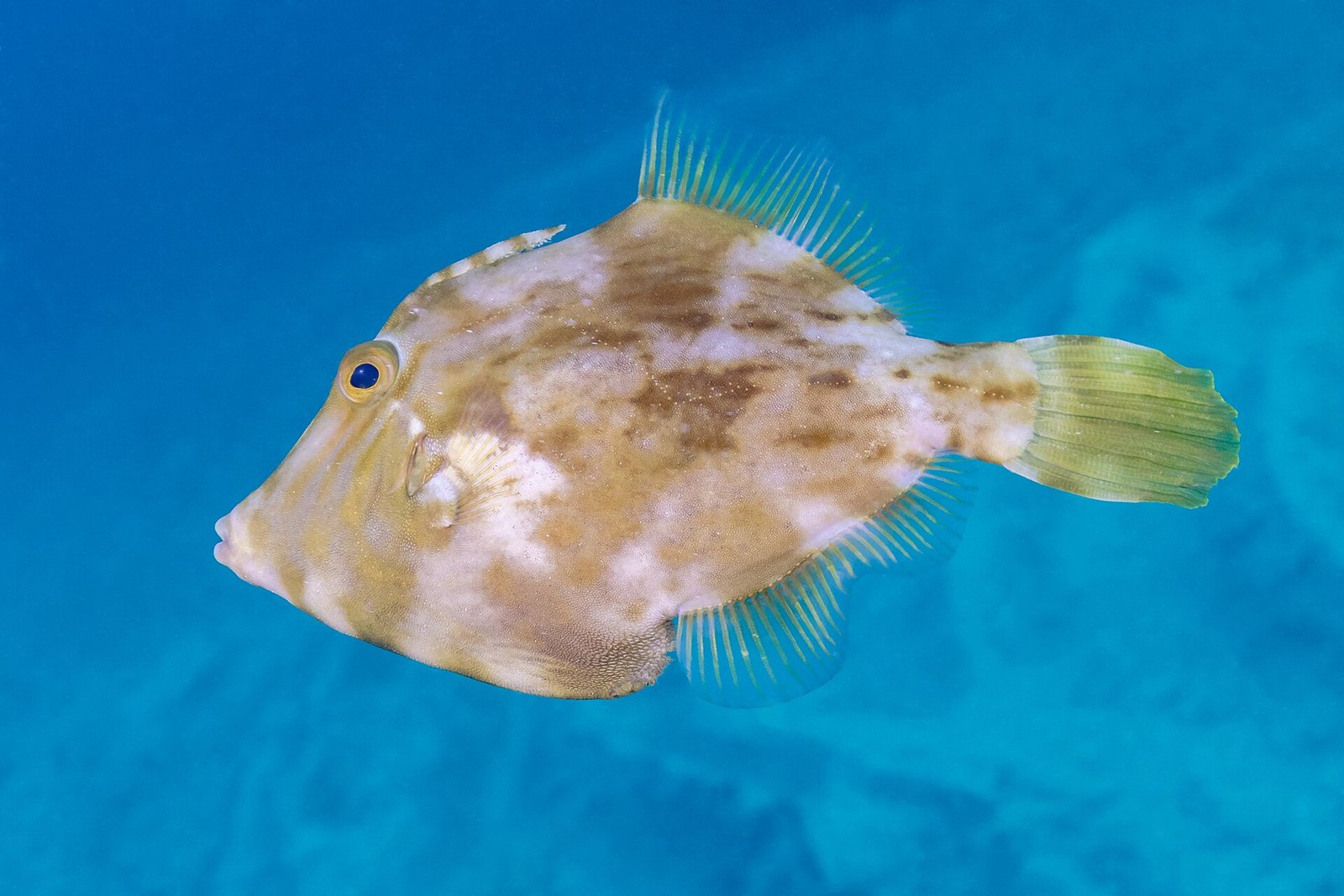
If you have ever stood on the dark lava shores near Fuencaliente and gazed out at the Atlantic, you have been looking at one of the Canary Islands' most carefully guarded underwater treasures. The Reserva Marina de la Isla de La Palma is not the archipelago's largest protected area, but it harbours a concentration of marine life that is rare elsewhere in the islands. Now, the Spanish government is adding a layer of artificial intelligence to its defences.
At a recent event marking the anniversary of the Canary Islands' marine reserves, Minister of Agriculture, Fisheries and Food Luis Planas confirmed that the ministry is working on a specific surveillance plan for each reserve. For La Palma, that plan includes what he called "intelligent cameras to prevent poaching" — a move he described as "absolutely necessary". The announcement, reported by local outlets including eldiario.es and La Provincia, signals a significant technological upgrade for a reserve that already runs daily patrols and georeferenced monitoring.
Where exactly is the reserve and why does it matter?
The reserve hugs the south-western flank of La Palma, running from Caleta de los Pájaros — at the southern end of Charco Verde beach in Los Llanos de Aridane — down to Punta Gruesa in Fuencaliente. In official terms, it lies in state waters west of the island, bounded offshore by the 1,000-metre depth contour. Covering roughly 3,455 to 3,719 hectares along about 13 kilometres of coastline, it includes a central integral zone where all fishing is prohibited and only authorised scientific activity is permitted.
This is not just a line on a map. The reserve was created specifically to protect a high diversity of species of fishing interest that are scarce elsewhere in the Canaries. It shelters protected algal communities, invertebrates such as the prized Canarian spiny lobster, and is frequented by marine mammals and turtles. For the authorities, illegal fishing represents one of the main obstacles to keeping these ecosystems healthy. The new cameras are designed to change that equation.
What the smart cameras will actually do
The ministry has been clear about the core purpose: the cameras are being introduced specifically to prevent furtivismo — poaching and illegal fishing. They form part of a broader national modernisation effort for which the ministry has allocated around 3.5 million euros across the entire marine reserve network, funding specialised vessels, thermal cameras with GPS, drones, radar radio-link enhancements and remotely operated vehicles.
At a minimum, the La Palma system will provide continuous visual monitoring of surface waters and vessel activity. The reserve already uses georeferenced cameras to document the exact position of authorised fishing boats, and the new intelligent cameras will reinforce this, allowing inspectors to link footage to precise boat positions relative to reserve boundaries and no-fishing zones. The aim is to detect and document vessels operating where or when they should not, creating solid evidence for enforcement.
What about the "intelligent" part? While the ministry has not yet published detailed technical specifications for La Palma, similar projects elsewhere in Spain offer clues. In the Bahía de Palma reserve in the Balearic Islands, a system called AutoNatura2000tres uses computer vision and AI to automatically count and geolocate fishing vessels and even identify fish species. Another programme, Remar2, employs AI to identify, measure and count fish and crustaceans from images. It is plausible that La Palma's cameras will eventually incorporate comparable capabilities — automatic vessel detection, behaviour analysis and perhaps night-time thermal imaging — but for now, those remain informed expectations rather than confirmed facts.
What this means for divers and eco-tourists
For visitors who come to La Palma to slip beneath the surface, the reserve is already a tightly managed experience — and that is precisely the point. Authorised dive sites include evocative names like Cuevas del Cedazo, El Remo Norte, El Remo Sur, Vuelta del Toro and La Pipa. Recreational diving is strictly regulated, with limits on the number of divers per day, per boat and per buoy, all designed to protect the ecosystem while maintaining a high-quality underwater experience.
The existing surveillance regime is no slouch: a 12-metre patrol vessel runs daily routes along the coast, guards maintain exhaustive control, and fishing activity is documented with georeferenced cameras. The new intelligent cameras are explicitly framed as an upgrade and reinforcement of this system, not a replacement. For divers, the practical upshot is a reserve where illegal fishing becomes harder to get away with, which over time should mean healthier fish populations, more abundant marine life and better encounters underwater.
Studies from comparable Spanish reserves paint an encouraging economic picture. In the Reserva Marina del Llevant in Mallorca, annual ecosystem services are valued at around 4.8 million euros, with tourism and recreation contributing roughly 3.1 million euros — including about 583,000 euros from diving alone. Analyses suggest that each euro invested in reserve maintenance yields about ten euros in ecosystem and economic benefits for local communities. While no equivalent figures have been published specifically for La Palma, the pattern is clear: well-protected waters are good for business.
Who runs the show and how it is funded
The La Palma marine reserve is a state responsibility, managed by the General Secretariat for Fisheries within the Spanish Ministry of Agriculture, Fisheries and Food, because it lies entirely in external waters. Surveillance and inspection fall to the State's Maritime Fisheries Inspectorate, operating under specific plans tailored to each reserve. Authorisations for diving and other regulated activities are issued by the Directorate General for Sustainable Fisheries, with input from the Canary Islands government.
On the ground — or rather, at the harbour — the Centro de Información de la Reserva Marina de la Isla de La Palma at Puerto de Tazacorte serves as the main point of contact for visitors and operators. The Dirección Insular de la Administración General del Estado en La Palma and the Cabildo Insular also play supporting and coordinating roles.
Funding for the smart camera deployment comes from the Spanish state via the ministry's national modernisation programme. Whether additional EU or recovery-plan funds are earmarked specifically for La Palma's cameras has not yet been detailed publicly. What is clear is that the investment forms part of a wider push to bring cutting-edge surveillance technology to all of Spain's marine reserves, with La Palma, La Graciosa and El Hierro named as priorities in the Canary Islands.
Common questions
- Where is the La Palma marine reserve?
- It runs along the south-west coast of La Palma, from Caleta de los Pájaros near Los Llanos de Aridane down to Punta Gruesa in Fuencaliente, covering about 13 kilometres of coastline.
- What are the new cameras supposed to do?
- They are intelligent surveillance cameras designed to detect and document illegal fishing activity, reinforcing existing patrols and georeferenced monitoring.
- Can I dive in the reserve?
- Yes, recreational diving is permitted at designated sites such as Cuevas del Cedazo and El Remo, but it is strictly regulated with daily limits and requires prior authorisation.
- Who manages the reserve?
- It is a state-managed reserve under the Spanish Ministry of Agriculture, Fisheries and Food, with coordination from the Canary Islands government and local authorities.
- Will the cameras use artificial intelligence?
- The ministry has announced "intelligent cameras", and similar projects elsewhere in Spain use AI for vessel detection and species identification, but exact technical details for La Palma are not yet confirmed.
Read on
- La Palma: Carnival 2027 poster contest, 700 eurosLa Palma · 28 October
- La Palma TriJazz: 3 jazz trios, 31 Oct to 14 Nov, 20:00La Palma · 27 October
- El Paso: Bruja Rock Fest and €25 vouchers on 31 OctoberLa Palma · 26 October
- La Palma: Noche de Finados on 31 October, free entryLa Palma · 26 October
- La Palma: Music Run Night on 14 November from 21:00La Palma · 26 October
- All events on La Palma →
Stand 27 July 2026. Technical specifications for the camera system are based on official announcements and comparable national projects; detailed AI capabilities for La Palma have not yet been published by the ministry.