Three Islands in One: South, Centre, North
Before you set off, a simple picture helps: Gran Canaria is almost perfectly round and, like a cake, splits into three slices. The south is sunny, dry and full of beaches. The centre is mountainous, green and cool — crowned by Roque Nublo. The north is fertile, lively and real, with the capital Las Palmas and white villages.
The beauty of it: everything is close. From a southern beach to a central summit is barely an hour's drive. In a single day you can lie by the sea in the morning and hike through pine forest in the afternoon.
For the coastal towns, bus and taxi are enough (see our getting-around guide). But for the mountains and inland villages a rental car pays off — the loveliest corners lie off the bus routes.
Roque Nublo: the Landmark in the Sea of Clouds
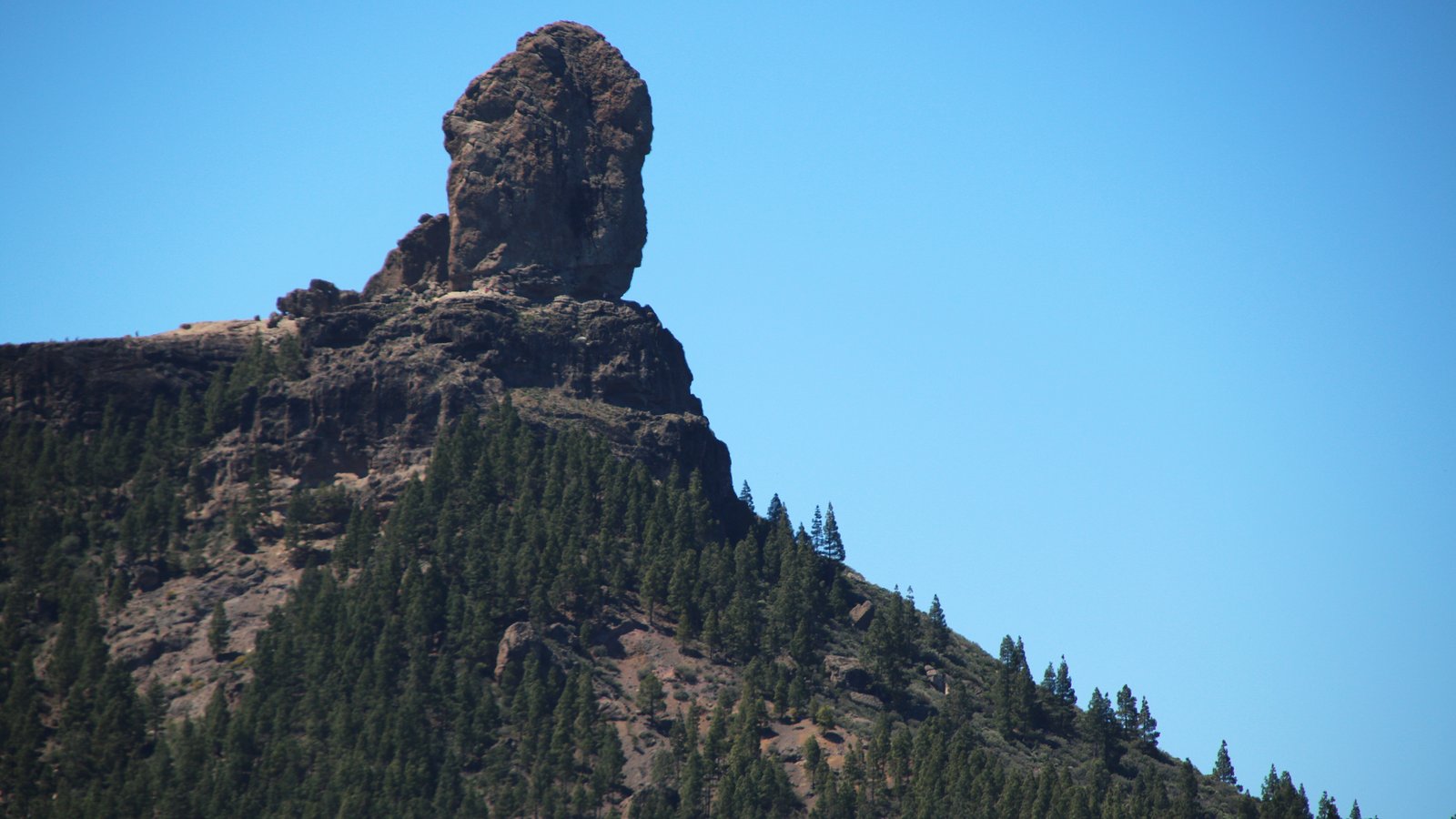
If one image stands for Gran Canaria, it's this: Roque Nublo, an 80-metre rock spire at 1,813 metres, pointing skyward like a petrified finger. Up top you're often above the clouds — a "mar de nubes", a sea of clouds from which, on clear days, even Teide on Tenerife rises.
The good news: you don't need to be a mountaineer. From the roadside car park (La Goleta) a well-trodden path climbs to the foot of the rock in about 30 to 45 minutes. Sturdy shoes, water and a jacket (it's cooler and windier up there) are all you need.
An honest tip: the car park is small and fills up early. Come in the morning — you'll get space, good light and often the clearest views. Just check before you go whether the path currently requires a reservation, as that can change.
The Maspalomas Dunes & the Sunny South
The south holds the second great landmark: the Maspalomas dunes, a little piece of Sahara right on the Atlantic. This nature reserve of golden, shifting sand is most magical at sunrise and sunset, when the hills glow pink and gold. Around it: the historic lighthouse, miles of beach and Playa del Inglés.
This is also family-highlight territory — Palmitos Park (an animal park with parrot and dolphin shows) and several water parks are right around the corner. For something quieter, just walk along the water into the dunes.
Puerto de Mogán & the West Coast
Drive from Maspalomas along the west coast and it grows hillier and quieter — until you reach what's arguably the prettiest spot on the island: Puerto de Mogán. Thanks to its little canals and bridges everyone calls it "Little Venice": whitewashed houses, bright flowers, a laid-back fishing harbour and the best sunset for miles.
On the way, the sheltered bathing bays of Puerto Rico, Amadores and Anfi del Mar are worth a stop, with calm turquoise water. Boat trips and dolphin tours also leave from Mogán's harbour.
An experience in itself is the approach from above: the mountain road GC-605 down from Pico de las Nieves to Mogán is one of the island's most spectacular drives — winding, lonely, breathtaking.
Las Palmas: Old Town, Cathedral & City Beach
The capital Las Palmas in the north is a day in itself. Its heart is the old town of Vegueta, a maze of cobblestones, mansions and 15th-century squares. Here stand the Santa Ana Cathedral (whose tower you can climb for a great view) and the Casa de Colón — a museum in the house where Christopher Columbus is said to have stopped on his way to the Americas.
Then the afternoon belongs to the city beach Las Canteras: a golden arc just over three kilometres long, in the middle of the city and calm as a bathtub thanks to an offshore reef — widely counted among Europe's finest urban beaches. Swim, stroll the promenade, eat tapas.
In other words, Las Palmas isn't an afterthought but a real Spanish city — culture, great food and beach all at once.
The Mountain Villages: Tejeda, Teror & Artenara
Stay only at the beach and you'll miss the island's soul — and that lies in the mountain villages. Tejeda, set inside a vast volcanic crater, looks like an Andalusian "white village" and ranks among the prettiest towns in Spain — with views of Roque Bentayga and famous for almonds and almond liqueur.
Teror is the island's most heart-warming village: colourful houses with intricately carved wooden balconies and the Basilica of the Virgin of the Pine, Gran Canaria's most important pilgrimage church. The Sunday market with its famous Teror chorizo is a feast in itself.
Higher and quieter still is Artenara, the island's highest village, with cave dwellings and a panorama that reaches all the way to Roque Nublo. Together these villages are the perfect contrast to the bustle of the coast.
The Green North: Agaete, Arucas & Guayadeque
The north and east surprise you with lush green and real island life. In the north-west lies Agaete with the picturesque harbour of Puerto de las Nieves: natural rock pools in the Atlantic, fresh fish and the green Valle de Agaete, where coffee is even grown — a rarity in Europe.
In Arucas stands the neo-Gothic church of San Juan Bautista, which with its towers looks almost like a cathedral, plus a long-established rum distillery (Arehucas). And the Barranco de Guayadeque in the east is one of the island's most dramatic ravines — with real cave dwellings and restaurants carved straight into the rock. Lunch there is an experience.
If you have time, combine it with a detour to the Cenobio de Valerón, an impressive aboriginal granary cave complex.
The Perfect Route: 3 Days & 5 Days
So you don't have to puzzle it out yourself — here are two ready-made routes. Both assume a rental car for the mountain days.
If you have 3 days (the highlights):
- Day 1 – South: the Maspalomas dunes and lighthouse in the morning, then over to Puerto de Mogán for sunset.
- Day 2 – the mountains: up to Pico de las Nieves (views with no hiking), then the short walk to Roque Nublo, lunch in Tejeda, back via the spectacular GC-605.
- Day 3 – north & capital: Teror in the morning, Las Palmas in the afternoon with Vegueta, the cathedral and Las Canteras beach.
If you have 5 days (the whole island at ease): take the three days above and add:
- Day 4 – north-west: Agaete, Puerto de las Nieves with its rock pools and the green Valle de Agaete.
- Day 5 – east & relaxation: the Barranco de Guayadeque with lunch in a cave restaurant and a stop in Arucas — or simply a second, lazy beach day.
The best tip to finish: don't plan every minute. Gran Canaria rewards the wander — the spontaneous stop at a viewpoint, the second coffee in Tejeda, the beach that just happens to appear.
Frequently asked questions
- What must you see in Gran Canaria?
- The top classics: Roque Nublo, the Maspalomas dunes, Puerto de Mogán, the old town of Las Palmas and at least one mountain village like Tejeda or Teror. For nature, add Pico de las Nieves and the Barranco de Guayadeque.
- Are 3 days enough for Gran Canaria?
- For the highlights, yes: one day south, one day mountains (Roque Nublo), one day north/capital. To see the whole island at ease, plan for 5 days.
- Do you need a reservation for Roque Nublo?
- It can change — some paths on the island require a reservation. Check shortly before your visit. The car park is small, so come in the morning.
- Do you need a rental car?
- For the coastal towns, bus and taxi are enough. For the mountain villages, Roque Nublo and the finest scenic roads, a rental car is a clear advantage.
- When is the best time for excursions?
- April to June and September to November: pleasant hiking temperatures, fewer crowds and cheaper than the winter high season.
- What's the island's finest drive?
- Many say the GC-605 mountain road from Pico de las Nieves down to Mogán — winding, lonely and breathtaking.
- What should you see in Las Palmas?
- The old town of Vegueta with the Santa Ana Cathedral and the Casa de Colón, plus the city beach Las Canteras.