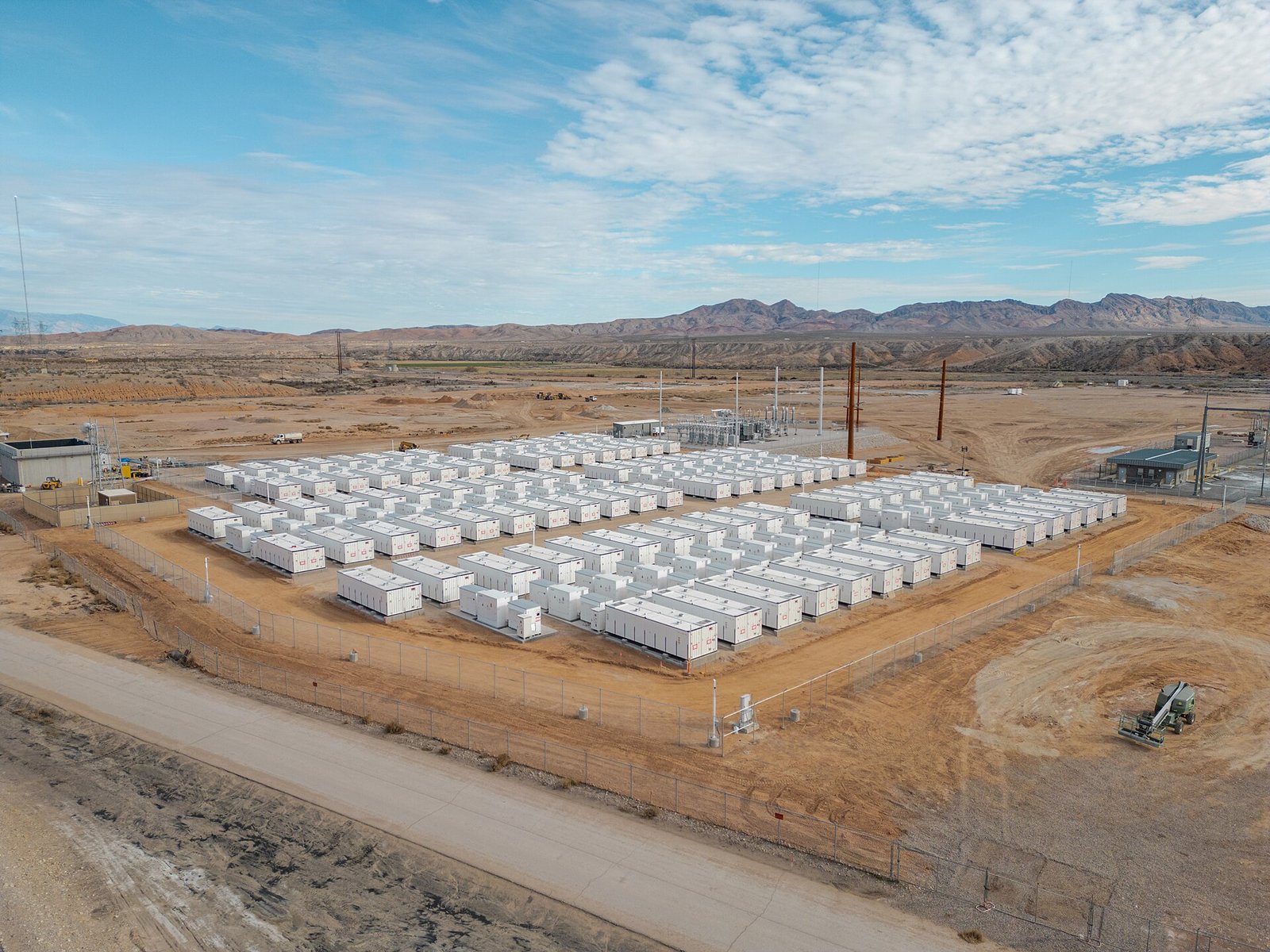
For years, the patch of land in Arico was an eyesore—a degraded area scarred by illegal motocross tracks. Today, it is a showcase for the Canary Islands’ energy future. The DISA Group, a homegrown Canarian energy company, has transformed the site into a hybrid solar-and-storage plant that is quietly reshaping how Tenerife manages its electricity.
The installation pairs an 8-megawatt solar photovoltaic plant with a battery system boasting an operational storage capacity of 8 megawatt-hours. While earlier planning documents floated a design figure closer to 9.6 megawatt-hours, the confirmed, functioning capacity stands at 8 megawatt-hours. That makes it the single largest operational renewable-energy battery in the entire archipelago—a milestone that puts Arico firmly on the map of the islands’ green transition.
How the Battery Works for Tenerife
The basic idea is wonderfully simple. When the midday sun is blazing and solar panels are producing more electricity than the grid needs at that moment, the battery charges up. Then, as the afternoon wears on and demand climbs—think kettles boiling, air conditioners humming, and businesses still buzzing—the stored energy is released back into the network. This process, known as peak-shaving and load-shifting, helps smooth out the bumps in Tenerife’s electricity supply.
To put the scale into a more tangible picture, DISA estimates that the battery can deliver roughly the equivalent of the entire electricity demand of the neighbouring island of La Palma for about an hour and a half. That is, of course, an illustrative comparison rather than a literal cross-island supply, but it gives you a sense of just how meaningful those 8 megawatt-hours are in the context of an isolated island grid.
Why Island Grids Need Storage So Badly
Living on an island brings a special set of energy challenges. Unlike continental Europe, where power can flow across borders to balance surpluses and shortages, the Canary Islands operate as electrically isolated systems. Historically, that has meant a heavy reliance on fossil-fuel power plants to keep the lights on and the frequency stable. When the wind suddenly drops or a cloud bank swallows the sun, a diesel or gas turbine has to pick up the slack—fast.
Battery storage changes that equation. By holding renewable energy in reserve, systems like the one in Arico give grid operators a new tool to respond to sudden drops in wind or solar output, or even to unexpected outages at conventional plants. The result is a more flexible, resilient grid that can integrate a higher share of renewables without compromising reliability. The Canary Islands Government has explicitly framed the Arico installation as a reference project for future storage systems on other islands, signalling that this hybrid model is likely to be replicated across the archipelago.
Arico’s Growing Role as an Energy Hub
The DISA battery is not a solitary pioneer. Arico is rapidly emerging as Tenerife’s renewable-energy nerve centre, with several other significant storage projects in the pipeline. The publicly backed Instituto Tecnológico de Energías Renovables (ITER), which depends on the Cabildo de Tenerife, is developing a pilot plant called Fotobat 5+5 on its own land in the municipality. That project pairs 5 megawatts of solar with 5 megawatt-hours of battery storage and is designed to validate hybrid integration techniques. Although it has faced delays and is still under execution, it represents an important research and development step.
Further along the development path, Siemens Gamesa has secured approvals for a solar-and-storage installation at a site known as La Morra or Hoya Honda, also in Arico. The plans describe roughly 7.5 megawatts of solar capacity alongside about 7.6 megawatts of lithium-ion batteries, designed to deliver full power for approximately one hour. Once built and commissioned, this system would rival the DISA battery in size, cementing Arico’s status as the storage capital of the Canary Islands.
Grid Upgrades and the Bigger Picture
Batteries alone cannot do the job. They need a robust transmission network to move electricity where it is needed, and that is exactly what is happening in Tenerife’s southeast. Red Eléctrica, the national grid operator now known as Redeia, is reinforcing the evacuation and transmission infrastructure around Arico. Key projects include the Tagoro substation and new installations in Porís and Abona, along with associated power lines. These upgrades are explicitly designed to increase the security and reliability of supply while improving the evacuation of renewable generation.
Together, the batteries and the grid reinforcements tackle one of the most persistent headaches of island energy systems: the curtailment of clean power. When the sun shines brightly and the wind blows strongly, renewable plants sometimes have to be throttled back because the grid cannot absorb all the electricity. Storage soaks up that excess, and a stronger grid can move it to where it is consumed. The combined effect is fewer blackout risks and a lower dependence on imported fossil fuels.
The Canary Islands Government has backed this vision with serious money. Around 84.9 million euros have been allocated to 51 renewable and storage projects across the islands through the IDAE and NextGenerationEU funds, with storage and grid security as explicit priorities. The two-million-euro investment in the DISA battery system came from those European recovery funds, while the broader PV-plus-storage project involved a total investment documented at about 7.28 million euros.
Common questions
- Is the Arico battery already working?
- Yes, the DISA installation is operational and is currently the largest renewable-energy battery in the Canary Islands.
- How much energy can it store?
- The confirmed operational capacity is 8 megawatt-hours, enough to cover the equivalent of La Palma’s electricity demand for about an hour and a half.
- Who owns and runs the plant?
- The installation belongs to DISA, a Canarian energy company, and was supported by NextGenerationEU funds channelled through the regional government.
- Where exactly in Arico is it located?
- It sits on rehabilitated land that was previously used as an illegal motocross circuit; a more precise local place-name has not been publicly specified.
- Will more batteries be built in Arico?
- Yes, ITER and Siemens Gamesa both have storage projects in development in the municipality, which will add significant capacity once completed.
Read on
- Tenerife: Eólica Festival on 16 and 17 OctoberTenerife · 16 October
- Tenerife: Orchestra Baobab free at MUNA on 17 OctoberTenerife · 16 October
- Santa Úrsula: fiestas to 25 October, Bustamante freeTenerife · 15 October
- Loro Parque Tenerife: 09:30–17:30, free train, Twin TicketTenerife · 15 October
- Tenerife: Rallye Histórico in Puerto de la Cruz 23-24 OctTenerife · 15 October
- All events on Tenerife →
Stand 17 July 2026. This article is based on verified information from the Canary Islands Government, DISA, ITER, and official planning documents. All figures reflect confirmed operational data where available; design-phase figures are clearly distinguished.