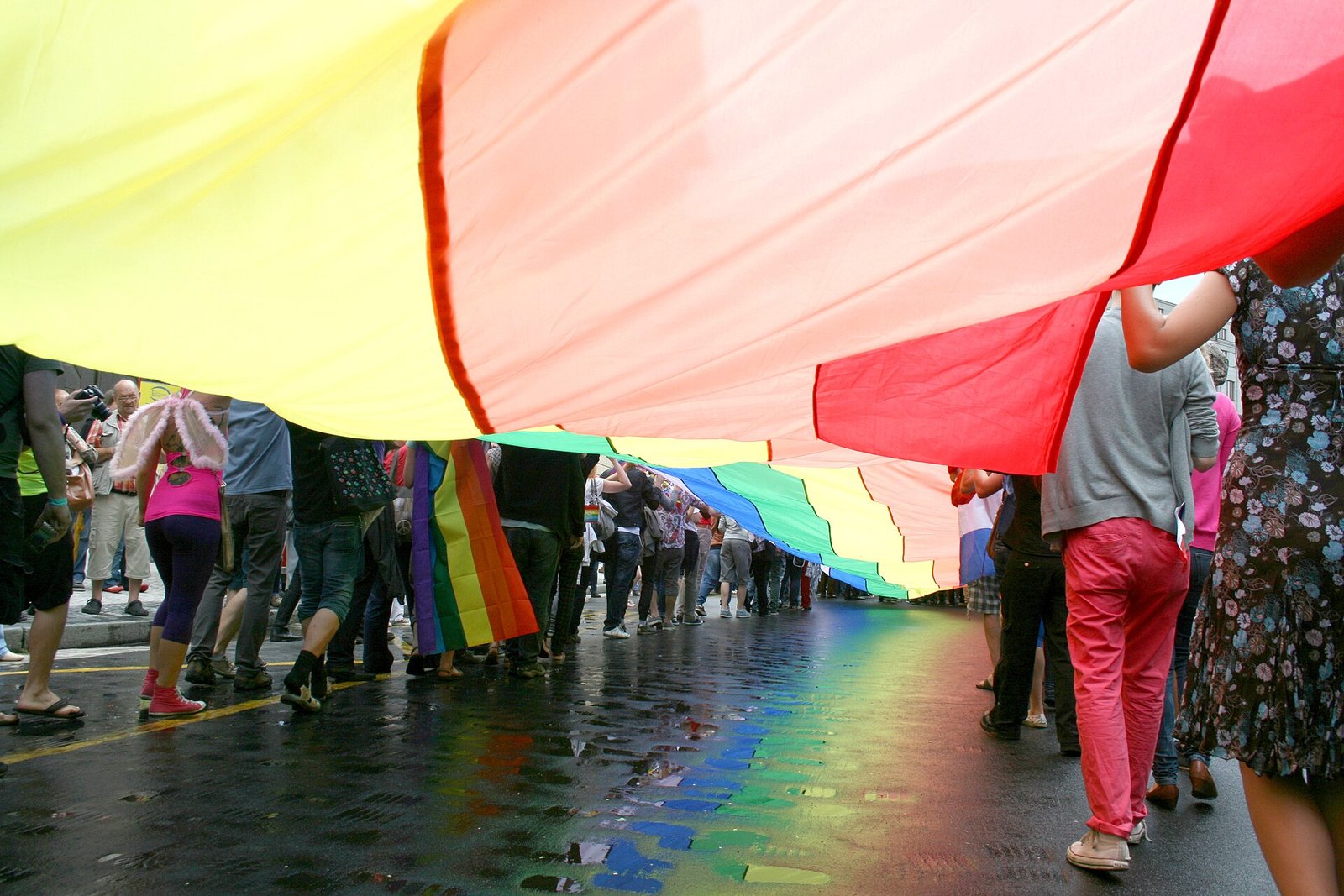
There is a quiet, almost sacred power in taking a piece of paper and cutting a word apart. On a warm Friday evening in July, the stones of Plaza de Santa Ana will witness exactly that. The Valencian duo Art al Quadrat, formed by twin sisters Mónica and Gema del Rey Jordà, are bringing their deeply moving participatory performance *Transmutación IV* to Las Palmas de Gran Canaria. It is not a spectacle to be passively watched, but a collective ritual where the public becomes the protagonist, working together to transform the language of repression into a vocabulary of freedom.
The starting point is painfully real. The artists have delved into the Archivo Provincial de Las Palmas, unearthing documents that lay bare the persecution of LGBT people during the Franco dictatorship. From these files, they have extracted the pejorative words used to stigmatise, criminalise and dehumanise individuals. These are not abstract historical terms; they are words that echoed through the streets of the Canary Islands, carrying the weight of a regime that systematically annulled basic rights. The performance is a parallel activity to the exhibition *Memorias colectivas / Represiones cotidianas* at the Centro Atlántico de Arte Moderno, and it promises to be one of the most resonant cultural moments of the summer in the capital.
A walk from the plaza to the museum
The event begins at 18:00 in the emblematic Plaza de Santa Ana, the civic heart of the historic Vegueta district. From there, the group will move together towards CAAM–San Antonio Abad, a space that sits at the crossroads of contemporary art and historical conscience. The journey itself is symbolic — a physical passage from the open, public square, a place of gathering and proclamation, into the contemplative halls of the museum, where memory is preserved and interrogated.
Upon arrival, the core of *Transmutación IV* unfolds. Armed with paper and scissors, participants are invited to literally cut up those old, hurtful words. The act is simple but profound. By dissecting the letters, rearranging them, and pasting them anew, the group collectively rewrites the narrative. A slur is not simply erased; it is dismantled and reconstructed into a term of collective struggle, a declaration of rights, or a word that speaks of love and identity. The artists frame this as an urgent reminder that the past and present are not so far apart. The fight against what they call “new fascisms” requires this constant, vigilant reclamation of language and historical memory.
The sisters behind the scissors
Mónica and Gema del Rey Jordà have built an international career on this precise intersection of intimate memory and public history. Their work consistently uses oral tradition, family archives, and official documents to question how history is written and who gets to write it. *Transmutación IV* is part of a broader series that has travelled to various contexts, always adapting to the local archival material. In Las Palmas, the Canarian documents give the performance a specific, chilling resonance, connecting the global struggle for LGBT rights with the very local soil of the islands.
Their exhibition *Memorias colectivas / Represiones cotidianas* at CAAM–San Antonio Abad marks their first major solo show in Spain, a significant milestone that underscores the growing recognition of their unique methodology. The exhibition itself is a tapestry of recovered stories, and the performance acts as its living, breathing extension. After the participatory action, at around 19:00, the artists will lead a guided visit through the exhibition, offering deeper insight into the research and personal testimonies that shape their work.
Why this matters now
It would be easy to view a performance about Franco-era repression as a history lesson. Art al Quadrat insists it is anything but. The documents may be yellowed, but the mechanisms of discrimination they represent are not confined to the past. The rise of polarising political discourse across Europe and beyond makes the performance feel less like a commemoration and more like a rehearsal for civic resistance. By inviting the public to physically handle and transform these words, the artists break down the barrier between spectator and activist.
The choice of paper and scissors is deliberate. It evokes the humble, domestic act of crafting, but also the bureaucratic paper trails that totalitarian regimes use to control populations. To cut through that paper is to symbolically sever the continuity of oppression. The new words created are not just art objects; they are small manifestos, fragile but potent declarations that another world is possible, and that it must be built together, letter by letter.
Plan your evening in Vegueta
Attending *Transmutación IV* is also a perfect excuse to spend a summer evening in one of the most beautiful neighbourhoods of Las Palmas. The area around Plaza de Santa Ana is rich with history, from the majestic cathedral to the narrow cobbled streets lined with traditional Canarian balconies. After the guided tour of the exhibition, which wraps up the formal part of the evening, the surrounding streets of Vegueta offer plenty of spots for a relaxed dinner or a drink to discuss the powerful experience.
The event is free and open to everyone, reflecting the democratic spirit of the artwork itself. No prior knowledge of art or history is needed, only a willingness to participate and reflect. It is a rare opportunity to engage with a work of art that is not finished until the public puts their hands on it, making it a truly ephemeral and unrepeatable moment in the cultural life of Gran Canaria.
Common questions
- Do I need to book in advance to participate?
- No, the performance is open to the public and no prior registration is required; simply arrive at Plaza de Santa Ana by 18:00.
- Is the event suitable for people who don't speak Spanish?
- The visual and participatory nature of the work makes it accessible, though the guided tour will likely be conducted in Spanish.
- What exactly will I be doing during the performance?
- You will be invited to cut up paper with historical slurs and rearrange the letters to form new words of freedom and rights.
- Can I visit the exhibition on another day?
- Yes, *Memorias colectivas / Represiones cotidianas* is on display at CAAM–San Antonio Abad beyond the date of the performance.
- Is there a cost to attend?
- Both the performance and the guided tour of the exhibition are free of charge.
Read on
- Gran Canaria strike 11 Nov: march 18:00, buses unconfirmedGran Canaria · 10 November
- Gran Canaria petrol from €1.345 a litre in IngenioGran Canaria · 10 November
- Jinámar Caña Dulce fiestas 8 December 2026, free entryGran Canaria · 10 November
- Maspalomas Dunes arrest on 9 November after agent scuffleGran Canaria · 10 November
- La Isleta Santa Catalina fiestas, 20–29 November, freeGran Canaria · 10 November
- All events on Gran Canaria →
Stand 9 August 2026. Details based on the official programme of CAAM and Art al Quadrat. Participation is at your own discretion.