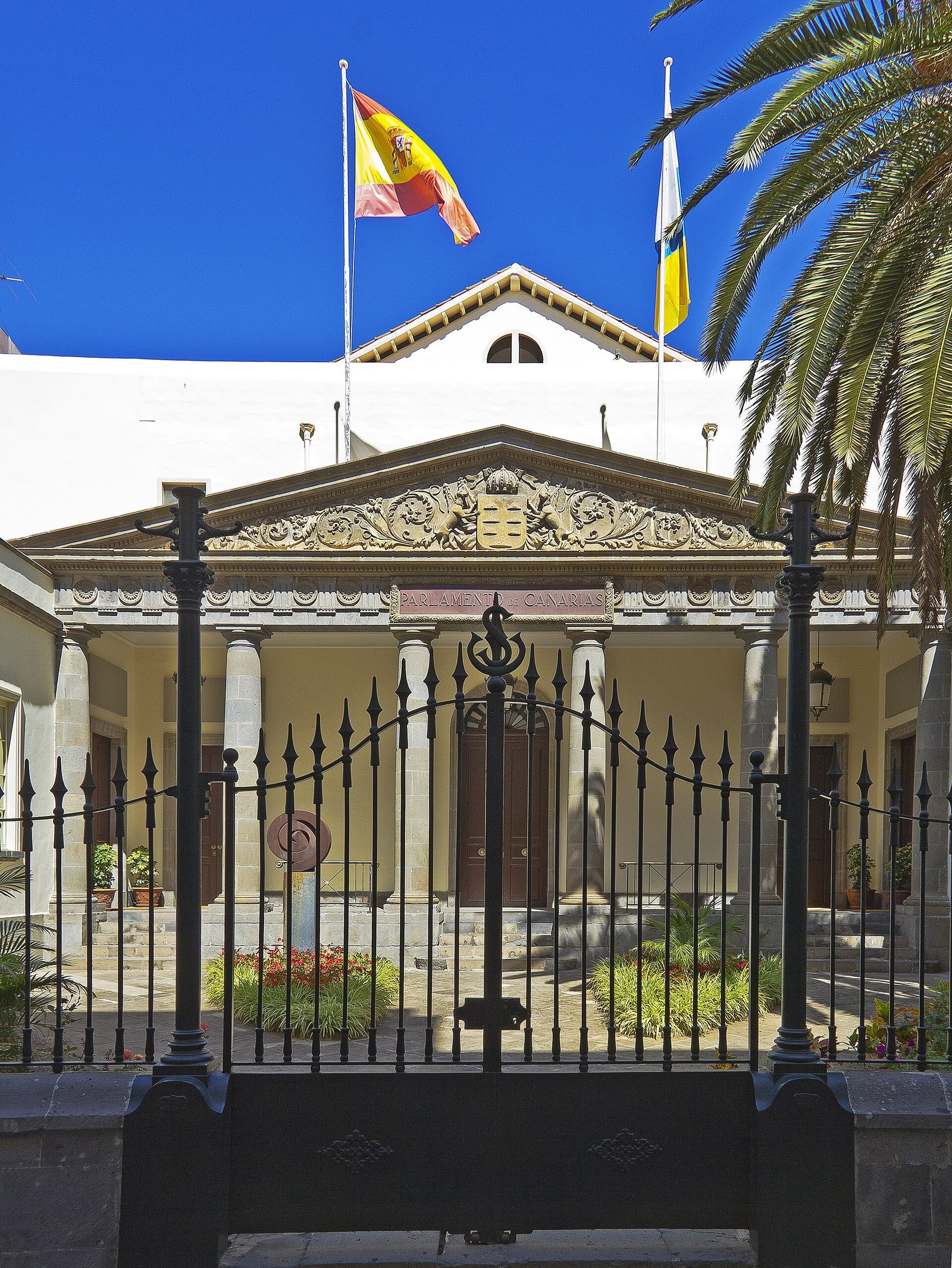
If you have ever tried to find out how a local council spends its budget or what a public official earns, you know it can feel like peering into a locked room. That room is now opening wider. The Canary Islands’ own transparency watchdog, the Comisionado de Transparencia y Acceso a la Información Pública, has released its latest annual evaluation, and the numbers tell a story of steady, broad-based improvement.
The headline figure is an 8.87 average across the entire Canarian public sector. That is up from 8.44 in the previous round and marks the highest result since the ITCanarias system began tracking these metrics. The score is not a vague opinion poll; it is built on a detailed technical assessment of more than 1,100 entities, from the regional government down to small municipal bodies and public corporations. The evaluation looks at whether institutions publish the information they are legally required to share, how well their transparency portals work, and whether they go beyond the bare minimum with voluntary disclosures.
What the score actually measures
Transparency can sound abstract, but the ITCanarias index breaks it down into concrete checks. The Comisionado examines three main pillars. First, compliance with legal disclosure duties: are contracts, budgets, accounts, audits, organigrams, and remuneration data actually published where they should be? Second, the technical quality of each transparency portal: is the information findable, structured, and up to date? Third, voluntary transparency: does an institution publish more than the law strictly demands, showing a genuine culture of openness?
The assessment runs through a platform called T-Canaria, which aggregates the data and produces the annual ITCanarias scores. Because the methodology has been consistent over several years, the upward trend from much lower early scores into the high-8 range is a reliable indicator of real change, not just a statistical blip. The Comisionado frames its entire mission around protecting the public’s right to information and making institutions more accessible, and these results suggest that message is getting through.
Who improved the most
The overall 8.87 average hides some interesting variation. The regional administration of the Comunidad Autónoma climbed to 9.10, while the island cabildos reached 8.92. Town halls, which often face the most direct scrutiny from residents, averaged 8.71. Universities came in at a strong 9.23, and the mancomunidades — associations of municipalities that pool services — led the pack at 9.39. Public-law corporations, a diverse group that includes professional bodies and other entities, averaged 8.99.
What is striking is that the improvement was not driven by a single star performer dragging the average up. It was broad-based. The Comisionado’s summaries describe a general strengthening of what is called publicidad activa, the systematic publication of information without waiting for someone to file a request. For ordinary residents, that means more of the data you might want — about local spending, public salaries, or institutional structures — is already online before you even ask.
Why this matters for your daily life
You might wonder why an index score should matter to someone who just wants to enjoy island life. The answer is practical. When public institutions publish their accounts, contracts, and audits openly, it becomes easier to spot waste or irregularities. Journalists, neighbourhood associations, and individual residents can compare what was promised with what was delivered. That kind of accountability loop tends to improve services over time, even if the effect is gradual.
Access to information also changes the dynamic between citizens and officials. Instead of feeling like you need insider knowledge to understand a council decision, you can look up the relevant documents yourself. The Comisionado explicitly links its work to the right to information, framing transparency as a fundamental protection for residents. In a region where many people come from abroad and may not be familiar with local administrative culture, having clear, published data in one place lowers the barrier to participation.
It is worth noting that the ITCanarias index is distinct from the methodologies used by organisations like Transparency International Spain. That means you cannot directly compare the Canarian 8.87 with, say, a national ranking from a different body. But within the Canary Islands’ own consistent framework, the upward trajectory is unambiguous and credible.
How the islands got here
The current result did not appear overnight. Official ITCanarias tables show a long climb from much lower scores in the system’s early years. Each annual evaluation has pushed institutions to close gaps, and the Comisionado’s public reporting creates a form of peer pressure: no council or public body wants to be seen lagging behind its neighbours.
The 2025 evaluation cycle covered more than 1,100 entities, a scale that reflects the complexity of public administration in an archipelago with two provincial capitals, seven island governments, and dozens of municipalities. The fact that the average still rose, and rose significantly, suggests that transparency practices are becoming embedded rather than remaining a box-ticking exercise. The Comisionado’s own materials describe the improvement as a general strengthening of publicidad activa, and the numbers back that up.
For residents, digital nomads, and expats who call the Canaries home, this is quietly good news. It means the institutions that handle public money and make decisions affecting daily life are becoming more open, more checkable, and — over time — more accountable. The locked room is not fully open yet, but the door is wider than it has ever been.
Common questions
- What is the ITCanarias index?
- It is the official transparency score for Canarian public entities, run by the Comisionado de Transparencia, on a scale from 0 to 10.
- Who evaluates the institutions?
- The Comisionado de Transparencia y Acceso a la Información Pública de Canarias carries out the annual assessment through its T-Canaria platform.
- What does the score cover?
- It measures legal disclosure compliance, portal quality, and voluntary transparency beyond minimum requirements.
- How does 8.87 compare to previous years?
- It is the highest result since the system began, up from 8.44 in the prior evaluation cycle.
- Can I look up a specific council or entity?
- Yes, the Comisionado publishes detailed breakdowns on its website at transparenciacanarias.org.
Read on
- Canary Islands sea hits record 25.78 °C – what it means for your swim and the oceanCanary Islands · 17 July
- Canaries: 211,400 homes empty as new rental scheme opensCanary Islands · 28 October
- Canary Islands doctors' strike extended to 10 NovemberCanary Islands · 28 October
- Canary Islands 16–18 October: fiestas, concerts, partiesCanary Islands · 16 October
- Canary Islands: strong calima to Wednesday, 30C in southCanary Islands · 26 October
- All events on the Canary Islands →
Stand: 30 July 2026. Based on official ITCanarias data and reporting by Atlántico Hoy and Europa Press. Cross-regional comparisons with other Spanish autonomous communities are not available from the current evaluation.