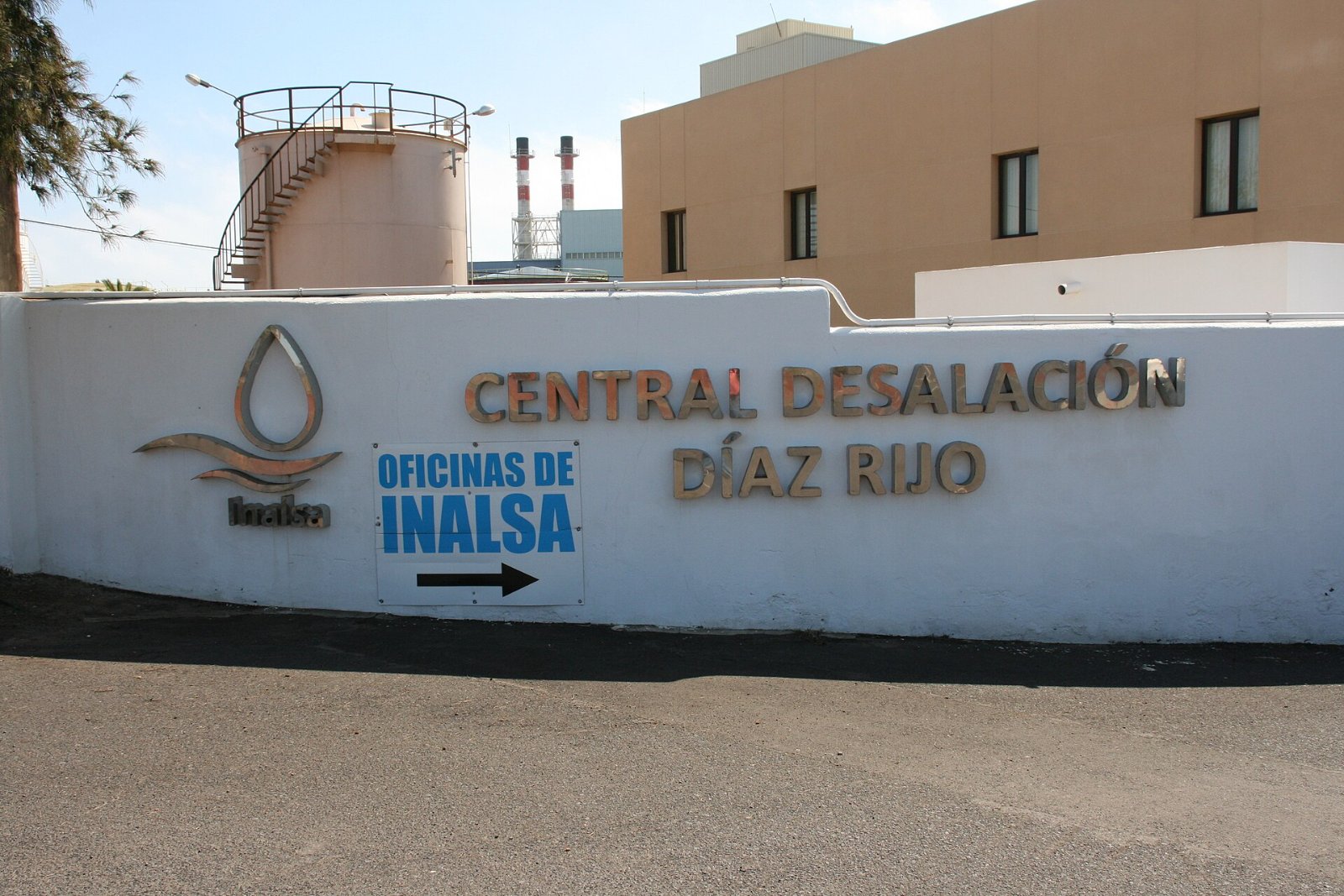
The Canaries pull off a quiet little miracle: green resorts and full showers — on islands with almost no rivers and only limited groundwater. So where does the water come from? Largely from the sea.
Because the islands are world champions at desalination. Where nature delivers too little, seawater is made drinkable. It sounds technical, but in daily life it is long since routine — and it explains why water matters more here than in most places.
How the islands get their water
The backbone is seawater desalination. About 80% of the plants use reverse osmosis, forcing salt water through fine membranes. Lanzarote led the way: in 1964, Arrecife got Spain's first industrial desalination plant.
Today the dry eastern islands — Lanzarote and Fuerteventura — and Gran Canaria depend almost entirely on desalinated water. On Tenerife and La Palma, old groundwater from galerías (water tunnels) and wells also plays a part. The catch: desalination needs a lot of electricity, which is why the islands increasingly turn to wind and sun.
The drought — and its end
After one of the driest winters in memory, Tenerife declared a water emergency in May 2024. It lasted almost two years. A very wet winter of 2025–2026 turned things around: in late February 2026 the emergency was lifted, with reserves at around 70% — the highest level in six years.
Why it matters to you too
As a guest or adopted islander, you are part of the equation. Nobody expects you to go without — but a few habits genuinely help: showering a little shorter, reusing towels, not letting the tap run. On islands that draw every litre from the sea, that is more than a nice gesture.
Looking ahead
The Canaries keep expanding: new containerised desalination plants are meant to supply farming too, driven by more renewable energy. Not everyone is thrilled — some experts question whether new plants are needed everywhere. What is clear: the mix of saving, desalinating and clean power will decide how calmly the islands ride out the next dry winter.
Frequently asked
- Can I drink the tap water?
- In many places it is technically drinkable but often tastes of desalination. Many people use filtered or bottled water — it is best to ask locally.
- Why do the Canaries have so little water?
- There are no rivers and only limited groundwater. The supply comes mainly from the sea.
- Is the drought over now?
- Tenerife lifted its emergency in February 2026 after reserves rose to around 70%. But you can never be entirely sure.
- How is seawater made drinkable?
- Usually by reverse osmosis: salt water is forced through fine membranes that hold back the salt.
- What can I do as a visitor?
- Use water sparingly — shorter showers, reuse towels, don't leave the tap running.
Read on
- Canary Islands on 13 Oct: fiestas, opera and storytellingCanary Islands · 13 October
- Grandchildren’s Law: vote suspended for 163,020, report saysCanary Islands · 13 October
- €177 a day, €24.4 billion a year: the Canaries are catching up with Catalonia — but does «quality over quantity» really pay off?Canary Islands · 24 May
- Canaries 12 Oct: Pilar fiestas, Fetish Pride, DJ brunchCanary Islands · 12 October
- Binter funds 9 Embraer jets, about €455m, from 2027Canary Islands · 12 October
- All events on the Canary Islands →
Figures as of July 2026. Water reserves and official classifications can change quickly with the weather.