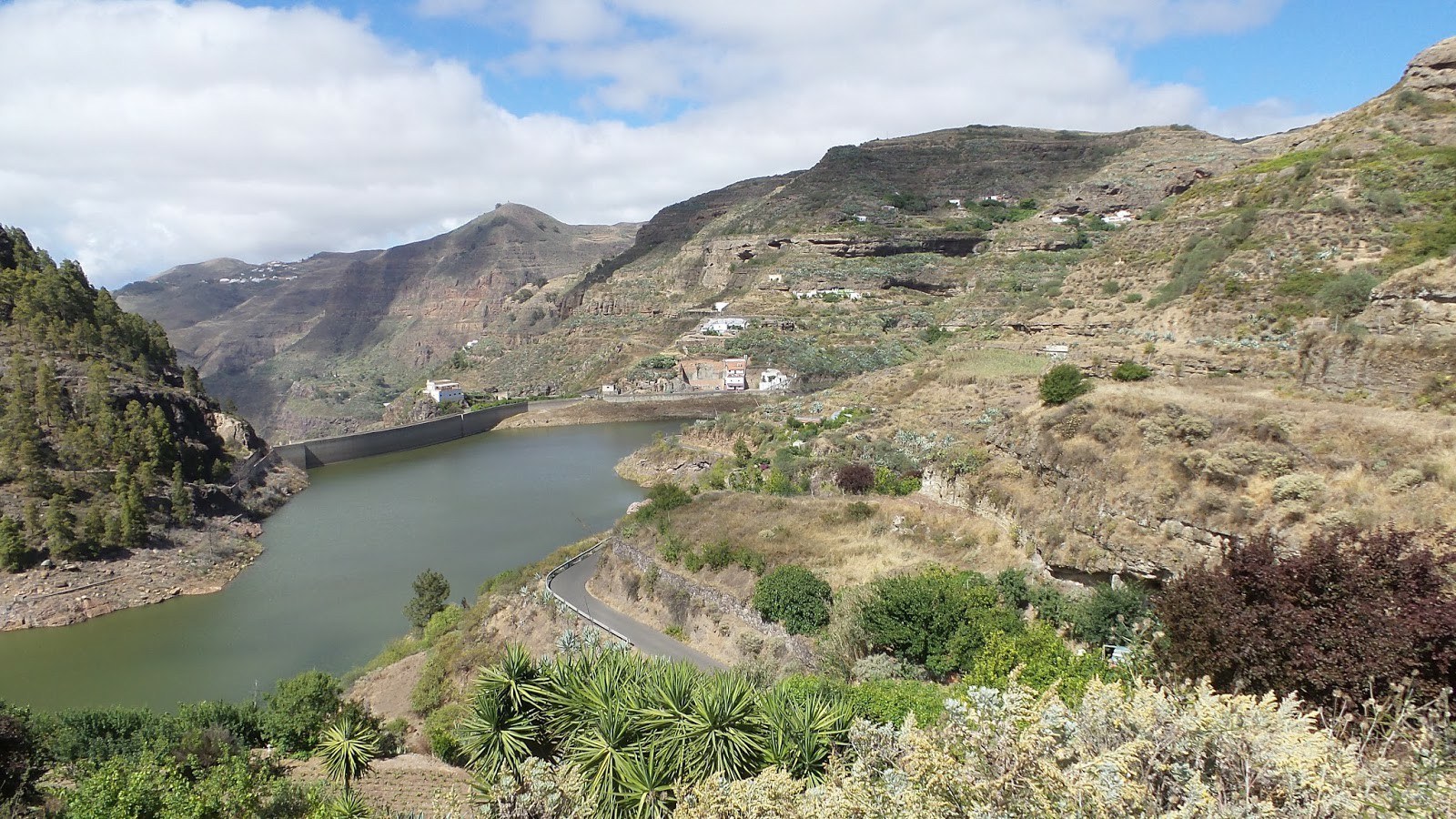
It is a finding that sounds contradictory at first: in February, Tenerife reported its best water reserves in six years and on 1 March lifted the water emergency in force since May 2024 — while on Gran Canaria some municipalities are starting the summer with water cuts. Both are true. And together they form the real picture: the Canaries do not have a simple drought that vanishes with the next rain, but a structural one. To speak of «reserves running dry» therefore tells only part of the story.
The good news: the rainy winter helped
Let us start with the reassurance. The winter of 2025/26 brought rainfall well above average. On Tenerife, water reserves rose by 146 percent from their low and now stand at around 70 percent of capacity — the highest in six years. The reservoirs in the dry south of the island are in places more than 90 percent full: Granadilla at 99, Guía de Isora at 97, Fasnia at 92 percent. The island government officially declared the emergency over. Only a year ago the Los Realejos reservoir had stood at one percent — the contrast could hardly be greater.
The bad news: the underlying problem remains
But full reservoirs are a snapshot, not a solved problem. A brand-new study by the University of La Laguna, presented in early June, reaches a clear conclusion: the water available in the Canaries will decline progressively over the course of the century — through rising temperatures, increasing evaporation and rainfall that at best stays stable. A single wet winter changes none of that.
The figures from the Canarian environment agency bear this out. Average rainfall is around 19 percent below the average of the past thirty years, which means a deficit of almost 400 million cubic metres of water. At the same time, domestic consumption rose by twelve percent in 2025 — driven by a population that grew by 7.5 percent and by 18 million tourists. On top of that comes a home-made leak: around 30 percent of the water seeps away in decaying pipes before it arrives. And over 80 percent of resources come from groundwater that has been over-exploited for decades and is increasingly turning saline.
Why Gran Canaria is in a different position
That the situation varies by island has geographic reasons. On Gran Canaria, the energy-intensive desalinated seawater barely reaches the higher-lying towns: above the «cota 300», the 300-metre contour line, no desalinated water arrives. Municipalities such as San Mateo and Firgas therefore turned to summer cuts to secure supply. It is less a question of total volume than of distribution and altitude.
The dispute simmering underneath: who uses the water?
And so to the politically most delicate question that runs through every Canarian water debate: is tourism to blame? The answer depends on whom you ask — and, honestly, there is no simple one.
The water authorities push back against the sharpening. The manager of one island water council made clear that tourism «does not take resources away from the other sectors». Environmental organisations see it differently: the Fundación Canarina calculates that a tourist on Tenerife uses between 300 and 500 litres a day, while local per-capita consumption is around 140 litres — and criticises golf courses, water parks and hotels as excessive consumers. Both figures can be true and still lead to opposite conclusions: tourism is not the sole cause of the scarcity, but it adds pressure to an already strained system — precisely the tension that also lies behind the protests of the «Canarias tiene un límite» movement.
What the government is planning
No one is idle. In October 2025 the regional government adopted the «Agua 2030» plan, resting on three pillars: more desalination, leaner agricultural irrigation and consistent water reuse. New desalination plants are being built, for instance on Fuerteventura. For farming, which suffers especially under restrictions and rising water prices, €7.9 million in drought aid was provided over two years for more than 3,000 holdings; at the same time, irrigation caps and tiered tariffs apply. The «billions in damage» invoked by the headline cannot, however, be substantiated at that specific level — what is documented is aid and extra costs in the millions, plus general warnings of economic consequences, not a quantified figure in the billions.
- Live in higher-lying towns on Gran Canaria (above the «cota 300»): possible summer cuts.
- Work in agriculture: irrigation caps and rising water prices.
- Take the long view: thrift remains advisable — a wet winter is a breather, not a solution.
The bottom line
The Canaries' water paradox can in the end be summed up in a sentence: the sky has granted the islands a breather, but the real problem — growing demand on an archipelago with naturally scarce water — remains unsolved. Full reservoirs are a good day. They are not yet a solution.
Frequently asked questions
- Do the Canaries face water collapse in 2026?
- No, not acutely at least. Tenerife has even lifted the emergency, with reserves as high as they have been in years. But the structural problem — falling availability against rising demand — remains.
- So why are there water cuts on Gran Canaria?
- For geographic reasons: above the 300-metre contour line («cota 300»), desalinated seawater barely reaches the towns. Municipalities such as San Mateo and Firgas secure summer supply through cuts. It is a distribution problem, not a pure volume one.
- Is tourism to blame for the scarcity?
- It is disputed. Water authorities say tourism takes no water from other sectors. Environmental groups point to 300–500 litres per tourist per day against around 140 for locals. Tourism does add pressure but is not the sole cause.
- What is the government doing?
- The «Agua 2030» plan (more desalination, leaner irrigation, reuse), new desalination plants and drought aid for farming (€7.9m for over 3,000 holdings in two years).
- Is it true that billions in damage loom?
- A specific figure in the billions cannot be substantiated. What is documented is aid and extra costs in the millions, plus general warnings of economic consequences for tourism and farming.
Read on
- Canaries: 2,444 homes back in long-term rental marketCanary Islands · 24 October
- Canary Islands: foreign property buyers face 10-year ruleCanary Islands · 24 October
- Canary Islands: Clásico on 25 October, Barça favouritesCanary Islands · 21 October
- Canary Islands: general strike on 11 November hits touristsCanary Islands · 23 October
- Canary Islands: tenants and pensioners rally on 24 OctoberCanary Islands · 23 October
- All events on the Canary Islands →