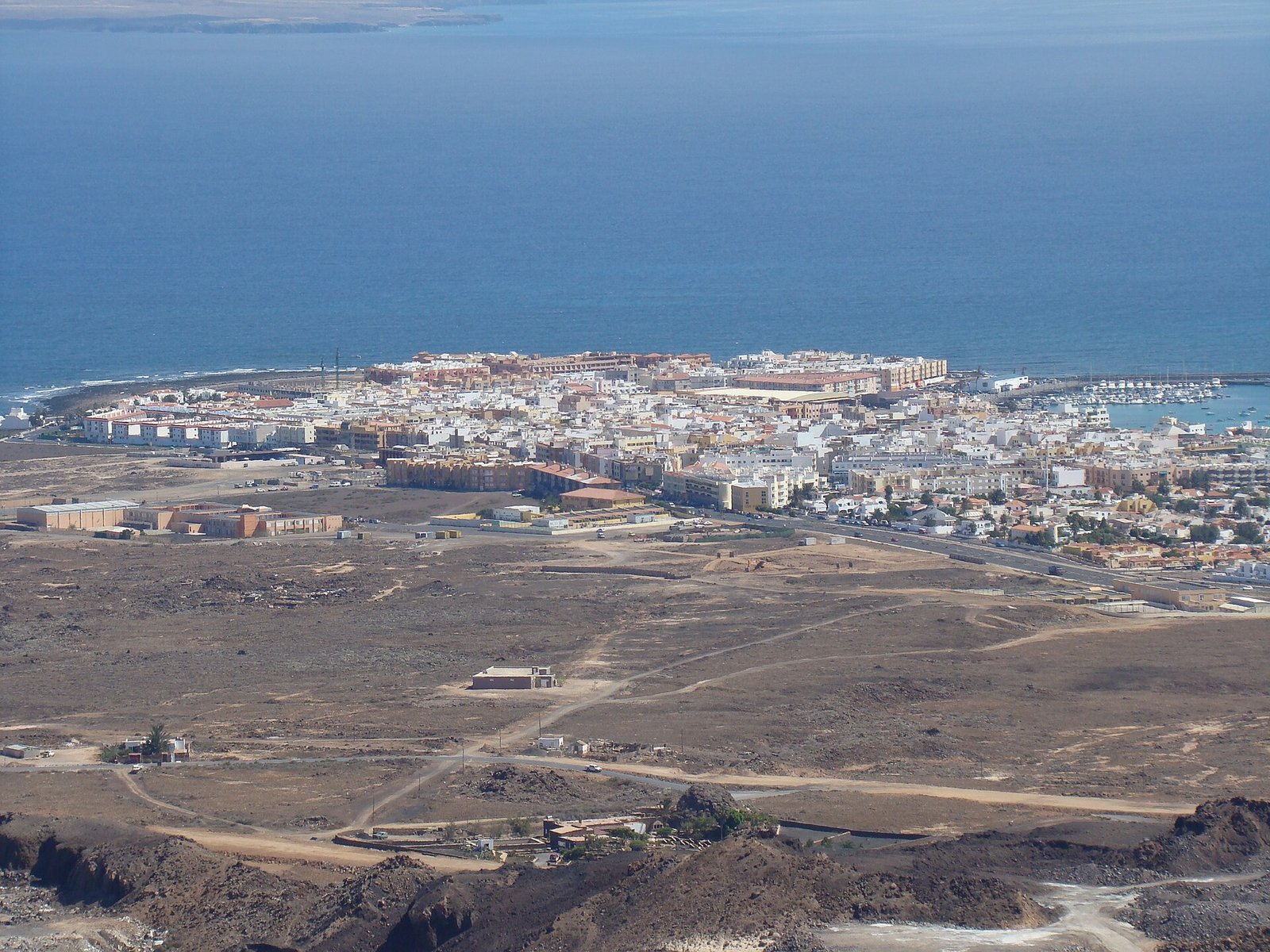
If you've strolled through the charming, whitewashed lanes of Corralejo's old town or the laid-back fishing village of El Cotillo recently, you'll know they are places of undeniable character. But behind the sun-bleached walls, many of these homes are crying out for modernisation. Now, a landmark public investment programme is answering that call. A total of 507 homes across these two northern Fuerteventura hotspots are set for a deep green makeover, thanks to a coordinated push by local, regional, national and European authorities.
This isn't just a fresh coat of paint. The project, framed as an Entorno Residencial de Rehabilitación Programada (ERRP), is a comprehensive neighbourhood-level intervention. Its primary mission is to dramatically improve the energy efficiency of the housing stock, while simultaneously upgrading the surrounding urban environment. For the residents, it promises lower energy bills, better thermal comfort and a more dignified standard of living. For the towns themselves, it's a chance to polish their historic cores, making them even more attractive for both locals and the visitors who are the lifeblood of the local economy.
A Deep Dive into the Neighbourhoods
The 507 homes are split between two distinct but equally beloved locations. The lion's share, 369 homes, is concentrated in the Casco Viejo, the historic old town of Corralejo. This bustling area, a stone's throw from the seafront, is a maze of pedestrian-friendly streets lined with restaurants, shops and residential buildings. The work here is being rolled out in three phases: the first two cover 262 homes, with a third phase adding another 107.
Further down the coast, the project reaches the nucleus of El Cotillo, a former fishing village that has blossomed into a haven for surfers and those seeking a more bohemian vibe. Here, 138 homes are set to benefit from a dedicated budget of over 4.1 million euros. The municipality has explicitly stated the goal is to "remodel the core of El Cotillo," signalling a blend of building rehabilitation and public-space improvements that will touch the very soul of the village.
Who Pays the Bill? A Zero-Cost Surprise
The financial architecture behind this scheme is a model of inter-administrative cooperation, tapping into the European Union's post-pandemic recovery engine. The funds flow from the NextGenerationEU programme, channelled through Spain's Plan de Recuperación, Transformación y Resiliencia (PRTR), and are co-financed by the Spanish Ministry of Housing and Urban Agenda, the Canarian Government, the Cabildo de Fuerteventura, and the La Oliva Council.
For the 507 homes, the combined investment for the Corralejo and El Cotillo interventions reaches nearly 14 million euros. This is part of a much larger, 53-million-euro housing push across the island. The most remarkable detail, however, is reserved for the owners in El Cotillo. The rehabilitation of their 138 homes comes at a confirmed "zero cost to the owners." This removes the single biggest barrier that typically prevents the upkeep of older coastal properties, ensuring the village's architectural heritage can be preserved without burdening local families.
What Exactly Will Change?
While the official documentation focuses on the overarching goals, the nature of an ERRP project gives us a very clear picture of what's in store. The works are centred on energy efficiency, which in practice means a significant upgrade to the buildings' thermal envelopes. Residents can expect improvements such as new insulation for façades and roofs, the installation of high-performance windows, and upgrades to building systems to reduce energy consumption. The result should be homes that are cooler in summer, warmer in the sparse Fuerteventura winter, and much cheaper to run.
Beyond the individual buildings, the "residential environment" component is key. This means the public spaces around the homes—the streets, small squares, and access ways—will also see improvements. Think better paving, improved accessibility, and a general tidying of the urban landscape. This holistic approach ensures that the upgraded homes sit within a worthy setting, enhancing the quality of life for everyone in the neighbourhood.
More Than Just Homes: A Boost for Tourism
Although this is fundamentally a residential programme, its impact on Corralejo and El Cotillo as tourist destinations will be profound. The Canarian Government has previously described Corralejo's old town and seafront as "nerve centres of the tourist destination," where the aim is to "rehabilitate, enable and modernise tourist points to make them accessible and inclusive." The ERRP works in the Casco Viejo will dovetail perfectly with this vision.
The renewal of a historic centre's building stock and public realm naturally makes it a more attractive place to wander, explore, and spend money. In El Cotillo, the explicit goal of "transforming" the village core with a 4.1-million-euro budget will polish its unique, laid-back charm. A more beautiful, accessible, and well-maintained urban environment directly supports the local hospitality businesses, shops, and rental markets that depend on the steady flow of visitors. It's a virtuous circle where better living conditions for residents create a better experience for everyone.
Common questions
- How many homes are being renovated in total?
- A total of 507 homes in the municipality of La Oliva are part of this specific ERRP programme.
- Where exactly are the works taking place?
- The projects are located in the Casco Viejo (old town) of Corralejo and the historic core of the fishing village of El Cotillo.
- Do homeowners have to pay for the renovations?
- In El Cotillo, the cost to homeowners is explicitly zero. For the Corralejo phases, the specific co-financing terms should be confirmed with the local council.
- What kind of improvements are planned?
- The focus is on energy efficiency upgrades (like insulation and windows) and the rehabilitation of the surrounding residential environment, including public spaces.
- When will the project be finished?
- It is a multi-year programme. The El Cotillo works are funded for the 2024–2026 period, and the Corralejo phases are already advancing, though specific completion dates per phase are not yet published.
Read on
- RIU Tres Islas Renovation in Corralejo Dunes Approved by FuerteventuraFuerteventura · 7 August
- Mogán's 202 affordable homes: tender draws no bidders againGran Canaria · 20 August
- Pájara: NeuroCanarias 2026 from 20 to 22 NovemberFuerteventura · 28 October
- Fuerteventura: Halloween party in Corralejo on 31 OctoberFuerteventura · 28 October
- Fuerteventura: Arena Negra rest area with showers, toiletsFuerteventura · 28 October
- Corralejo Guide: food, nightlife, tips and events
- All events on Fuerteventura →
Stand: 31 July 2026. This article is based on official communications from the Cabildo de Fuerteventura, the Ayuntamiento de La Oliva, and the Government of Spain. Exact completion dates and a detailed breakdown of works per building are not yet fully confirmed.